





Wg Cdr Mahesh Chander Sudan (Retd)
maheshchander59@gmail.com
We, the people of India, have witnessed various ongoing changes in almost all spheres of life as it is that every change brings some conceptual upgrdation/improvisation corresponding to the contemporary world order.
India gained independence from the English empire after almost two centuries and the society at large suffered in various aspects of public life affecting political, economic and social structures. Leadership of the United India thereafter worked for laying a systematic process of development as a Nation to emerge as an example of self-rule in the comity of nations. To devise a cohesive plan in an orderly democratic pattern, the people of India solemnly resolved to constitute a sovereign, socialist, secular democratic republic and formerly laid down an exhaustive Laws of land to achieve Justice, Liberty, Equality, Fraternity and above all the integrity of the nation. Education remained last priority of foreign rulers throughout their stay and it deepened the level of illiteracy, ignorance, innocence that demanded priority amongst other aspects of life. However, a newly born nation could draw growth trajectory based on urgency involved in strengthening the basic parameters of economy through five year plans and essentially thrusting towards a technologically advanced nation compatible with latest scientific temperament growing across the globe.
Keeping in view a large pool of human resources at its disposal, leaders of the nation sensitized young minds to gain education on priority through government established institutions so that they contribute substantially in enhancing literacy level across the country. It is observed that a systematic approach through public sector schools, colleges and Universities picked up momentum in the field of education attracting private enterprises both at national and international levels raising a spirit of competition across the spectrum. This raised the number of schools, colleges and universities to undertake primary, secondary and higher level of education both in formal and professional education. The concept of Clustering institutions to create a University is a modern educational model where several colleges in close geographic area merge to form a cluster University to relieve overcrowded State run Universities and shares resources to create dynamic school of learning. It helps to create shared library pooling books and staff together.
Historically this model of education in USA dates back to 1920s where schools were asked to share administrative costs and resources while maintaining their own campus identities. Few examples worth quoting are The Claremont Colleges, Atlanta University Center and Consortium of Universities of the Washington Metropolitan Area where even students cross register for classes at different schools. In our country, this framework is specifically shaped by the National Education Policy (NEP) 2020 which provides students with flexible and multidisciplinary learning. It breaks decades old system of strict "Single" stream approach like science stream can be combined with liberal arts. The concept gained support with National Education Policy (NEP) 2020 and government scheme Rashtriya Uchchatar Shiksha Abhiyan (RUSA).
It is seen that the cluster format of modern education has been adopted almost a decade ago in our country and literally speaking it is supposed to be student friendly, economic and an idea out of box breaking decades old approach of single stream that prohibited cross multidisciplinary learning but the concept has not been exploited with required thrust at national level as very few States/UTs adopted it possibly due to constitutional provisions as education is a concurrent list subject as per constitution of India vide 42nd Constitutional amendment and therefore the government of India do not have absolute constitutional mandate to implement it on national level. There are only five States/UT where the Cluster University Concept is adopted on trial basis in a very limited manner. It needs to be analyzed at national level and all pros and cons be studied and propagated liberally to encourage the utility of the concept in all States/UTs so that improvisation of Higher Education uniformly affects the career prospectus of the students.
It is also a fact that demand for restoration of Education to the State List emerged quoting that one size does not fit all and the approach with dual controls is felt undesirable and not feasible in a diverse structure of governance. On budgetary front, it is seen that federations are spending around 75% and the Union Government shares only 25% of the education budget as per budgeted allocation during year 2022. Another point of concern is that all federations do not enjoy equal prosperity to spare funds to that extent and the Education is an important tool for all around development of the country. A varying literacy levels like Himachal Pradesh proudly achieved 100% literacy rate and there are other federations lacking behind in this field despite the fact that citizens of India are constitutionally authorized for equity and equality across all spheres of life. Education as a State Subject may provide an opportunity to tailor the Syllabus as per local requirements. Union Government may exercise advisory control and extend help in achieving modern infrastructure, latest technology and updated knowledge bank for better education environment across the country especially in rural areas where even the building infrastructures with simple internet connectivity is rarely available. At international level, the countries like USA, Canada, Germany and South Africa have left education at the sole management of the Provinces.
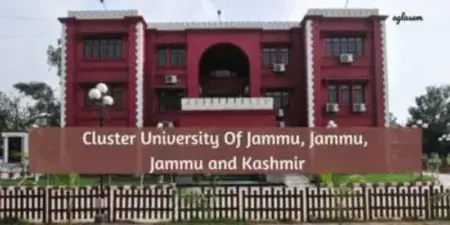
The subject "Education" was understandably transferred from List II (State List) to List III (Concurrent List) vide 42nd Constitutional Amendment in the year 1976 and the present status demands for a healthy review of the concept with the involvement of the educationists from functional Cluster Universities, colleges and on ground survey of the affected student community of States/UTs where the concept has remained under trial for almost a decade so that education system is not dealt so lightly creating class of students divided into Cluster concept and the regular University education system. As regards the Union Territory of Jammu and Kashmir, the concept has been adopted at twin capital cities, Jammu and Srinagar, by clubbing five institutions at both the towns with a Marketing tag of "Design your Degree" as if a sale of rotten products is encouraged through attracting marketing trends. Education is tool to improvise our society across the sectorial divisions and demands a serious involvement of all stake holders.
As it stands, the concept of clustering institutes for better management in terms of infrastructure, buildings, libraries, funds and above all the knowledge banks created independently by the clustered units in addition to well trained professionals, teachers and other skilled tradesmen handling Libraries and Laboratories are optimally used to achieve desired results in the field of education so that the country produces better skilled doctors, engineers, scientists, technocrats, professors, writers and administrators to lead the nation in the comity of nations and may hold the tag of Vishvguru in a real sense and not for decorative displays. Jai Hind, Jai Bharat.