





51.5% encountered ADRs; just 22.6% reported
Irfan Tramboo
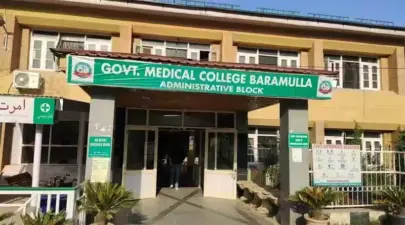
SRINAGAR, Aug 27: A study at Government Medical College (GMC) Baramulla has found a wide gap between awareness of adverse drug reaction (ADR) reporting and actual reporting among healthcare professionals and students at the institution.
While 93.4% of respondents said ADR reporting was necessary and 90% considered it a professional obligation, only 22.6% had ever reported an ADR.
The gap is notable because 51.5% of respondents said they had encountered an ADR at the hospital. This means more than half had come across a suspected adverse drug reaction, but fewer than one in four had ever reported one.
Published in Discover Public Health, the study assessed knowledge, attitudes and practices related to pharmacovigilance among healthcare professionals and students at GMC Baramulla, a tertiary-care teaching institution serving predominantly rural populations in North Kashmir.
Researchers distributed 350 questionnaires and received 326 completed responses, giving a response rate of 93.1%.
Despite the high level of support for ADR reporting, nearly 60% of respondents said they had never reported an ADR.
The main barriers were practical rather than attitudinal. Difficulty recognising an ADR was the most commonly cited barrier, reported by 37.2% of participants.
Lack of time was cited by 26.6%, while 13.8% said fear of legal liability discouraged reporting. Another 11.5% said reporting forms were unavailable, while an equal proportion felt that a single ADR report would make little difference.
The findings also point to a gap between basic knowledge and the practical skills needed to report ADRs.
Seventy per cent of respondents correctly defined pharmacovigilance, while 86% correctly identified which ADRs should be reported.
However, only 52.3% knew where ADRs should be reported, and just 43.7% correctly identified the scale used to assess ADR causality.
Awareness of India's pharmacovigilance system was similarly uneven.
While 74% said they were aware of the national ADR reporting system and 83% correctly identified the regulatory body responsible for ADR monitoring, only 64.3% said they had information about the Pharmacovigilance Programme of India.
Practical exposure to the reporting system was limited. Only 14.6% of participants had ever visited an ADR monitoring centre.
Although 61.8% had seen an ADR reporting form, just 55.5% said they had received training on how to report an ADR.
The researchers describe the findings as a significant knowledge-attitude-practice gap.
Their findings suggest that underreporting is driven not simply by a lack of awareness, but by difficulties in recognising ADRs, limited practical training, lack of confidence, time constraints and gaps in institutional support.
They recommend integrating ADR reporting into routine clinical practice, simplifying reporting tools, strengthening institutional monitoring and feedback, and providing practical, competency-based training.
The study offers evidence from a rural-serving tertiary-care institution in North Kashmir, although the authors caution that the findings cannot be broadly generalised because the study involved a single institution, convenience sampling and self-reported data.