





For a UT that has watched its power distribution utilities corporatise, digitise and rebrand themselves over the past decade, Jammu and Kashmir's electricity sector remains stubbornly stuck in the same position it has occupied for decades.
The formation of the Jammu Power Development Corporation Limited (JPDCL) and the Kashmir Power Development Corporation Limited (KPDCL) was meant to usher in professionalism, accountability and financial discipline. Instead, what one witnesses today is a textbook case of institutional buck-passing, where every stakeholder - utility, vendor, regulator and consumer - points fingers at everyone but themselves, while the losses simply keep piling up.
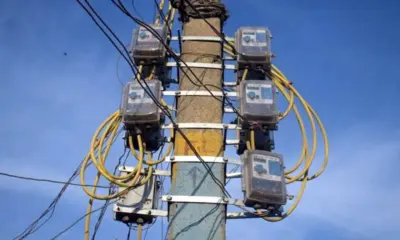
Consider the smart meter fiasco. Over 50,000 meters across the two regions are officially defunct, damaged, burnt or non-communicating, with thousands of consumers waiting since as far back as 2023 for replacement. Regulations under the Joint Electricity Regulatory Commission (JERC) are unambiguous: a defective meter must be replaced within three billing cycles, with consumption charged on an average basis in the interim. Yet JPDCL has now written to JERC seeking to double that grace period to six months - a tacit admission that it has no intention, or capacity, of meeting its own regulatory obligations. And if 50,000 defunct meters are the officially acknowledged figure, one can only guess how many more are illegally bypassed or hooked up through the ubiquitous "kundi" connections that continue to bleed the grid dry in broad daylight.
A cruel irony is buried in this mess. While genuine, bill-paying consumers face load-shedding and rising tariffs for a service that is patchy at best, those whose meters have quietly stopped recording consumption are, in effect, enjoying endless unmetered electricity. The very inefficiency that ought to embarrass the utilities has become, for a section of consumers, an unintended windfall - hardly the incentive structure a power sector haemorrhaging revenue can afford.
The financial arithmetic tells its own story. JERC's tariff order for 2026-27 pegged the annual revenue gap for both utilities at a staggering Rs 2,922.85 crore. Had the regulator passed this shortfall entirely onto consumers, tariffs would have risen by nearly 40 per cent rather than the 6.83 per cent hike approved from September 1. The difference - some Rs 2,420 crore - is being quietly absorbed through Government grants and subsidies. In effect, the state exchequer, and by extension every taxpayer, is bankrolling the inefficiency of two corporations that were supposed to be commercially self-sustaining. This cannot continue indefinitely.
Meanwhile, the private vendors contracted to install, repair and replace smart meters have downed tools, citing unpaid dues running into crores, leaving both utilities and consumers hostage to a payment dispute they had no part in creating. JERC, to its credit, has begun asking the right questions - demanding sub-division-wise loss reports, cost-mapping studies and clarity on power purchase agreements. But questions without enforcement are just paperwork. AT&C losses of 27.45 per cent in Jammu and 33.54 per cent in Kashmir remain more than double the national average, and theft complaint helplines exist more in name than in function - numbers that go unanswered, complaints that go unattended, and ground staff who cite lack of police protection as an excuse for inaction against power theft.
The recent suspension of employees by JPDCL over power theft, which promptly triggered a strike, only underscores how fragile the will for reform truly is. Every attempt at accountability from the top is met with resistance from below, and every excuse from the ground staff is tolerated by the administration above. The much-lauded solar rooftop initiative also seems ineffective: why would a consumer invest in solar panels when defunct metering already provides nearly free power?
The solution is neither mysterious nor complicated. Feeder-wise revenue accountability, meter-to-meter physical inspection drives, and the deployment of smart meters' inherent capability to disconnect power remotely - much as a mobile SIM can be barred - for confirmed theft, would go a long way. What is missing is not technology or regulation, but the will to enforce both, consistently, without fear or favour. J&K's power sector does not need another committee, another grant, or another grace period. It needs surgery - sharp, sustained and unsentimental. Until then, the honest consumer will keep paying more for less, while the buck keeps travelling in circles, stopping nowhere.