




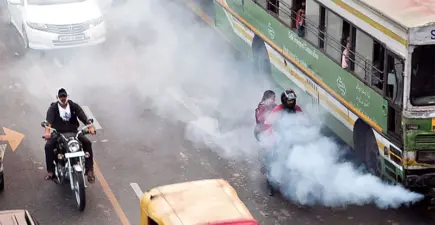

The latest Lancet Public Health study should trouble every Indian citizen and policymaker alike. Deaths attributable to second-hand smoke in India have risen by nearly 50 per cent since 1990 - from 2,17,700 to 3,25,600 in 2023. That death rates fell by 35 per cent over the same period offers little comfort, for the absolute toll keeps climbing as India's population, and its exposure to ambient smoke, keeps growing.
With 444 million Indians now living amid second-hand smoke, the country trails only China in this grim tally. What makes these figures particularly tragic is the nature of the victims. Unlike the smoker who lights a cigarette by choice, those succumbing to passive smoking are, in the truest sense, victims of circumstance. A family living beside a coal-fired power plant, a street vendor stationed at a congested intersection, or an office-goer trapped daily in traffic - none of these people ever chose to inhale toxic fumes. Their only fault is where they live, work or commute. There is no warning label, no opt-out clause, and often no awareness that the air itself has become a slow poison.
The consequences are neither minor nor short-lived. Cardiovascular disease, respiratory illness, and complications in those already battling conditions such as coronary artery disease are well-documented outcomes of prolonged exposure. These victims occupy hospital beds for months and often end in death regardless of medical intervention. The financial and emotional strain cascades through entire households. Nowhere is this crisis more visible than in Delhi-NCR, where each winter transforms the capital into what can only be described as a gas chamber. Schools shut, hospitals fill, and yet year after year the response remains reactive rather than preventive. Despite repeated judicial interventions and Government task forces, no durable solution has emerged. Stubble burning, vehicular emissions, and industrial pollution continue largely unchecked, while citizens are left to fend for themselves with masks and air purifiers - solutions available only to those who can afford them.
The Lancet study is not merely academic; it is an alarm bell. It demands a coordinated response - one where Government agencies, the judiciary, industry, and citizens move in tandem rather than in the current pattern of blame and inertia. Unless India treats air quality as a public health emergency rather than a seasonal inconvenience, the statistics in next year's report will be grimmer still - and the victims, as ever, will be those who never lit a cigarette.