




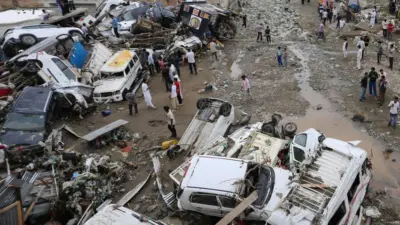

Jammu Division witnessed scenes of devastation that few will forget. Cloudbursts, flash floods and landslides tore through the hilly districts overnight, it was Rajouri and Poonch that bore the brunt of nature's wrath.
Numerous lives were lost, many are still missing, hundreds of homes are damaged, the bus stand was washed away, and livestock were swept off-the scale of the calamity is staggering, and the grief it has left behind is immeasurable. What makes this tragedy particularly cruel is the hour at which it struck. The heaviest rain and the deadliest cloudbursts hit around three in the morning, when the vast majority of residents were fast asleep, utterly unaware of the fury bearing down on them. Landslides buried homes before their occupants had any chance to react. Many in the villages of Surankote's Marrah and Sangla were swept away by flash floods. By the time the first cries for help went up, entire households had already been swallowed by debris or floodwater. This is not a case of people ignoring warnings and staying put out of carelessness - it is a case of a disaster that arrived in the dead of night with a speed and scale that gave almost no window for escape.
It bears repeating: no one, anywhere in the world, can reliably predict exactly when or where a cloudburst will strike, or which slope will give way in a landslide. The meteorological department had issued its orange alert well in advance, and district officials did circulate advisories through field staff and local networks. That such warnings prevented an even higher death toll, but there can be no specific alert for nature's fury that unfolded at night.
Where the administration cannot be excused, however, is in the decisions taken long before this night - decisions about where to build. The image of Rajouri's Bela Bus Stand, along with dozens of shops, being swept away in an instant, is not simply an act of God. It is the entirely foreseeable consequence of permitting a bus stand, a market and residential colonies to come up on the banks of a river prone to flash flooding. Eyewitnesses have not minced words, pointing to encroachment on state land along the Nallah, carried out with what they allege was official connivance. Similarly, the flooding of homes and commercial premises in supposedly "safer" localities away from the riverbank points to a second failure: inadequate drainage and haphazard town planning that leaves water with nowhere to go once it starts pouring in earnest.
Once daybreak arrived and the full extent of the destruction became visible, the response was swift and commendable. The army, police, SDRF, civil defence, volunteer home guards and local administration worked in tandem to rescue scores of stranded individuals, evacuate flood-hit families, and set up relief camps with rations, medicines, blankets and shelter. But nature's fury is far from over. The MeT department's alert for heavy rain across the Jammu Division remains in force until 24 July. The highways, power infrastructure and communication links across the region remain damaged or vulnerable. Boulders continue to threaten vehicles on national highways; tunnels and roads remain partially blocked; rivers such as the Chenab are still running close to danger levels. There is little scope for administration to relax.
Once the rains finally recede, a hard-nosed review of town planning along riverbanks and nullahs in Rajouri, Poonch and other vulnerable districts is not optional - it is essential. Encroachments must be identified and addressed, drainage systems overhauled, and building permissions along waterways reconsidered with the lessons of Bela Colony firmly in mind. Damage assessments must be thorough and swift, and compensation for the families who have lost homes, livestock, vehicles, and loved ones must reach them without the usual bureaucratic delays. Nature cannot be stopped. But where human beings choose to build and how carefully they plan for water's inevitable return remain within human control. Rajouri and Poonch have paid too heavy a price for that lesson to be forgotten. It's another wake-up call by nature.