



Raman Suri
ramansuribjp@gmail.com
For decades, Jammu Kashmir remained trapped in a cycle of terrorism, separatism, political uncertainty, economic stagnation and street violence.
The region, despite its enormous natural resources, tourism potential, educated youth and strategic importance, struggled to realise its true potential because development was repeatedly held hostage to instability. Stone-pelting, shutdowns, separatist diktats, militant threats and recurring disruptions had become part of everyday life.
For ordinary citizens, particularly the youth, the promise of a peaceful and prosperous future often appeared distant. Seven years after the historic decision of August 5, 2019, however, Jammu Kashmir presents a significantly transformed picture. The changes are visible not merely in Government statistics but also in public life, economic activity, tourism, infrastructure, democratic participation and the aspirations of its people. The Union Government, under Prime Minister Narendra Modi, has attempted to replace a politics of uncertainty with an agenda centred on development, integration, security and opportunities.
The decision to nullify the special provisions of Article 370, eight years ago, and subsequently reorganise the erstwhile state into the Union Territories of Jammu Kashmir and Ladakh under the Jammu and Kashmir Reorganisation Act was a watershed moment. It fundamentally altered the constitutional and administrative framework governing the region. The Government's stated objective was to ensure that the people of Jammu Kashmir enjoyed the same constitutional rights, legal protections and development opportunities available to citizens elsewhere in the country.
While the decision generated political debate and continues to attract differing opinions, its consequences have been particularly significant in the fields of governance, social justice, infrastructure and security. Perhaps the most visible achievement has been the transformation of the security environment. There was a time when stone-pelting incidents, forced shutdowns and street protests regularly paralysed normal life. Schools and colleges remained closed, businesses suffered losses and the movement of ordinary citizens was frequently disrupted. Areas such as Downtown Srinagar, Sopore and Tral were often associated with fear and violence.
Today, the atmosphere in these places is considerably different. Lal Chowk's iconic clock tower, once associated with political unrest and security concerns, has emerged as a popular meeting point and selfie destination. Families, tourists and young people can be seen enjoying public spaces without the atmosphere of fear that once dominated them. The figures underline the scale of this change that Jammu Kashmir has seen during these eight years.
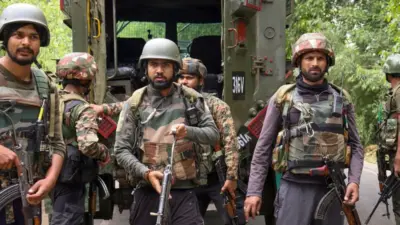
According to the data cited in the recent assessment of Jammu Kashmir's transformation, the region witnessed 1,328 organised stone-pelting incidents and 52 organised shutdowns in 2018. By 2023, organised stone-pelting and shutdown-related disruptions had effectively disappeared from the recorded picture. Similarly, according to Ministry of Home Affairs figures, terror incidents declined from 228 in 2018 to 46 in 2023. These figures represent more than a statistical improvement. They reflect the restoration of normal life, the freedom to conduct business, the ability of children to attend schools and the opportunity for people to move without the constant threat of street violence.
This change has been supported by stronger coordination between Jammu Kashmir Police and central security agencies. The National Investigation Agency (NIA), Enforcement Directorate (ED) and other agencies have intensified action against terror financing, hawala networks, separatist organisations and the financial infrastructure that sustained militancy. The objective has been to dismantle not only the armed networks but also the ecosystem that provided them with financial, logistical and ideological support. Separatism can no longer exercise the same influence over everyday public life that it once did.
However, it would be incorrect to suggest that terrorism has been completely eliminated. The horrific Pahalgam terror attack in 2025 was a grim reminder that Pakistan-sponsored terrorism and its support networks remain a serious challenge. The emergence of new terror networks also underlines the need for sustained vigilance. Despite our vigilant security agencies, Indian army and Airforce showed their military might be giving Pakistan a befitting reply through Operation Sindoor. That was enough for as well as Pakistan sponsored terrorism to understand India of 21st century under Modi government is different from what it used to think of.
The government's achievement, therefore, should be assessed by recognising the security environment that has improved substantially and the state has demonstrated greater institutional capacity to confront the challenge. Another major indicator of changing circumstances is the unprecedented growth in tourism. Jammu Kashmir's natural beauty has always attracted visitors, but insecurity and repeated disruptions prevented the tourism industry from reaching its full potential. The situation has changed considerably.
The arrival of 2.11 crore tourists in 2023 and 2.36 crore in 2024 reflects renewed confidence in the region. Srinagar, Gulmarg, Pahalgam, Sonamarg, Jammu, Patnitop, Katra and numerous lesser-known destinations have witnessed renewed activity. The sight of domestic and international tourists enjoying Kashmir's lakes, gardens, mountains and markets has become an important symbol of normalcy. Tourism is not merely about visitors and photographs. It is the livelihood of thousands of families.
Hotel owners, houseboat operators, taxi drivers, pony owners, handicraft sellers, restaurant operators, tour guides and small business owners depend on this sector. Increased tourist arrivals translate into employment, business opportunities and income generation across the region. Equally important is the growing confidence of visitors who are increasingly willing to explore destinations that were previously considered difficult to access.
The economic transformation is also reflected in industrial investment. According to the figures provided, industrial investment proposals worth approximately Rs 15,940 crore have been reported in Jammu Kashmir. This is significant for a region that historically remained dependent on a limited number of economic sectors and struggled to attract large-scale private investment. Investment can create employment, encourage entrepreneurship, improve industrial infrastructure and provide local youth with alternatives to Government jobs.
The Union Government has also prioritised major infrastructure projects. According to a June 2026 Government report, 63 major development projects worth approximately Rs 80,000 crore were approved for the region. Investment exceeding Rs 51,000 crore had already been made, while 53 projects had been completed. These projects encompass important sectors such as roads, railways, electricity and other essential infrastructure. Improved connectivity is particularly important for Jammu and Kashmir because of its mountainous geography, difficult terrain and strategic location.
The expansion of road and railway networks has the potential to transform the region's economic future. Better connectivity reduces transportation costs, facilitates the movement of agricultural and industrial products, improves access to healthcare and education, and makes tourism more accessible. For remote areas, infrastructure is not simply a development indicator; it is a lifeline. The improvement of electricity infrastructure and other basic facilities also contributes to better living standards and creates an environment in which businesses can function more efficiently.
Employment remains one of the most important concerns of Jammu Kashmir's population, particularly its educated youth. According to the supplied Government figures, more than 41,000 Government jobs were provided between 2019 and May 2026. While this is a significant number, the local Government must continue to focus on transparent recruitment, private-sector employment, skill development and entrepreneurship. Government jobs alone cannot absorb the aspirations of an expanding educated population. Industrial growth, tourism, information technology, agriculture, horticulture and start-up initiatives must become equally important engines of employment.
The political landscape has also undergone a significant change. The 2024 Lok Sabha elections witnessed a voter turnout of 58.46 per cent in Jammu Kashmir, the highest participation in general elections in the region in 35 years, according to the Election Commission (EC) figures cited in the report. This was followed by Assembly elections in September and October 2024, resulting in the formation of an elected government. The participation of voters in these elections demonstrated that democratic processes continue to hold importance for the people of Jammu Kashmir.
The restoration of an elected Government is an important development in the region's political journey. Democracy must not be limited to electoral participation alone; it must also be reflected in accountable institutions, responsive administration and the ability of elected representatives to address people's concerns. At the same time, the demand for greater administrative powers for the elected Government remains a subject of political debate. Such questions need to be addressed through constitutional processes and constructive engagement. The larger achievement is that political disagreements are increasingly being expressed through democratic and institutional platforms rather than through violence and street disruption.
One of the most consequential changes following the removal of Article 35A and the extension of central laws has been the expansion of legal and social protections. Women and children have gained access to legal safeguards that were previously not uniformly available under the earlier constitutional arrangement. Laws concerning domestic violence, women's rights and the protection of children have strengthened the framework of social justice. The extension of central legislation has also helped bring Jammu Kashmir into a more uniform national legal and administrative framework.
Seven years after August 5, 2019, Jammu Kashmir has travelled a considerable distance from the atmosphere of uncertainty that once defined its public life. The transformation is visible in the streets of Srinagar, the tourism economy of Kashmir, the growing infrastructure network, the expansion of social protections and the participation of people in democratic processes. The challenges of terrorism, unemployment, political reconciliation and regional development remain, and no government can afford complacency. The Pahalgam attack has particularly reinforced the importance of remaining alert and ensuring that the gains achieved through years of effort are not reversed.
Nevertheless, the larger direction of change is unmistakable. The Union Government has placed Jammu Kashmir on a development-oriented trajectory, seeking to replace decades of instability with investment, connectivity, opportunity and national integration. The responsibility now extends beyond the Centre to the elected government, local institutions, civil society and the people themselves. Sustaining peace, ensuring equitable development between Jammu Kashmir, creating employment and strengthening democratic institutions must remain collective priorities.
Jammu Kashmir deserves a future in which its identity is celebrated through its culture, hospitality, talent and achievements rather than defined by terrorism and conflict. The most meaningful success of the transformation will be when every citizen, irrespective of region, religion or background, feels secure, empowered and confident about tomorrow. The journey is not over, but the foundations of a new Jammu Kashmir are increasingly visible.
(The writer is Joint Treasurer BJP Jammu Kashmir)