




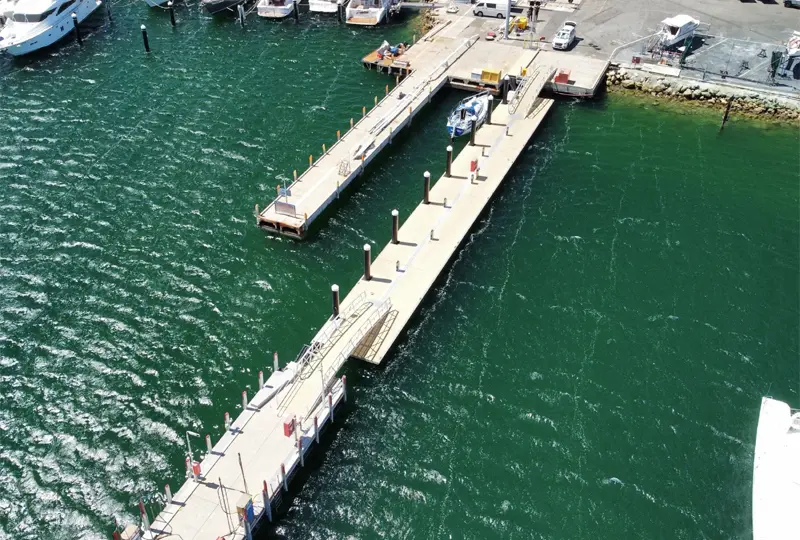

There is a quiet revolution stirring along the riverbanks of Jammu & Kashmir - one that does not announce itself with the thunder of excavators or the hum of highway machinery, but with the gentle lap of water against newly constructed floating jetties.
After decades of neglect, false starts, and geopolitical obstructionism, the waterways of this breathtaking UT are finally being prepared to carry their share of the future. The timing could not be more consequential. The world is grappling with an energy crisis of historic proportions. Fossil fuel costs remain volatile, road freight consumes enormous quantities of diesel, and the environmental cost of air cargo is increasingly indefensible. Against this backdrop, water transport - arguably the oldest and most energy-efficient mode of moving goods and people - is enjoying a remarkable global renaissance. The arithmetic is compelling: a single cargo vessel can carry what would require dozens of lorries. Per tonne-kilometre, water transport consumes a fraction of the fuel that road or air freight demands. And crucially, waterways follow the shortest natural routes - point to point, unimpeded by terrain or traffic jams.
Before the age of motorised transport and metalled roads, Kashmir's economy literally floated. The Jhelum was its motorway. Large wooden boats called 'khachus', capable of carrying up to fifteen tonnes, formed the backbone of trade, connecting the fertile orchards of Sopore to markets downstream. Seventy per cent of Kashmir's cargo was once moved by water. The horticulture boom - which transformed the valley into India's apple basket - was sustained in no small part by this aquatic infrastructure. Then came roads, bridges, and political complications, and the rivers fell silent as arteries of commerce.
The silence may soon end. The Inland Waterways Authority of India, in collaboration with the J&K Government, is developing cruise corridors along three national waterways - the Jhelum (National Waterway 49), the Chenab (National Waterway 26) and the Ravi (National Waterway 84). A 76-kilometre corridor from Pantha Chowk to Wular Lake, eight floating jetties along the Jhelum stretch, a nine-kilometre cruise run from Reasi to Akhnoor Fort on the Chenab, and a fifteen-kilometre leisure corridor along the Ravi at Sohar - these are not distant dreams but funded, contracted, time-bound commitments. Jetty construction across all three corridors is targeted for completion by July 2026. The Chief Secretary is monitoring progress and heading review meetings with the Chairman of IWAI.
Equally momentous is the revival of the long-stalled Tulbul Navigation Project - the Wular Barrage - conceived in 1984 and shelved under relentless Pakistani diplomatic pressure. With the Indus Waters Treaty now effectively in abeyance following the Pahalgam terror attack, India is asserting what was always its sovereign right: to develop its own waterways. The Tulbul project would restore navigability along the Jhelum through winter months, when natural water levels fall perilously low, and enhance downstream hydroelectric efficiency. The strategic and economic logic is unanswerable.
Beyond freight and geopolitics lies perhaps the most immediately tangible opportunity: tourism. Cruise travel is a worldwide phenomenon, and with good reason. There is something irreplaceable about gliding through a landscape rather than driving through it - the cool breeze, the unfolding panorama, the unhurried encounter with aquatic life and riparian ecology. Yet despite possessing some of the most spectacular water bodies on earth - Dal Lake, Wular Lake, the Jhelum, and the Chenab - J&K has remained conspicuously absent from the global cruise tourism map. That missing link is finally being addressed. In Srinagar, where summer traffic during peak tourist season reduces the city to a crawl, water transport along the Jhelum and towards Wular would do double duty - easing congestion whilst adding an entirely new dimension to the visitor experience. Around Reasi, already magnetised by the Shri Mata Vaishnodevi pilgrimage and the spectacular Chenab Rail Bridge, a river cruise would transform a transit point into a destination.
The path ahead demands patience. Investment is substantial; feasibility across dry seasons must be rigorously managed; inter-departmental coordination is complex; and the ecological sensitivity of these rivers is non-negotiable. But the journey has unmistakably begun. Phase one - the DPRs - is complete. Phase two - the jetties - is underway. J&K's rivers waited decades to be rediscovered. They will not have to wait much longer.