
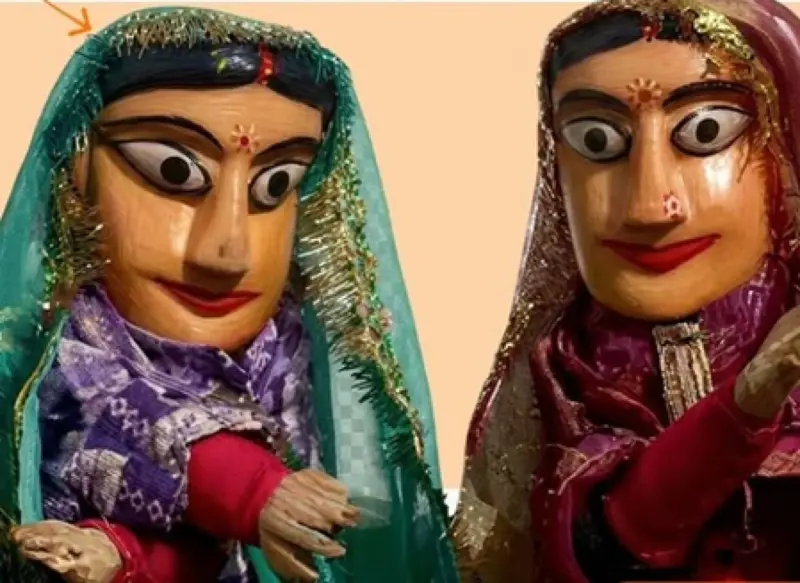

New Delhi, March 21: Every year on March 21, the beauty and cultural significance of puppetry are celebrated worldwide as part of World Puppetry Day.
In India, puppetry is an ancient tradition that brings stories to life through small puppets made of wood, leather, fabric, and colors. This art form serves not only as entertainment but also as a medium for moral values, folklore, epics, and social messages.
Across the country, various styles of puppetry reflect local culture, language, and traditions. The history of puppetry in India is extensive, with references found in the Mahabharata and Panini’s Ashtadhyayi. According to legend, Lord Shiva entertained Parvati by entering a wooden idol. The “Singhasan Battisi” describes the 32 puppets of Vikramaditya. This art form is a beautiful blend of drama, music, dance, painting, and craftsmanship.
In India, the main styles of puppetry include string puppets, shadow puppets, rod puppets, and glove puppets. However, regional diversity makes it even more special. Rajasthan is renowned for its puppetry, where Bhat or Nat artists manipulate colorful wooden puppets with strings. The stories often revolve around warriors and kings and queens, filled with tales of battles and adventures.
In Uttar Pradesh, the glove puppet art form known as Gulabo-Sitabo has been popular since the 17th century. It humorously depicts the conflicts between two wives of the same husband, Gulabo and Sitabo, entertaining audiences throughout the state, particularly in Lucknow, although its popularity is waning. In Tamil Nadu, Tolu Bommalattam (shadow puppetry) and Bommalattam (string and rod puppetry) are prominent, showcasing stories from epics and Puranas. The Pava Koothu (glove puppetry), based on the victory dance of Goddess Lakshmi, is nearly extinct. Meanwhile, Kerala features Tolu Pava Koothu (shadow puppetry), Pavakathakali (glove puppetry inspired by Kathakali), and Nool Pavakoothu (string puppetry).
Tolu Pava Koothu is dedicated to Bhadrakali and lasts several days, often based on the Ramayana. Pavakathakali mimics Kathakali dance. In Karnataka, Togalu Gombeyata (leather shadow puppetry) and Yakshagana Gombeyata (string puppetry) are famous, based on the Ramayana, Mahabharata, and folk tales, with costumes resembling those of Yakshagana. In Andhra Pradesh, styles like Tolu Bommalata (shadow), Koyya Bommalata, Keelu Bommalata, and Sutrum Bommalata depict scenes from the Ramayana and Mahabharata, featuring large, colorful puppets made of leather.
In Odisha, Ravan Chhaya, Gopalila Kundhei (string puppetry), and Kathi Kundhei focus on the leelas of Krishna and Radha. West Bengal is known for Danger Putul Nach (rod puppetry) and Taarer Putul Nach (string puppetry), which address social issues alongside epic tales. In Assam, Putula Nach is a string puppet form centered around the Ramayana.
Celebrating World Puppetry Day: A Glimpse into Indias Rich Puppet Traditions