




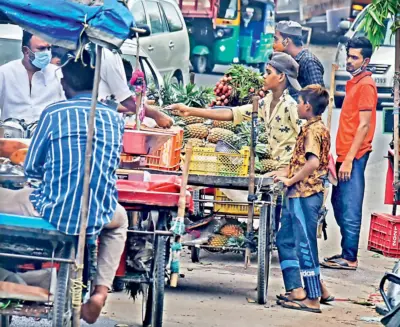

Tirupati: Children doing manual jobs like carrying goods, cleaning tables and selling products is a common sight in the world-renowned abode of Lord Venkateswara in Tirupati.
Classrooms are only a dream for these kids, raised as they were in poor families having difficulty earning their daily bread. Manual labour at a tender age evokes pity among the large swarms of devotees, but the authorities are turning a blind eye on the "banned" system of child labour.
A ground-level check across the hill town revealed minors working in eateries, shops, roadside stalls etc and engaged in informal vending activities. From the early morning hours, children are seen serving food, carrying cold drinks and water bottle cases, shifting cardboard boxes and selling toys and religious items to pilgrims.
The Tirumala Tirupati Devasthanams is too busy handling the daily turnout of pilgrims and managing the temple affairs, while the police, vigilance and other departments operating on the hill are saddled with their daily chores. Hardly a thought crosses their mind about the plight of these "children of a lesser god."
Lack of regular inspections and enforcement of rules against child labour has drawn criticism from devotees and child rights activists but this has gone unheeded.
During interactions by Deccan Chronicle, some children said they take up work due to their poor family situations. A 14-year-old boy working at a fastfood centre said he came to Tirumala to support his parents. "My family needs money. I stopped studying and started working voluntarily. I earn some amount and send it home. I know education is important, but now I must help my family," he said.
Another minor involved in wholesale distribution of toys had a different response. "I am working because I want sone money. I can buy what I like and enjoy life with my friends without asking anyone for financial support," the boy said.
Child welfare activists say such statements reflect gaps in the system. Children, they feel, may not understand the long-term impact of leaving education and entering work at a young age. "Whether or not a child says he took up a work voluntarily, it is still the responsibility of the government to protect them. Poverty and family problems cannot be reasons to ignore child labour," said K Rajeswari, a child rights activist.
Devotees visiting Tirumala feel this cannot happen without the knowledge of officials as these children are working in public places. "Tirumala is a place where crores of rupees are spent on facilities and arrangements. But when children are seen working openly, it raises questions about the priorities of the administration. These children are not working secretly and everyone can see them. If devotees can notice them during a short visit, why are these officials looking the other way," asked Srinivas Rao, a devotee from Vijayawada.
Criticism is growing that entities like TTD, police, district administration and labour department have failed to conduct frequent joint inspections to identify child labour and act against those employing minors.
Activists feel occasional 'dramas' will not help and seek continuous monitoring, rehabilitation and strict action against rule violators.
Officials claim they hold inspections occasionally and would ensure coordination among departments to identify and support vulnerable children.