


When Redwood Software began evaluating cities for its India expansion, Hyderabad was not selected on instinct. The company studied talent pools, infrastructure, retention patterns, branding opportunities and long-term operational costs before choosing the city for its new 30,000 sq.
ft. global capability centre in Hitec City.
For Rajkumar Paulraj, head of Redwood India, the decision reflected a larger shift underway in the global technology industry. Companies building AI and enterprise software businesses are no longer chasing only scale. They are looking for stability, depth of talent and teams that can stay together long enough to build complex products.
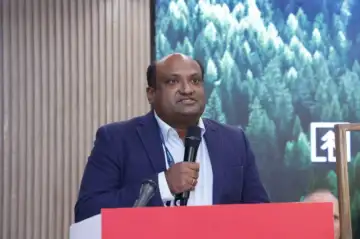
Rajkumar Paulraj, Vice President (Engineering) and India Country Head, Redwood Software
"What Hyderabad has got right is the density of everything being together," says Paulraj. "All the infrastructure is in one place and that makes a significant difference. For people coming from abroad, they immediately get a sense of what this ecosystem can do."
The new office is already operational with around 125 employees, and Redwood plans to scale the workforce to 300 by 2027. Hiring is currently focused on engineering, cloud, AI and business operations roles.
Paulraj says Hyderabad gives smaller global brands an unexpected advantage because proximity itself creates visibility.
Unlike consumer internet firms that often prioritise rapid expansion, Redwood operates in enterprise automation, an industry where long-term continuity matters. The company develops AI-powered systems that automate complex business operations, requiring teams that can institutionalise knowledge over several years.
Paulraj believes Hyderabad is increasingly offering something Bengaluru struggles with: a balance between innovation and retention.
"In Bangalore, people are constantly chasing the next thing. That creates a problem for companies trying to build deep capability. If people keep moving every year or two, you cannot institutionalise innovation," he says.
According to him, the real hiring challenge today is not fresh graduates or senior leaders. It is the mid-level engineers with 10 to 15 years of strong technical experience.
"It is easy to find people with three to five years of experience. Very senior leaders can also be found through search networks. The hardest segment is the mid-senior engineering talent that actually drives execution," he says.
The AI transition, he argues, is also changing the very definition of expertise inside technology companies. For decades, India's IT services industry rewarded memory, process familiarity and operational repetition. Paulraj believes AI is beginning to dismantle that model.
"Memory is not knowledge," he says. "Our education system and services industry have treated memory as expertise for too long. AI can cut through that. What matters now is discernment, problem solving and the ability to think."
He says the next generation of engineers must become builders rather than task executors.
"We have had generations of young people trained to follow instructions. Now they actually have to solve problems. That is a good thing," he says.
Redwood's hiring strategy reflects that shift. The company is combining experienced lateral hires with campus recruits who bring newer AI and cloud-native skills. Paulraj says the old hierarchical model of engineering teams is disappearing.
"We need fresh graduates mixed with experienced people because the structure of one senior person knowing everything no longer works," he says.
Retention, however, remains a difficult equation in India's tech sector. Paulraj admits there is no guaranteed way to predict whether young employees will stay.
"You cannot know," he says candidly. "People want entrepreneurship, education abroad or a bigger opportunity. That ambition is natural."
Instead of relying only on salaries and promotions, Redwood is trying to create ownership among employees.
"The single most powerful lever is making people feel entrepreneurial. If they feel the product is theirs, they stay longer," he says.
Paulraj also takes an unusually direct approach to performance management. He believes companies must clearly identify their most critical employees instead of treating everyone equally.
"You have to be unashamedly biased toward your top talent," he says. "If someone is not in a critical role, seniority alone does not mean much."
Even attrition, he says, is not always unhealthy.
"Churn is healthy. The real problem is when your best people leave and you do not know why," he says.
For Paulraj, the AI transition is not only about software. It is also about how countries position themselves globally. He believes India's linguistic diversity and digital public infrastructure will become central to the next phase of AI development.
"There is no AI without India," he says. "This country has the diversity of languages, experiences and scale that AI systems need to learn from."
He points to initiatives such as India's digital identity systems and language technologies as examples of how the country could shape AI differently from the West.
"If we structure ourselves properly, AI can completely transform Indian businesses and public services," he says.
Despite the industry uncertainty surrounding AI, Paulraj remains optimistic about India's engineering talent. His message to young professionals entering the workforce is simple.
"Do not despair," he says. "Every year the job changes. If you are still doing the same thing as last year, then you are already falling behind."