
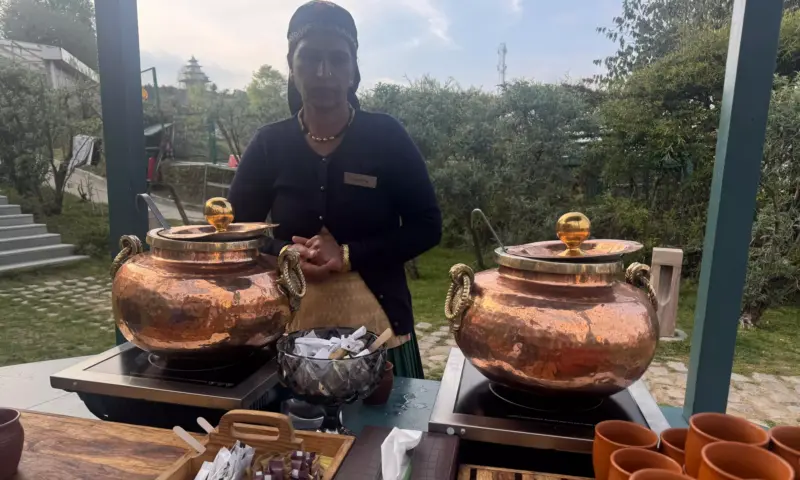

In the hills, evenings don't rush past you. They gather.
Spend a few days in the Garhwal region and you will notice how the day slowly folds into a shared pause.
Work wraps up, doors stay open, and people drift into each other's spaces without an invitation. Someone puts the kettle on, someone else brings a plate of something warm, and before you know it, a small group has formed. Conversations pick up from where they left off the previous day. Kids run around, someone suggests a game, and time stretches in the most unhurried way.
This everyday ritual has a name here, the kachri tea ritual. It is not planned, not dressed up, and definitely not formal. It is simply a way of staying connected.
In destinations like Mussoorie, the view has always been the hero. Rolling hills, drifting mist, and long valley sunsets have defined the hill station experience for decades. But increasingly, travellers are looking for something that goes beyond the visual…something they can participate in, not just observe. They want to feel a place, not just see it.
This shift is quietly reshaping how resorts operate in the hills. At places like JW Marriott Walnut Grove Resort & Spa, the focus is turning inward--toward culture, ritual, and shared moments that feel rooted in the region rather than staged for visitors.
One of the most telling examples is the revival of tea as a social ritual. In many parts of Uttarakhand, tea is not just a beverage; it is a pause in the day, a reason for people to gather and reflect. Resorts are now interpreting this tradition in ways that feel both familiar and experiential.
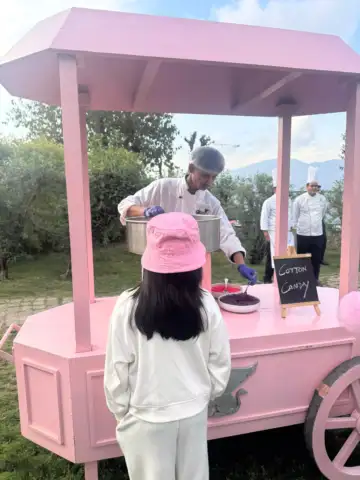
As the day light fades, the space comes alive in a gentle, unforced way. There's pahadi chai being poured, strong and comforting, alongside local snacks that bring in familiar flavours from the region. For children, there's a touch of fun with freshly spun cotton candy, adding a sense of playfulness to the setting.
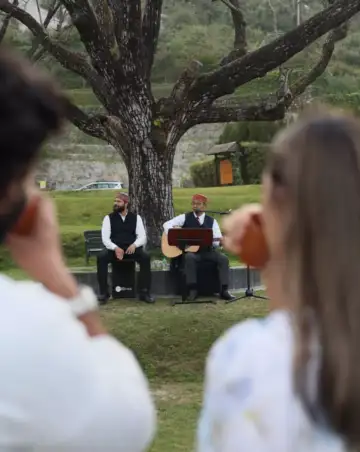
Local musicians take their place, singing melodies that feel rooted in the hills, adding warmth without being too in your face. It's the kind of music that lets conversations continue, not pause.
Soon enough, the place begins to feel like a shared living space. Guests who started off as strangers find themselves talking, laughing, and settling in. A round of tambola often brings everyone together, breaking the last of the ice. It's not about winning, it's about joining in. People cheer for each other, tease, and carry the energy forward into easy conversations.
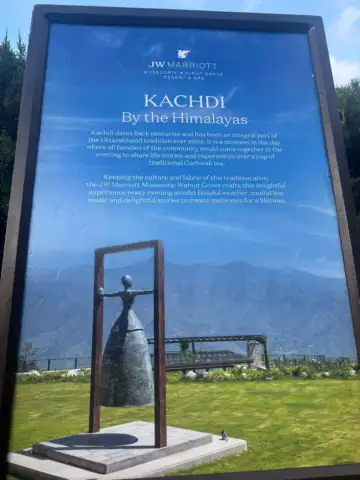
What makes it work is how natural it feels. Nothing is overthought. The tea, the food, the music, and the games all come together in a way that feels familiar, even if you are experiencing it for the first time. The hotel's effort to bring in these local elements are not cultural showcases designed for applause. Instead, they are intentionally unstructured spaces where guests can slow down and observe how community is built in the hills
This approach reflects a larger shift in hospitality. It is about creating moments where guests can step into it, even if just for an evening. At JW Marriott Walnut Grove Resort & Spa, the kachri tea ritual becomes a way to keep guests engaged while also offering a deeper connection to the place they are visiting.
In a place like Mussoorie, where tourism has long been defined by movement…walking the Mall Road, visiting viewpoints--this slower, more reflective approach offers a counterbalance. It gives travellers something they didn't know they were missing: a sense of belonging, even if only for a few hours.
And in doing so, it changes the memory of the destination. The view may still be the postcard, but the feeling of sitting down with tea, surrounded by unfamiliar yet welcoming rhythms, is what stays long after the journey ends.