

Hubballi: For Anitha (30), a waste picker-turned-entrepreneur in Bengaluru, life has changed dramatically in the last two-and-half months.
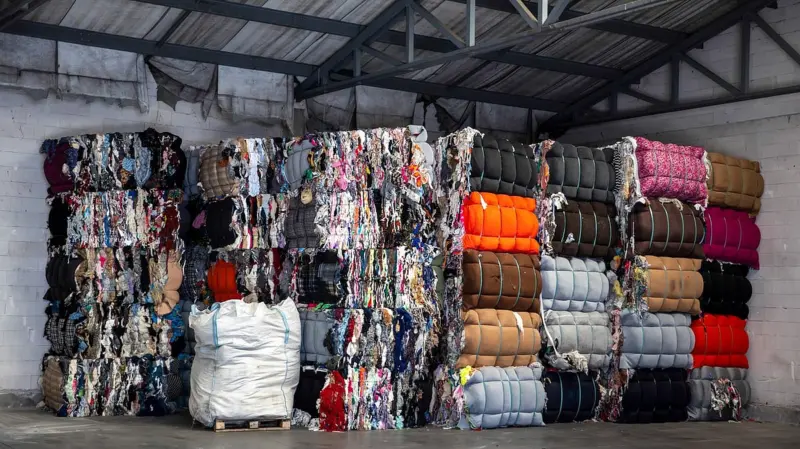
Once engaged in the precarious job of picking rags marked by stigma and uncertainty, she now runs a textile recovery facility (TRF) near Nagarbhavi, employing two others and earning a dignified livelihood. At the facility, she and her team segregate and process soiled and discarded clothes, giving them a second life. More importantly, their model is being considered as a replicable solution for major cities grappling with the growing problem of urban textile waste.
Anitha's TRF is one of three such facilities operating in Bengaluru, contributing to the city's efforts to address its mounting textile waste challenge.
The initiative to systematically handle post-consumer textile waste was first initiated in Bengaluru in 2023 through Saamuhika Shakti, a collective of not-for-profit organisations developed by the Circular Apparel Innovation Factory (CAIF), a neutral industry-led platform and an Intellecap initiative. Hasiru Dala, an NGO, is implementing this model on the ground. What started in Bengaluru has since expanded to seven other cities in India.
India's textile sector battles mounting waste, sustainability gapUnder this system, a network of hyper-local TRFs collects post-consumer textile waste from households and institutions, ensuring that it doesn't end up in landfills. The waste is then sorted based on market needs and sold to resellers, upcyclers, recyclers, and downcyclers. Since 2023, more than 660 metric tonnes of textile waste have been diverted from landfills, according to Rahul Chatterjee, Manager at Intellecap.
Currently, TRFs are collecting waste from nearly 16 wards in Bengaluru and a significant part of this success has been driven by NGOs and women, many of whom were once waste pickers.
Bengaluru alone generates an estimated 220 tonnes of post-consumer textile waste daily. Historically, much of this waste-driven by the boom in fast fashion-was mixed with municipal solid waste and either discarded in landfills or incinerated, further contributing to pollution and greenhouse gas emissions. Today, thanks to coordinated efforts from NGOs and former waste pickers, around 20 per cent of this textile waste is being diverted from landfills and kept out of the environment, says Institute for Social and Economic Change.
Zibi Jamal, Communications Director at Saamuhika Shakti, highlights that TRFs provide an important avenue for post consumer textile waste management and income upliftment for waste pickers, a win-win for both planet and people.
Mouna B C, a member of Hasiru Dala, adds that TRFs are already preventing 50 to 70 tonnes of textile waste from entering landfills daily, while also supporting women's livelihoods.
"Textile waste makes up nearly four percent of Bengaluru's solid waste. By collecting and processing it, entrepreneurs like Anitha and Indumathi are reducing environmental damage while simultaneously creating economic opportunities for over 140 workers," she says.
However, Mouna notes that only certain parts of the city currently participate in sending their old clothes to dry waste collection centres (DWCCs), with many households still disposing of them unscientifically.
Meenakshi Solanki, manager at Saahas Zero Waste TRF, explains that her centre processes about 25 tonnes of textile waste a month, with 90 per cent being post-consumer waste and 10% pre-consumer waste. She emphasises the need for TRFs to scale up, both in terms of the volume of waste they process and the income they generate.
"At present, textile waste sent for recycling and other purposes fetches anywhere from 50 paise to Rs 10 per kg. This rate varies depending on the quality, end-use processing and whether the material is pre- or post-consumer," she says and calls for government incentives to support the sector with significant growth potential..
Even though certain authorities, including the textile commissioner, remain unaware of the initiative, these community-led centres demonstrate how grassroots efforts can produce both environmental and socio-economic benefits.