




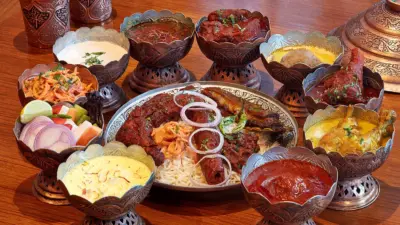

"Nothing about wazwan is rushed," my host remarked as I sat down on a Kashmiri carpet for a meal. As we gathered on the floor seating, our room carried the quiet anticipation reserved for something extraordinary.
In the backdrop, soft notes of the santoor mingled with the fragrance of saffron and kehwa, and a handcrafted copper tashnaer was passed among guests. Warm water was poured over waiting hands in a centuries-old gesture of welcome. It marked the beginning of wazwan, one of Kashmir's oldest living traditions; a ceremonial feast where generations of family recipes, craftsmanship, and hospitality come together to celebrate the valley's rich culinary heritage.
An elaborate copper trami arrived and as the sarposh (the ornate copper lid) was lifted, fragrant rice appeared beneath an array of delicacies. Smoky seekh kebabs, succulent methi maaz and one exquisitely prepared course after another arrived in a precise sequence. The meal culminated with gushtaba, silky hand-pounded meatballs in velvety yoghurt gravy, revered as the crowning glory of an authentic wazwan.
Never-ending platter
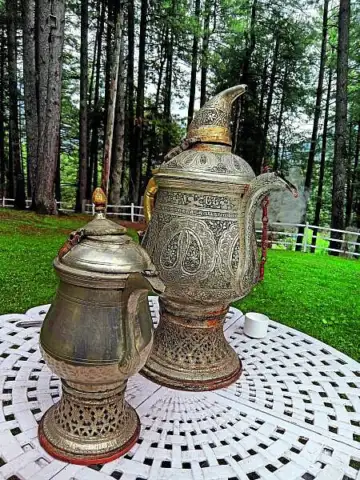
Every ritual has a purpose and the experience begins long before the first bite, believes Master Chef Zahir Abas Wani of Welcomhotel by ITC Hotels, Pine N Peak, Pahalgam. He says, "The wazwan feast begins with dashtpaak, a cherished Kashmiri tradition that symbolises the purification of hands before the meal. Guests are seated on the floor, where the host performs this welcoming ritual by pouring water over their hands using a traditional copper vessel known as the tashnaer. The term dashtpaak itself translates to 'purification of hands', marking the beginning of an experience rooted in warmth, hospitality, and respect."
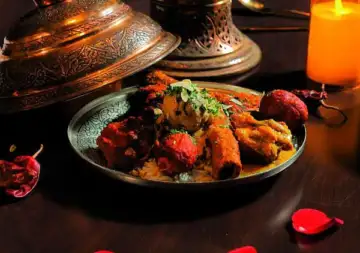
It struck me that in an age obsessed with speed, Kashmir's greatest culinary treasure continues to honour slowness. Chef Wani adds, "One by one, the waza presents an elaborate sequence of dishes, beginning with the iconic rista and culminating in the signature gushtaba. Between these two classics, guests are treated to an extraordinary spread that can feature anywhere from a dozen to nearly fifty meticulously prepared delicacies, making wazwan not merely a meal, but a celebration of Kashmiri culture, craftsmanship, and hospitality."
Where the feast begins
Behind every wazwan is a team of wazas or master chefs who carry forward the art not through cookbooks or culinary schools, but through years of practice. "Wazwan is much more than a collection of recipes; it's a living tradition that has been protected by generations of wazas," says Chef Naresh Kharbanda, Executive Chef at Radisson Collection Hotel & Spa, Riverfront Srinagar. Everything is passed on from one generation to the next through observation, practice and trust.
Chef Kharbanda explains, "There are techniques that cannot truly be written down. They have to be experienced and that's what makes wazwan so special. Every waza carries a part of Kashmir's culinary heritage with him. Even today, many of the spice combinations, cooking sequences and finishing techniques remain closely guarded family traditions, passed down only to trusted members or dedicated apprentices."
ing the kitchen at work, I finally understood what he meant. There were no measuring cups or recipe cards. Young apprentices stood quietly beside seasoned cooks, learning through repetition rather than instruction. Chef Kharbanda explains, "The preparation of signature dishes such as rista and gushtaba continues to follow centuries-old techniques. The meat is hand-pounded on a stone slab known as the kanyen using a wooden mallet called the goshpara, creating the smooth, delicate texture that defines these iconic dishes. While modern equipment can make the process faster, these traditional methods continue to be valued because they preserve the authenticity and character of the dishes."
A trami platter is often shared among four people, and is designed to dissolve barriers and allow conversations to flow.
Use of spices
The soul of Kashmiri food lies in its restrained yet deeply aromatic spice palette. Chef Srinivasulu A, Brand Chef of Chor Bizarre Restaurant (that serves 36 dishes in wazwan), credits the usage of authentic Kashmiri spices for unique flavours in the local dishes. He says, "Kashmiri red chilli lends the signature crimson hue without overwhelming heat, while fennel and dry ginger create the sweet, warm depth that defines many wazwan dishes. Mawal flowers (cockscomb) add a natural red colour to classics meat dishes such as rogan josh, rista and marchwangan korma, saffron brings luxury and fragrance, and asafoetida contributes a savoury note in Pandit cuisine, and mustard oil ties everything together with its unmistakable pungent character."
By the time I left Kashmir, I realised I wasn't carrying home not just memories of extraordinary meals but also the warmth of people who believe feeding someone is among the highest forms of affection.
Beyond the banquet
Kashmir's culinary story stretches beyond its grand banquets. Some of my favourite discoveries came from humble neighbourhood kandurs (bakeries) and street shops, where local breads like girda, lavasa, bakarkhani, kulcha and sheermal emerged warm from wood-fired ovens.
Paired with a fragrant cup of saffron-infused kehwa or the valley's iconic salty pink noon chai, these local favourites offered some of the most authentic flavours of Kashmir.
Equally memorable were humble home-style classics such as haakh (leafy greens), nadru yakhani (louts stem cooked in yogurt), dum aloo and charcoal-grilled tujj (grilled chicken), accentuated by flavours of locally-grown spices like fennel, dry ginger and saffron.