
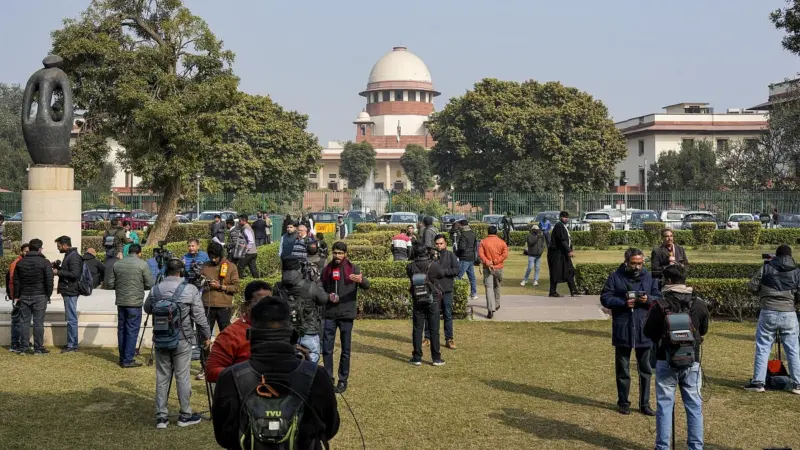

New Delhi: Terming the siphoning of over Rs 54,000 crore by digital frauds as "absolute robbery or dacoity", the Supreme Court on Monday told the Centre to draft a standard operating procedure in consultation with stakeholders like the RBI, banks and the Department of Telecommunications to deal with such cases.
A bench of Chief Justice of India Surya Kant and Justices Joymalya Bagchi and N V Anjaria said that the amount siphoned off by digital fraud was more than the budgets of many small states.
From fake texts to digital arrests to cloned voices - scams enter a new phaseHaving noted that such offences may be due to either collusion by or the negligence of bank officials, the court stressed the need for timely actions from the RBI and the banks.
In a slew of fresh directions, the court asked the Ministry of Home Affairs to consider the Standard Operating Procedure of the Reserve Bank of India and similar SoP or decisions of the Department of Telecom and come up with a draft MoU in four weeks to effectively deal with such offences.
The bench also noted that the RBI has crafted an SOP prescribing action by the banks to temporarily hold debit cards to prevent cyber-enabled fraud.
The court directed the CBI to identify digital arrest cases and asked the Gujarat and Delhi governments to accord sanction to the federal probe agency to proceed with the investigations in the identified digital arrest cases.
High-level panel formed to examine digital arrest issues: MHA tells Supreme CourtThe court also asked the RBI, the DoT and others to jointly hold a meeting to come up with a framework for providing compensation in digital arrest cases. It said a pragmatic and liberal approach is needed to deal with the award of compensation to digital arrest victims and posted the plea for a further hearing after four weeks.
The court asked the authorities to file fresh status reports before the next date of hearing.
On December 16, the court asked the Centre to look into the suggestions put forward by the amicus curiae in ensuring compensation to victims of digital arrests, while voicing its concern over the enormous amounts taken out from the country by cyber criminals.
In 'digital arrests', gullible citizens are duped of their money by fake judicial and law enforcement authorities.
The court had on October 17, 2025 took a suo motu cognisance of rising incidents of online frauds in the country, especially 'digital arrests'.