





It's a Saturday morning in Singapore's Tiong Bahru, and walking around in a different country lined with greenery, neat sidewalks, and sun-drenched paths brings an easy kind of bliss.
The architecture stands out with neat rows of Art Deco buildings within which sit these cool, almost hidden stores. It has everything a new-age, hip neighbourhood should: the right mix of culture, history, and youthful cool.
A mindful version of Singapore seems to be taking shape - most visible in the growing crop of community-led, creatively inclined spaces that offer locals and travellers something different: a chance to experience the city slowly, up close, and more personally.
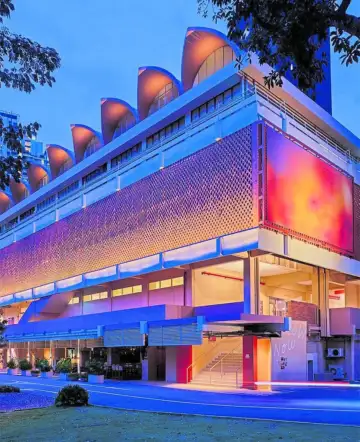
With its minimal, design-forward spaces, New Bahru feels like a haven. The once school classrooms have been transformed into intimate studios, cafés, and shops. You drift from a curated rack of local fashion to an artisanal leather studio, hop between matcha bars and aromatic coffee spots, or somehow find yourself lingering in chic bookstores.
In Tanjong Pagar, KADA Maxwell, housed in the former St Andrew's Mission Hospital - a beautiful building dating back to 1923 - draws in everyone: café-hoppers, pilates, girls, gym-goers, and the occasional visitor there for the vibe.
Tucked away near Chinatown is 195 Pearl's Hill Terrace that housed the police barracks. You can still feel the past in the scuffed corridors and sun-faded stairwells. Now, the same spaces have been taken over by independent studios, galleries, and creative businesses. Singapore is a fine example of a city that restores old buildings really well, without over-polishing them or turning everything into glass towers. Consequently, you get to experience a simpler, nostalgic side of the city.
Made for slow wandering, Joo Chiat Road feels like watching Singapore unfold on a single stretch. It's dotted with charming new boutiques that hold on to its Peranakan roots, something you might recognise from the movie, Crazy Rich Asians. One moment it's modest old shophouses, then suddenly, ornate Peranakan homes in soft pastels, and just a little further down, Art Deco buildings with a tropical, slightly worn charm.
Not just fun and games!
While you're doing all the easy, slow things around the city, there's always this underlying sense of how Singapore came to be. It's a true melting pot - Malay, Chinese, Indonesian, a touch of Arab influences - all coming together to shape what Singapore is today.
A good way to experience its history is to hop onto a vintage Vespa sidecar and take a tour through the neighbourhoods, as the city moves around you.
Katong and Joo Chiat are now among Singapore's most recognisable Peranakan enclaves. While you're at Joo Chiat Road, it feels like it's important to take a moment to understand the culture. The tour traces the lives of the Straits-Chinese families who settled in British Malaya and intermarried with local Malays, creating a culture that is layered, distinctive, and still very much alive. Many were prosperous merchants who played a key role in shaping modern Singapore, which explains the beautifully preserved buildings that once served as shops, homes, and even seaside bungalows.
Peranakan way of life
For a deeper dive, I headed to the Peranakan Museum. It feels less like a formal museum and more like stepping into someone's home - rooms filled with heirloom furniture, delicate beadwork, and family photographs. The museum details the Peranakan way of life, including wedding ceremonies, religious practices and funeral rites. There's a love for the ornate and the beautiful in Peranakan culture, and you notice it in the details: enamel tiffin carriers and dishware in pinks and blues with delicate floral motifs; intricately beaded slippers; embroidered lace blouses and sarongs influenced by the Netherlands and Indonesia; and detailed, carved teak furniture and fine porcelain from China.
Maritime history
Singapore has always been the beating heart of the maritime era. Back then, ships used to crowd the docks, their holds filled with textiles, spices, and ceramics and land traders from everywhere - Arabs, Indonesian, Indians. You still catch glimpses of that past in Kampong Glam, where old shophouses that once belonged to spice traders and textile merchants now house slow-fashion boutiques, minimalist cafés, and perfumers quietly distilling oudh into handblown glass bottles.
At the centre of it all is the Sultan Mosque. Its story goes back to 1824, when it was built for Sultan Hussein Shah, though the structure you see today took shape in the late 1920s. A short walk away, the Malay Heritage Centre, once the Sultan's palace, sits tucked behind gates, shaded by frangipani trees. Now, Kampong Glam, the neighbourhood in which the mosque is located, is a map that blends the past and present.
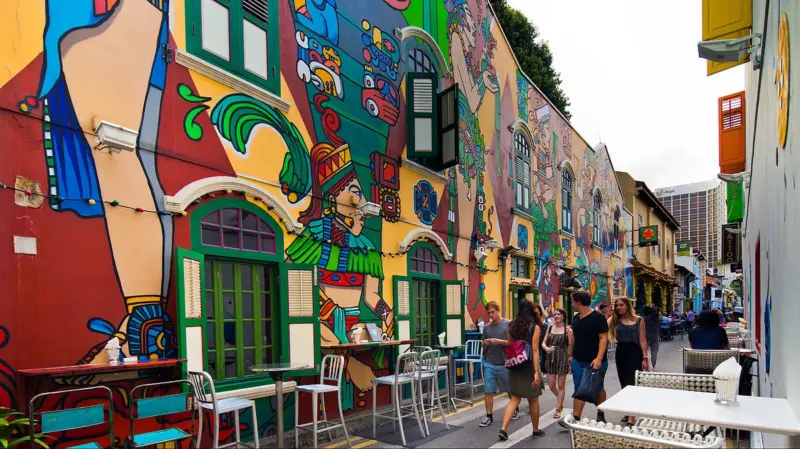
There's street art across the walls; famous artist Yip Yew Chong's mural traces the area's journey from a bustling port town to the cultural quarter it is now, hawkers selling satay (street food) and teh tarik (tea), and blacksmiths at work. Haji Lane is just the place if you like flipping through vinyl or hopping from one bar to the next.
Peranakan in a bowlPerhaps the most fun I had learning about the city was hopping onto a vintage Vespa sidecar and riding through Tiong Bahru. The Art Deco heritage estate is filled with striking architecture and murals that capture Singapore's slower, earlier days. They are a delight to look at - old-school ice cream carts, biscuit tins, and a 1950s provision shop, among others. The neighbourhood also has a wet market - distinctly Singaporean. You shop downstairs for fresh produce, then head upstairs to the hawker centre, where local dishes compete for your attention.
Singapore has long carried the image of a quick, almost checklist-style family destination. And yet, there's space for slow, unplanned afternoons, for lingering over tea with nowhere else to be.