
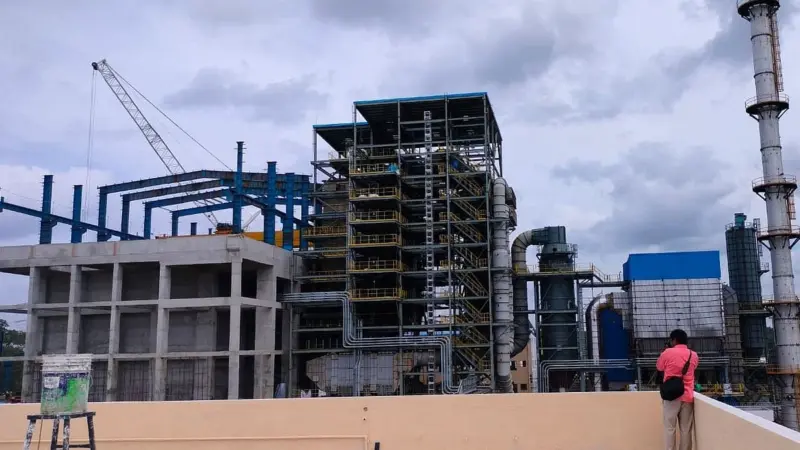

Months after getting a show-cause notice for flouting the environment laws, the Waste to Energy (WtE) in Bidadi has been given a clearance by the Karnataka State Pollution Control Board (KSPCB).
The 600-MT per day plant with a capacity to generate 11.5 MW of power was issued show-cause notice in June 2025 after the KSPCB found that the plant had not obtained authorisation as per the Solid Waste Management Rules.
The plant began operations in December 2024 and was shutdown for three months following an accident that killed five persons in January 2025. The incident had attracted the attention of activists who demanded immediate halt to the operations of the plant.
The matter was taken up by the Central Pollution Control Board which was directed to monitor the operations of the WtE plants across the country. The Board had issued directions Karnataka and eight other states, including Maharashtra, Andhra Pradesh, Telangana, Gujarat, Madhya Pradesh, Uttar Pradesh, Uttarakhand and Haryana.
No-cost rangapravesha at Bidadi arts venueThe KSPCB reported that online continuous emission monitoring system has been installed in the Bidadi plant to monitor particulate matter (PM), sulfur dioxide, nitrogen oxide, carbon monoxide, hydrogen chloride and others.
Sources in the KSPCB said the plant has been allowed to operate after a compliance letter was sent. To a question, the source said, "The WtE plants are still in the nascent stage. Once the Centre issues guidelines, the emission monitoring can be enhanced to include heavy metals and other pollutants."
Meanwhile, the CPCB said that guidelines on incineration-based WtE plants were being finalised. The Board said that a draft guideline issued last August elicited response from only six states.
It said reminders were sent to stakeholders in the first week of January and February, seeking their comments. "The comments from most of the stakeholders are awaited, and the same are important for harmonisation of the guidelines with the overall statutory and policy framework," it said, requesting three more months for the finalisation of the guidelines.