




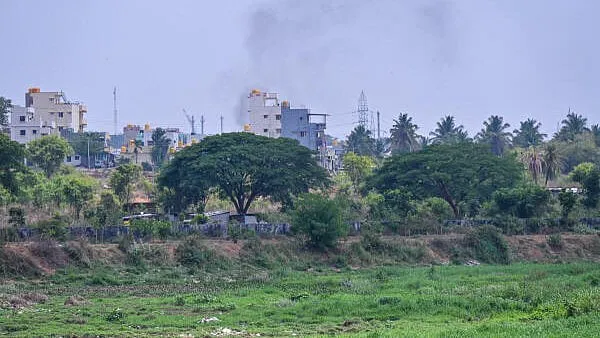

The Karnataka government's decision to proceed with the proposed Greater Bengaluru Integrated Township (GBIT) at Bidadi marks one of the most ambitious urban development exercises attempted in the state in decades.
Envisioned as an AI-powered integrated township spread across thousands of acres, the project aims to create a futuristic satellite city that could ease pressure on Bengaluru while generating employment and investment. With Deputy Chief Minister D K Shivakumar announcing that nearly 80% of landowners have agreed to part with their land and that the final notification will be issued by June 30, the project appears to have cleared a critical political and administrative hurdle. On paper, the compensation framework appears considerably more humane than earlier land acquisition models. The government is extending benefits under the Right to Fair Compensation and Transparency in Land Acquisition, Rehabilitation and Resettlement (RFCTLARR) Act, 2013, alongside livelihood assistance for affected families until compensation or developed sites are handed over. The promise of developed land-sharing, future appreciation, and improved connectivity through Metro and road may genuinely benefit many landowners if implemented transparently. Unlike past acquisitions, where farmers were left stranded after losing their primary source of livelihood, the present framework at least acknowledges the economic transition that displaced agrarian communities must navigate.
Bidadi township: A test of balance
However, the larger concerns cannot be dismissed as anti-development sentiment. Former Prime Minister H D Deve Gowda has raised legitimate questions about acquiring fertile agricultural land and its implications for food security. Karnataka cannot endlessly urbanise productive farmland around Bengaluru without considering the cumulative impact on agriculture, groundwater, and ecological sustainability. The state must simultaneously identify future industrial and township corridors in regions where water availability is more abundant.
The project's success will depend not merely on engineering or investment, but on trust. The scars of the abandoned Aerocity acquisition near Devanahalli remain fresh, where prolonged farmer protests eventually forced the government to retreat. Bidadi must not follow the pattern. Every affected family - including landless labourers dependent on the local rural economy - must feel included in the transition. Most importantly, GBIT must not replicate Bengaluru's civic failures. The state now has a rare opportunity to build a city before congestion and chaos overtake planning. Infrastructure, water management, sewage systems, public transport, and green cover must precede large-scale habitation, not follow it years later. If executed with foresight, Bidadi could become a model satellite city. If driven purely by speculative real estate and political haste, it risks degenerating into yet another urban crisis.