
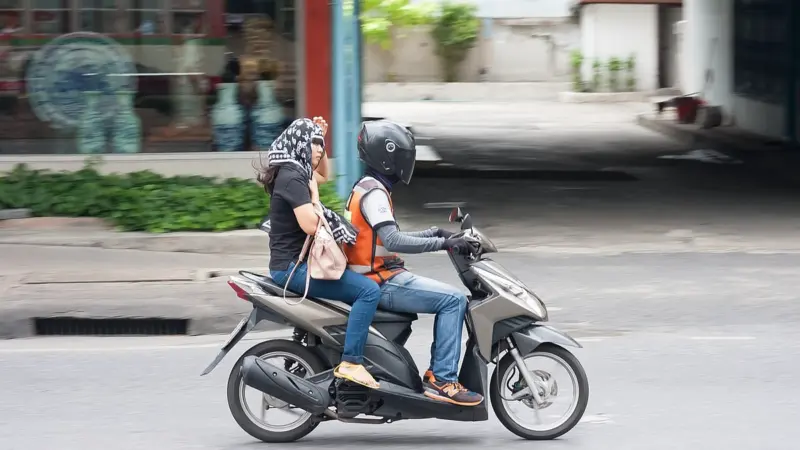

The Karnataka government's decision to move a Special Leave Petition (SLP) against the High Court's January 2026 order permitting bike taxis amounts to policy myopia at a time when urban mobility demands innovation, not obstruction.
Instead of prolonging litigation, the state must urgently frame a robust regulatory framework that prioritises passenger safety while protecting livelihoods.
The government's principal contention rests on classification - that motorcycles are not 'transport vehicles' under the Motor Vehicles Act, 1988. This position is increasingly untenable. The Centre, through the Ministry of Road Transport and Highways, has clarified that motorcycles fall within the definition of 'contract carriage' under Section 2(7), and can legally be used to carry passengers for hire. The updated Aggregator Guidelines go further, explicitly encouraging states to integrate bike taxis into shared mobility frameworks. Karnataka's legal challenge, therefore, risks placing it in contradiction with evolving national policy.
More troubling is the state's inconsistency. Even as it argues before the Supreme Court for the right to deny permits, a recent communication from Chief Minister Siddaramaiah to Congress leader Rahul Gandhi indicated a willingness to create guidelines recognising the sector. This contradiction exposes a policy vision that oscillates between prohibition and reluctant acceptance. The employment dimension cannot be ignored.
Karnataka begins process to frame policy for bike taxi servicesNearly 1.5 lakh gig workers in Karnataka, many concentrated in Bengaluru, depend on bike taxi platforms for income. In a state that prides itself on being India's technology hub, undermining a key segment of the gig economy sends the wrong signal. If motorcycles are deemed unsuitable as transport vehicles, an obvious question arises: on what basis are they being used by delivery partners of food and e-commerce platforms? Selective prohibition erodes regulatory credibility.
Safety concerns, often cited by the government, are valid - but they are not an argument for a ban. They are a case for regulation. Helmets for both rider and passenger, mandatory insurance coverage, GPS tracking, background verification, and fare transparency are all enforceable safeguards. Several states have demonstrated that bike taxis can operate within structured, accountable systems.
Urban mobility is at an inflection point. Congestion, last-mile connectivity gaps, and rising commuting costs demand flexible solutions. Bike taxis, when regulated effectively, offer an affordable and efficient alternative. The High Court recognised this reality. The state government must do the same. Continuing with the SLP only deepens uncertainty for workers and commuters alike. Karnataka must step back from litigation and step forward with policy. The choice is clear: regulate, do not resist.