




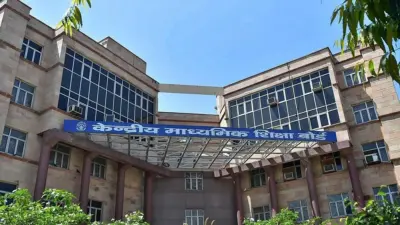

The Central Board of Secondary Education (CBSE) has issued fresh guidelines on the implementation of the three-language policy under the National Education Policy (NEP) 2020, seeking to clarify and recalibrate earlier directions.
The revised framework appears to respond to concerns raised by students, parents, and schools following the May 2026 circular, which required students from Class 9 onwards to study three languages, with at least two being Indian languages. The earlier directive had triggered apprehensions around sudden subject changes, disruption in learning continuity, and administrative constraints for schools managing diverse language offerings. It had also led to petitions before the Supreme Court challenging aspects of the policy.
The latest guidelines appear to respond to these concerns with a more phased approach. The Board has allowed students in Grades 7, 8, and 9 to continue with their existing foreign language choices, while adding one Indian language. This is alongside exemptions for the current Class 10 cohort and relief from a third-language board examination requirement. At present, Grades 7 to 9 will not have board examinations for the third language, which will instead be assessed through internal evaluation. The full rollout is planned to begin with Grade 6 in 2026-27, with the third language becoming a board examination subject by 2030.
CBSE clarifies three-language policy, announces relaxations for current students in Classes 7 to 10; here's what changesThe CBSE has also provided exemptions for Children with Special Needs (CwSN) under the Rights of Persons with Disabilities (RPwD) Act, 2016, as well as for schools located outside India and foreign students returning to India. It has permitted students migrating across states to continue their existing R3 language combination into Class IX and encouraged flexible staffing through existing teachers, retired educators, Sahodaya clusters, and hybrid teaching.
The initial uncertainty around whether students studying foreign languages would be required to abruptly change course exposed how disruptive even well-intentioned directives can become when transition pathways are not clearly articulated. The three-language framework remains pedagogically sound. The emphasis on multilingual exposure aligns with broader educational goals of cognitive flexibility, cultural literacy, and deeper engagement with India's linguistic diversity. The inclusion of Indian languages alongside English and other languages is an attempt to embed linguistic plurality into the structure of schooling itself.
The challenge lies in translating policy to practice. Language acquisition is a cumulative process that develops over time through sustained exposure, regular use, and continuity across grades. It cannot be effectively achieved through abrupt shifts or short-term exposure. It also depends on skilled instruction and consistent classroom support. From a Vygotskian perspective, learning is socially mediated and progresses best when students are guided within their zone of proximal development, where appropriate scaffolding by teachers enables them to move from what they can do independently to what they can achieve with support. While CBSE's assurance of grade-appropriate learning materials is important, the reform's effectiveness will depend on whether schools have the capacity to deliver it meaningfully. Teacher availability, timetable constraints, and uneven institutional preparedness will play a decisive role in shaping outcomes.
Inequity in outcomes
The framework introduces differentiated proficiency levels through R1, R2, and R3, marking a shift in how languages are structured in schools. R1 is the primary language, taught at an advanced level with a focus on literature, grammar, and expression. R2 functions at an intermediate level, emphasising functional communication and comprehension, while R3 is designed for basic proficiency and introductory exposure. This tiered approach moves away from a one-size-fits-all model and allows varying depths of engagement across languages. However, its effectiveness will depend on implementation, particularly whether R3 becomes meaningful language exposure or remains a limited, exam-oriented component, and whether multilingual learning is genuinely balanced across levels.
Equity across school contexts is another important consideration. CBSE schools operate within highly uneven conditions. Some institutions have strong foreign language programmes and trained faculty, while others are still building basic language infrastructure. A uniform policy, therefore, inevitably produces varied outcomes unless accompanied by strong support systems. Seen in this light, the current clarifications are less about policy dilution and more about operational realism. The phased rollout and cohort-based flexibility suggest that the CBSE is responding to feedback loops from schools and parents. However, it also highlights that the policy is still in the process of stabilising.
The three-language policy has a compelling educational rationale, but its success will depend on sustained investment in teacher capacity, curriculum design, and implementation support. Without these, multilingualism risks remaining a structural aspiration rather than a lived classroom experience.
(The author writes on education and international relations and is the co-author of Creativity and Critical Pedagogy in Education)
(Disclaimer: The views expressed above are the author's own. They do not necessarily reflect the views of DH.)