
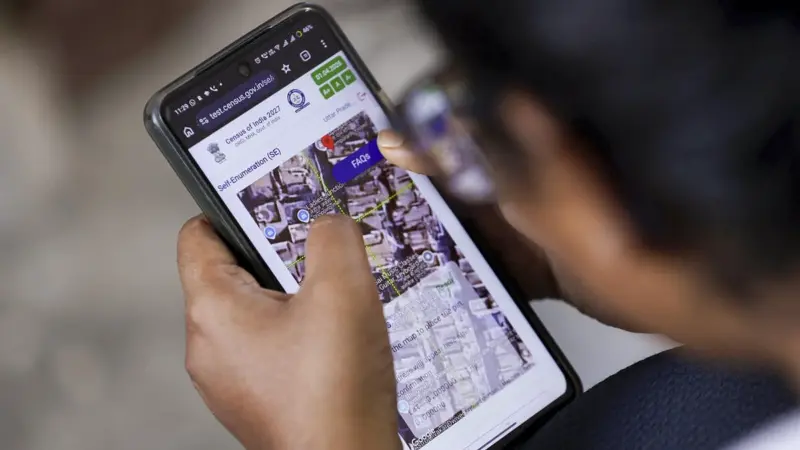

India's much-delayed census - its 16th and eighth after Independence - started this week and is set to be completed by March 2027. Though many parameters and methodologies have changed over the years, the census remains the most credible exercise in profiling the country, serving as the basis of administrative and development policies for successive governments.
The last census was held in 2011; the next edition of the decennial exercise - scheduled for 2021 - was postponed because of Covid. It was delayed even after the pandemic for unspecified reasons. The Union government notified the current census in June 2025. It has since mobilised the systems for the extensive enumeration, which will be covered in two phases.
This census is significant for multiple reasons. As a digital exercise, it is conceived to be more efficient and time-saving. In a country leveraging the progress of the digital age, the census presents an opportunity to combine the capacities of the State and the citizen to the best effect. Individuals can self-enumerate by providing their details through a web-based facility, in 16 languages, before the door-to-door survey commences. Enumerators will collect and submit the data through a mobile app on her/his smartphone. In the first phase of the census, the questionnaire consists of 33 queries, including those related to age, educational qualifications and employment, housing conditions, and assets. For the first time since 1931, caste data will be collected during the second phase of the census. This mapping will have political consequences and is critical to analysing the country's socio-economic profile. Beyond a population count, the exercise involves a compilation of the country's diversities, enabling a true assessment of its character. More than three million enumerators, supervisors, and other officials are expected to be involved in Census 2027.
Findings from the current census will eliminate a data vacuum caused by the delayed enumeration that had prevented efficient development planning. Resources must be allocated based on current and credible data, factoring in the demographic distribution in terms of geography, socio-economic divisions, and other metrics - Census 2027 will provide this crucial reset. The data from the census will also be of vital use to private sector entities, research institutions, etc. With the delimitation of legislative constituencies linked to the census, the exercise also has a strong political context. While the government is reported to have plans to increase the number of Lok Sabha seats based on the 2011 census, to implement women's reservation, there is no clarity on the possibility of another delimitation exercise linked to the ongoing census.