
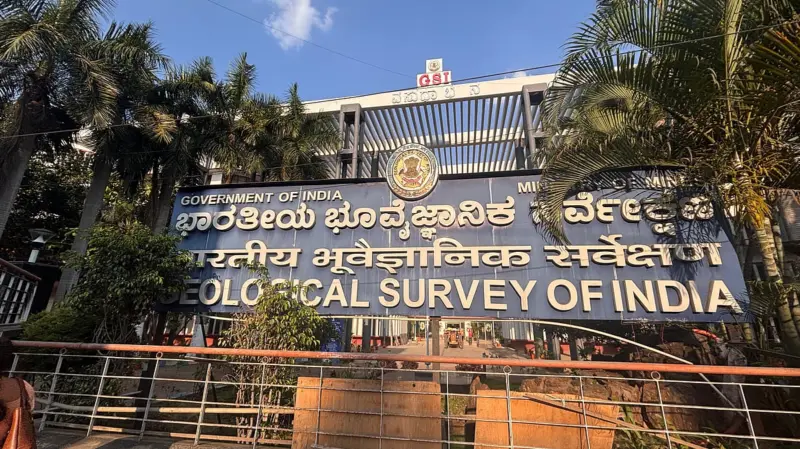

Bengaluru: A group of citizens has decided to meet senior officials of the Geological Survey of India (GSI) to share their concerns over the proposed North-South tunnel road project that will cut through the Lalbagh botanical garden.
The meeting gains significance as the GSI has also commissioned an inquiry to assess the geological implications of the project on the geo-heritage site.
Vijay Vishnupant Mughal, Additional Director General and Head of Department, GSI (Southern Region), Bengaluru, is expected to meet the citizens on Thursday.
During the meeting, citizens plan to petition GSI officials to pursue the recognition of Lalbagh, a 240-acre botanical garden, as a UNESCO world heritage site.
In Karnataka, GSI has recognised six places, including Yana Rock cave in Uttara Kannada and Columnar Basaltic Lava of St Mary's Island in Udupi, as geo-heritage sites. Lalbagh is one among them.
The peninsular gneiss at Lalbagh is one of India's oldest rock formations, dating back to over 3,000 million years.
Bengaluru: Panel inspects Lalbagh over tunnel road concernsThese gneisses were formed during the Archaean times and are mainly composed of Tonalite-Trondhjemite-Granodiorite (TTG), representing a landmark in the geological evolution of the Indian sub-continent.
While the Horticulture Department is responsible for the upkeep of the garden, the GSI is also the custodian of the geo-heritage site.
The GSI was not consulted before the detailed project report (DPR) of the 17.5-km tunnel road was finalised. The tunnel connects Hebbal in the north to Central Silk Board in the south. The DPR requires about six acres of Lalbagh on a temporary basis and one acre permanently.
Last week, Bangalore South MP LS Tejasvi Surya met Union Minister for Coal and Mines G Kishan Reddy to apprise him of citizens' concerns over the tunnel road project.
GSI subsequently constituted an expert committee to conduct a study and submit its report in three weeks.