

Social exclusion was rarely explored in mainstream cinema beyond tokenistic mockery, often reduced to accents, dialects or superficial markers of difference.
In recent years, however, a shift has emerged, with filmmakers bringing anti-caste narratives into the mainstream, confronting marginalisation and untouchability more directly.
Filmmakers like Pa Ranjith and Nagaraj Manjule have redefined the grammar of Dalit representation. Films like 'Madras' (2014) and 'Sairat' (2016) were among the early works to showcase both structural inequality and the everyday textures of Dalit life.
Similarly, Vetrimaaran's 'Asuran', 'Visaranai' and 'Viduthalai' show caste-based violence and police brutality, while Mari Selvaraj's 'Pariyerum Perumal' offers a deeply nuanced portrayal of the Dalit experience. Bollywood is slowly shifting towards portraying Dalit lives through movies like 'Masaan' and 'Dhadak 2'.
However, despite the shift, the portrayals remain incomplete. Dalit protagonists are often reduced to victims, agents of revenge or figures defined solely by socio-political struggle.
Media narratives
One of the first trans woman producers, Zena Sagar who comes from Dalit background, believes Dalit narratives in cinema remain overly symbolic and reinforce long-standing media stereotypes - depicting Dalits as being humble, extremely marginalised, unskilled, and subservient to the systems, and denied access to the fullness of citizenship.
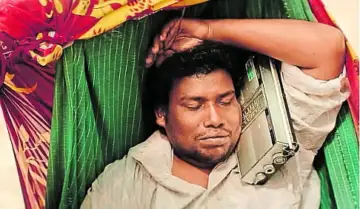
Yogi Babu's 'Mandela' offers a satirical take on caste politics.
She adds that this influence stems from how media, mainstream narratives have depicted Dalit lives. "This stereotyping limits the imagination of Dalit life and culture. It is important to showcase the daily habits, joys and intimacies, to create more accurate and empowering representations," she says.
Although authorship has shifted to Dalit practitioners in recent years, Zena believes it remains largely limited to only a few filmmakers.
Films like 'Aarakshan' and 'Article 15' were criticised for weak representation of Dalits, often portraying them as submissive characters, reducing Dalit agency and perpetuating an upper caste saviour narrative.
Stereotypes
Although Dalit life in cinema entered mainstream cinematic focus only about 15 years ago, the persistence of stereotypes is jarring.
Women actors reduced to 'Props' of male leads: Movie critic Sandhya Rani at BIFFes"A character has to always be multidimensional in any creative form, but we most often see only two-dimensional characters when it comes to showing Dalits on screen," says Lakshman K P, theatre practitioner and co-founder of the Ambedkarite art collective Jangama.
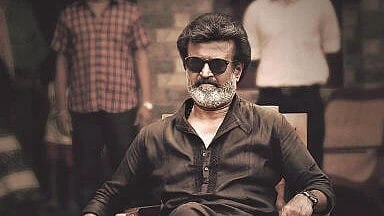
Karikaalan in 'Kaala' is a beautiful portrayal, he says. The character embodies wholeness. He is an activist, but also someone who plays cricket with children, shares meals, and inhabits five-star hotels with ease, thus breaking assumptions about what Dalit life looks like.
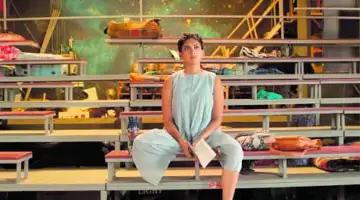
Rene from 'Natchathiram Nagargiradhu' was criticised for being inorganic.
In 'Pariyerum Perumal', the boy's father is another striking portrayal - a performer shaped by irony, more feminine than the mother.
Wholesomeness of Dalit literature
Revenge and violence, or submission, are often presented as the only responses in Dalit narratives. But in real life, many possibilities can be found, he says.
He cites Devanuru Mahadeva's 'Kusumabaale'. When Garesidda Maava is caught stealing about 16 coconuts, he says it isn't wrong if he was simply quenching his thirst. When asked if he can drink so many, he says yes. Taken aback, the owners, initially planning to fine him, back off, realising his desperation.
Quoting this, Lakshman says, ideas of justice emerge from lived experiences. Films often frame Dalit characters through dominant-caste morality, which differs sharply from Dalit ways of seeing the world. The agency Dalit characters possess in literature is missing in cinema, he says, citing Saakavva's character from 'Odalala' as another example. She says, If Yama comes, I will tell him this: life in hell cannot be harder than the struggles and hardships I have faced in this earthly world. "The characters have agency, a worldview, a stand and autonomy. This autonomy is lacking in cinema, and that is when the stereotyping of characters and narratives begins," Lakshman shares.
Senior journalist S R Ramakrishna, who has translated Dalit poet Siddlingaiah's autobiography 'Ooru Keri' into English (A Word with You, World), says filmmakers looking to portray Dalit life could explore the wealth of Dalit writing in Kannada. "Siddalingaiah's real-life accounts show a zest for life in the face of adversity," he says. "They can be adapted into films - perhaps Kavitha Lankesh could direct them, with Jaggesh in the lead."
Imagination and cinema as hope
Film scholar N Manu Chakravarthy says, "In the last scene of 'Pariyerum Perumal', the upper-caste girl's father is compelled to admit that there will come a time when we must acknowledge that the tyranny of the caste system cannot go on. The boy in the film is attacked and beaten - the portrayal of violence on Dalits is not an ideological position; it is a lived reality. But there is a futuristic vision when the father says he will have to accept the new reality." Filmmakers should not thrust Ambedkar into narratives, but work out his vision through experiential realities - because he did not carry an ideological position; he emerged from lived experiences, he adds.
In 'Kaala', Lakshman says, Rajinikanth's character is soft, even feminine - friendly with children, sometimes vulnerable, yet assertive.
Madonne Ashwin's 'Mandela', starring Yogi Babu offers a satirical take on caste politics. The film does not rely on violence to depict empowerment; instead, the protagonist asserts dignity and identity by calling himself, Mandela. While some critics found the ending too optimistic compared to the realities of caste, isn't art meant to imagine what is possible?
We need more films like 'Pariyerum Perumal' and its Hindi adaptation 'Dhadak 2', says Dalit thinker and teacher Dayananda Kavi. Films, he argues, should highlight evolving possibilities to transcend caste and build relationships - without romanticising these narratives.
Women narratives
In 'Captain Miller', Shakuntala tells Velmathi that women are subservient irrespective of whether they are from the upper caste or the lower caste. Even in films about Dalit lives and struggles, women often remain on the margins, their experiences overshadowed by narratives driven by male anger, resistance, and assertion.
Dalit cinema is still exploring the idea of Dalit feminism. While Rene in Ranjith's 'Natchathiram Nagargiradhu' (2022) appears as a strong self-assertive figure, her character drew criticism. Vijayashanthi Murthy, who teaches at St Joseph's College of Commerce, calls her portrayal inorganic and preachy, resembling an archetype rather than a fully realised character. "Rene's character also came from a male gaze of what liberation could be," she notes.
Vijayashanthi connects more with Selvi's character in 'Kaala'. "Selvi is bold; she is not shown as meek or somebody who needs the agency or support of a Dalit man," she adds.
Leena Manimekalai's 'Maadathy' also offers a rare, intimate portrayal of a Dalit woman from the Puthirai Vannaar caste considered 'Dalits among Dalits'.
Beyond politics: The art of DhurandharMissing Dalit gaze
Zena believes that representing Dalits in films does little to bring real change. "Representation is a farce idea - it means nothing without ecosystem and structural change. Decisions about who operates the camera, who gets cast, and which films receive funding are all shaped by various factors influenced by market, class, caste and geography, limiting imagination and diversity in storytelling, she says, adding "We also need long term-capacity building programmes to enable structural change."
The soil must be fertile - only then can everything grow. The film industry needs to create a thriving environment for more authentic stories to emerge - more people with lived experience need to be part of the industry.