





Bengaluru: With Delhi's air quality index (AQI) at around 108 in August 2026, air pollution may appear relatively subdued for the season.
But for a city where pollution levels rise sharply after the monsoon and peak in winter, access to cleaner indoor air remains a challenge, particularly for low-income communities.
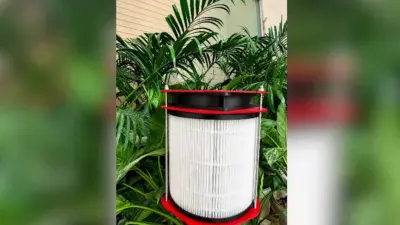
The solution to that challenge has now earned international recognition. The World Economic Forum (WEF) has selected the Global Shapers New Delhi hub as one of the eight winners of its 2026 Global Shapers Innovation Prize for developing a low-cost, modular air purifier to make clean indoor air more affordable for low-income communities.
Global Shapers Community is a network of young changemakers under 30 who work through city-based hubs to develop solutions to social challenges and engage with global leaders.
The project, developed under the hub's Climate Emergency Action Project, has received CHF 10,000 (approx. Rs 11,87,020) as an accelerator prize and is expected to use the funding to deploy 410 purifiers across schools, orphanages, elder care homes and community spaces. The team has so far deployed 25 units, with each purifier costing between Rs 1,700 and 2,100. The challenge is not only to make the purifier affordable but also to raise awareness about access to fresh air, establish a sustainable manufacturing process, fund the initiative and distribute it to people who cannot afford conventional air purifiers.
The purifier uses a high-efficiency particulate air (HEPA) filter, a fan, acrylic sheets, rods, nuts, an adapter and a jack wire in a modular design that allows parts to be easily replaced without specialised servicing. The team says a replacement filter costs around Rs 470 and lasts about six months. Around 20 women have been onboarded for assembly work, receiving Rs 200 per unit.
"The technology inside is not new," the team said, explaining that the innovation lies in the purifier's design and in reducing material and manufacturing costs. Its claimed advantages include compactness, lower cost, lower noise, lower electricity consumption and easier repair.
The team says testing at a NABL-accredited laboratory showed the purifier reduced particulate pollution by about 50% in 2 hours. A fresh three-day simultaneous test is now underway to see the efficiency over time.
The team reports collecting beneficiary testimonials about easier breathing and reduced irritation. The intended beneficiaries will receive the purifier free of cost. The team is exploring CSR funding, grants, institutional purchases and possible commercial partnerships, with about Rs 30-35 lakh in soft corporate commitments and targets distributing around 2,000 units during the coming pollution season.
The WEF recognition provides the project with funding, mentorship and access to potential partners. The opportunity ahead is to convert this recognition into a repeatable model, scaling production of the units from hundreds to serve a larger population of low-income communities in Delhi and, eventually, other cities.