
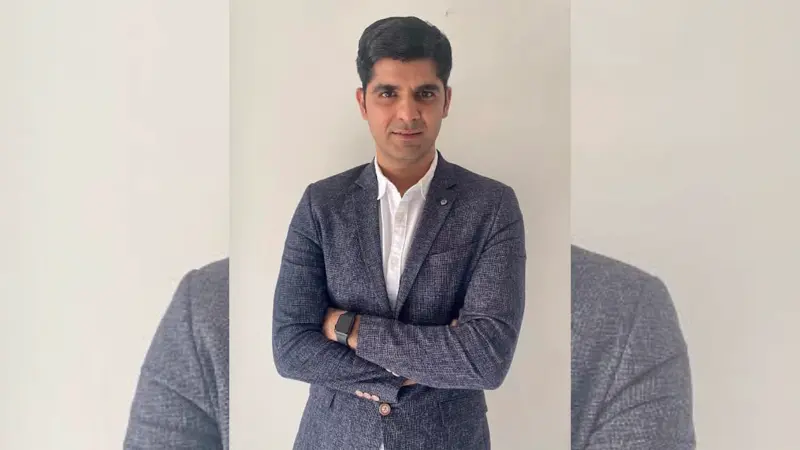

AbhiBus, a key player in India's online bus ticketing ecosystem, has steadily evolved from a backend technology provider to a consumer-facing platform with nationwide reach.
With deep integrations across state transport undertakings and private operators, the company is now focusing on predictability, customer experience, and Tier-2 and Tier-3 expansion. AbhiBus COO Rohit Sharma said in an interview with DH's Hrithik Kiran Bagade that the company's growth is being driven by technology, cross-platform synergies, and changing travel preferences.
Can you walk us through the journey of AbhiBus?
AbhiBus is a 17-18-year-old organisation that began as a software provider for state transport undertakings (STUs), starting with APSRTC around 2008-09, followed by TSRTC and others like UPSRTC and Himachal Roadways. We continue to power their passenger information systems, OPRS, and unified ticketing solutions, including POS integrations.
Just before the pandemic, we pivoted to the consumer ticketing business with AbhiBus.com and our app. Over time, we've emerged as a strong No. 2 player in the bus OTA market. Growth accelerated post the ixigo acquisition, driven by cross-sell opportunities and AI-led customer solutions.
How large is your business in terms of bookings and geography?
For an OTA like us, inventory is the foundation. Our approach has been simple: if a bus sells online, it should be available on AbhiBus. Today, we have about 17 SRTCs and nearly 99% of private operators - around 6,500-7,000 - on our platform. We sell tickets across every state in India and continue to grow strongly in regions where our market share was previously low.
What kind of travellers dominate your bookings?
Bus travel sees a healthy mix of users. Weekday and weekend demand is fairly balanced, indicating both work and leisure travel. Many professionals - teachers, bank employees, government staff - depend on buses for intercity commutes. About 40% of our users are young travellers, and we've seen strong growth in leisure and pilgrimage segments. Destinations like Prayagraj, Ayodhya, Tirupati, Madurai, Goa, Manali, and Puducherry have shown robust traction, particularly among families.
Beyond ticketing, what value-added services do you offer?
Our focus is on solving the unpredictability associated with bus travel. One of our flagship offerings is the "Assured" programme, which addresses four key issues: delays, poor bus condition, staff behaviour, and no-shows. If something goes wrong, customers can receive instant refunds, even mid-journey, based on GPS tracking and AI validation. Features like photo-based issue reporting and automated refunds have improved trust and repeat usage.
We've also invested in "Bus 360," which uses AI to predict bus assignments up to 10 days in advance, enabling features like 360-degree bus views, seat insights, and safety checks. The goal is to make bus travel as predictable as possible.
Can customers book leisure or packaged trips?
Yes, we offer integrated travel packages for select destinations. For instance, Tirupati packages combine bus tickets with darshan access, aligned with temple schedules. These are enabled through partnerships with operators who receive allocations, making it convenient for users to plan end-to-end journeys.
What trends are you seeing in intercity bus travel?
A major trend is the rise of Tier-2 and Tier-3 markets. These segments have been unlocked significantly through ixigo's ecosystem, especially from train users whose tickets remain waitlisted. We've also seen strong growth in sleeper buses, which are increasingly preferred as alternatives to AC train classes. Cross-selling from train bookings has been a key driver here.
Has there been a shift towards sleeper buses?
Yes, significantly. Pre-Covid, the ratio was roughly 70:30 in favour of seater buses. Today, that has flipped, especially for overnight routes, with sleepers accounting for about 70%. This shift began during the pandemic when privacy became important, and operators converted seater buses into sleeper coaches. Now, it's a comfort-driven choice, with travellers willing to pay a premium.
How does bus travel compare with flights and trains?
The biggest challenge has been predictability. Flights are highly structured, while buses have traditionally lacked consistency. We've addressed this through live tracking, better operator standards, and improved visibility into the journey experience. Buses also remain highly cost-effective, typically priced between Rs 1 and Rs 4 per km, and are ideal for last-minute travel since fares don't spike as sharply as flights.
How are you helping operators modernise?
Many operators are still traditional businesses, so we introduce them to technology-driven solutions.
Features like the "pink seat" ensure safer travel for women by preventing adjacent bookings by male passengers. We also provide analytics on
route adherence, fuel usage, and driving behaviour. These tools help operators improve efficiency and service quality.
What infrastructure challenges exist in the sector?
Private bus infrastructure remains underdeveloped, especially boarding points, which are often informal and inconvenient. This is a concern for safety and comfort, particularly for families. However, we are beginning to see improvements in some cities, and we expect more structured boarding facilities to emerge over the next few years.
Is the industry still largely unorganised?
While fragmentation exists, consolidation is underway. Operators who prioritise compliance, safety, and service quality are growing faster. Compared to a decade ago, the industry has become significantly more professional, and this trend will continue.