





Bengaluru: Over the last two decades, T20 cricket has become the ultimate poster boy for the idea that change can help shape the sport for a better future.
And ever since its birth, it has turned cricket into a commercial behemoth. T20s did not just enter the room, it filled it. The sponsors brought in big money, and the game took the path less travelled. And the results are there to be seen.
While Test cricket still made a strong case for itself, the ODIs were left fighting for relevance. The notion that it was boring spread like wildfire. The one-day international bilaterals lost spice, and it didn't take much to understand that the format was dependent on a World Cup year for importance. So change, for relevance, was more of a necessity than luxury.
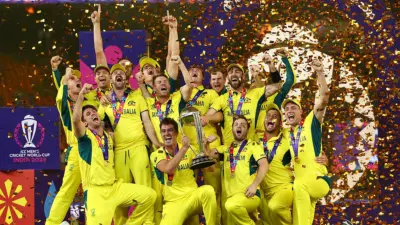
The International Cricket Council (ICC) recently made changes to the 14-team 2027 ODI World Cup format, an increase from the last two editions -- 10 teams in India 2023 and England and Wales 2019.
It is still a 14-team model, but the three lowest-ranked sides will play a round-robin Super Series prior to the main event. The top side will advance to Round 2 (30 matches), which will see 12 teams divided into two groups. The top three from each group and the next best-placed team among the two groups will feature in a Super Seven (21 matches) round. The top four then progress to the knockouts.
The primary goal behind the shift in structure? "The revised format creates greater context, competitiveness and consequence, ensuring meaningful competition," said the ICC. "The increased consequence and enhanced competitive intensity promise to enhance the overall experience for fans while continuing to provide emerging teams with the opportunity to compete on cricket's biggest stage," it added.
In simple words, the new format reduces the chances of dead rubbers, with almost every game expected to carry some significance. It also cuts down the percentage of drop in interest among the viewers.
"Obviously the ICC is trying to spruce things up. To make the tournament as interesting as possible and to sustain interest for as long as possible right through the World Cup," former India cricketer WV Raman tells DHoS. "That's exactly the prime objective as far as one can look at what ICC is trying to achieve."
However, the new format did not go well with a few.
"The World Cricketers' Association (WCA) is concerned by the ICC's announcement regarding the revised format for the 2027 ODI World Cup and believes it raises important questions about transparency, consultation and the game's long-term commitment to global growth," the WCA wrote on its website, handing its support to the Associate nations.
"Any significant structural changes to the game, including its pinnacle events, should be accompanied by clear communication, transparent decision-making and sufficient certainty for players and stakeholders who have planned around previously announced ICC commitments," it added.
And that argument, certainly, has weight to it. In the CWC League 2, eight teams play a whopping 36 ODIs in the multi-year cycle to secure spots in the Qualifiers. And now, they will have to again play another three-team qualifying series to make the cut. And if they don't, they lose out on the opportunity to play the big boys on the biggest stage. Following the decision, Netherlands skipper Scott Edwards did not mince his words. "The ICC talks a lot about growing the game globally but decisions like this make it harder for associate nations to play against the best teams in the world."
And their concerns are truly understandable. You see, the Netherlands made it to the 2023 World Cup ahead of West Indies, Zimbabwe and Ireland. And in the tournament, they also picked up wins against South Africa and Bangladesh.
The previously proposed format assured them of at least six games. And now, they might have to be satisfied with two.
ICC T20 World Cup 2026 | Hybrid Model a logistical nightmareFor a governing body whose idea is to take the game all over the globe, and with its initiation into the Olympics (cricket returned to the LA Olympics 2028 after a 128-year absence), is there a solution?
"The No. 12, 13, 14 teams will feel that they're a bit short-changed, that one of them will only get to play two games, preparing for so long and coming into the World Cup," Raman highlights.
"Maybe what they could have done is that because you're looking at making it a sport in the Olympics, they could have probably had the intercontinental tournaments and added the top two continents.
"When it is an Olympic sport, you try to engage fans from different continents. That is something to look at to make this game global. But maybe that is something that will perhaps happen.
Raman also addressed why the ICC brought about such structural changes. "A lot of matches by past experience and based on the feedback, the chances of having some irrelevant games and the reduced interest of spectators during those games can be avoided, seems to be the idea."
While a few argue with respect to the number of matches, the 61-year-old outlined a valid 'weather' reason as to why there could be a seventh team in the third round of the competition.
"The good move is bringing the seventh team into the next stage (Super 7), because you might have weather interference and there will be situations where a capable side might be out after getting at the wrong end of the stick as far as weather is concerned. So the wild card entry might give a deserving team a chance."
There will also be those who question the Super Seven stage, as it increases the prospect of an extra India-Pakistan game. The arch-rivals have not met in any bilaterals since 2013, and in ICC events, the games between the two, albeit one-sided in the last decade, are still the best return-on-investment game. The equation is simple. More India-Pakistan games, more money. Raman, however, does not see it that way. "I think we should try and not be fixated on one thing here. There has been criticism when ICC don't do things. When they venture into doing it, people will again find a lot of things in terms of context on why it is done. People are not going to keep quiet if it's going to be primarily the objective of a couple of teams playing more games. I don't think that's the basic idea here, he adds.
 International Cricket Council ICC HQ. Reuters File Photo
"From the ICC viewpoint, they'll have to look at the larger picture. There's always this whinging about ICC events' focus is all about India-Pakistan games. People who want to see it with a jaundiced eye, you can't stop them. There are other factors that the ICC needs to weigh in. The main thing they are trying is to make the event interesting throughout.''
The changes have been made to try and keep the tournament entertaining from ball one to the last. People could argue and criticise the details of it. For the ICC, though, it is a very thin line in trying to keep everyone happy and also developing something based on what is best for the game. And that will be a constant dilemma going into cricket's ultimate showpiece.