




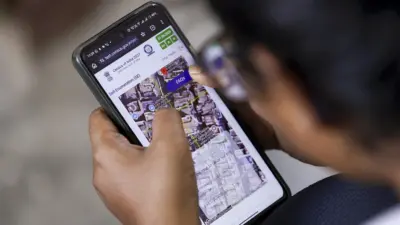

The announcement that the Office of the Registrar General & Census Commissioner, India Census 2027, will also collect data on caste has sparked a debate that will have significant implications for Indian public policy: how should India count its social diversity in a way that is statistically valid, administratively feasible, and politically legitimate?
This question has implications for welfare policy but also for the future debate on representation, reservations, and social justice.
The Census will be taken in two phases. Phase I: House Listing and Housing Census (HLO), will be conducted between April and September, and Phase II: Population Enumeration (PE) will be conducted in February 2027. Currently, according to the indications of the census authorities, the caste data in Phase I will still only record Scheduled Castes and Scheduled Tribes, while all caste categories are to be covered in Phase II, during the enumeration of population. The HLO primarily focuses on housing conditions, basic amenities, and household assets. The objective of this phase has in the past been to build a comprehensive national database on households.
In the 2027 Census, there are 33 questions, compared to 35 in the 2011 Census. Among these 33 questions, Question Number 12 asks whether the head of the household belongs to the Scheduled Caste (SC), the Scheduled Tribe (ST), or any other category. This indicates that in the upcoming Phase I, detailed information on Other Backward Classes (OBCs) and upper castes is not being collected.
Census 2027: Self-enumeration facility availed by 5.72 lakh households in 1st phaseIf the objective is to collect caste-wise data for all communities, why is comprehensive social classification not being undertaken from Phase I itself? Without initial social categorisation, Phase II risks confusion and inconsistency in capturing complete caste data. Although the second phase proposes to cover all castes, this has already raised concern among social justice groups. The OBCs, the MBCs/EBCs, de-notified tribes (DNTs) and nomadic tribes (NTs) ask a crucial question: if caste enumeration is to be carried out, which castes will be recognised, and which official list should be used? Unless a clear and inclusive framework is established at the outset, the credibility, and usefulness of caste data in the 2027 Census may be compromised.
This has sparked widespread debate among social justice activists, particularly those representing OBCs, MBC/EBCs, DNTs, and NTs. Their question is straightforward: if there is to be a caste count, the government must first announce which caste categories will be recognised, what administrative lists will be followed, and how accuracy in data collection will be maintained.
While the SCs and the STs are constitutionally notified categories, the OBC categorisation remains institutionally disjointed. Two official lists exist - one by state governments and another by the Union government through the National Commission for Backward Classes. Many castes appear in state lists but not in the Union list, and the same community may be known by different names across states and districts. This raises a technical question: which list should enumerators follow when recording caste?
Adding the DNTs and the NTs makes the problem more complex. Their long history of exclusion from formal classification means many remain poorly represented. In many states, they are subsumed under occupational groups, place names, or sub-caste formations that are not well documented in national data sources. Even for upper-caste groups, no standardised all-India classification exists for census purposes.
India has already experienced the perils of poorly architected caste data. In the Socio Economic and Caste Census 2011 Socio-Economic and Caste Survey 2011, thousands of caste entries reportedly appeared in different spellings, duplicate names, broken nomenclature, and code mismatches. It should have become a social database; but it became hard to manage because caste names were entered in multiple linguistic forms without adequate standardisation. This should serve as a reminder that caste enumeration is not simply a matter of posing a question, but of having a scientifically validated classification system in place first.
The stakes in Census 2027 are high, as caste data can guide future policy in several areas. Social welfare increasingly involves targeted beneficiary identification. Scholarships, hostel admissions, entrepreneurship schemes, and social welfare schemes rely on accurate targeting of beneficiaries. Far more critical, however, is that Union and state-level debates on reservations still depend on flawed demographic assumptions, as caste-specific population projections are still underway.
Politically, this is important too. Caste statistics could influence debates on sub-categorisation of backward classes, review of reservation policy and under-representation in public offices. In several states, caste demography has a direct bearing on electoral politics and coalition building. This is where data collection needs to be credible.
The government, therefore, needs to go beyond purely administrative preparation and begin a consultation with the intellectual elite. Anthropologists, sociologists, historians, demographers, and public policy researchers must be consulted to build the caste classification framework. State governments should also be heavily involved since they have better local knowledge of caste names, synonyms, and sub-castes. A centrally prepared list without state government validation will inevitably be problematic. Caste in India is highly regionalised, and the census method should be federalised.
Training of enumerators will be essential. In the absence of manuals, caste dictionaries, and computer-based data validation systems, field data collection may once again suffer. Data collectors will need to be trained in both data entry and the careful registration of social identities. The relevance of Census 2027 is that its impact will be far beyond statistics. It will shape India's understanding of inequality and the distribution of public resources, and claims of justice, for the next decade.
A caste census is not just a data collection effort. It is a decision about who gets counted in the national register. It is important to count all castes, and more important to count all castes right.
(Gowd Kiran Kumar is National President, All India OBC Students Association, and editor of Caste Census and Deepening of the Social Justice.)
Disclaimer: The views expressed above are the author's own. They do not necessarily reflect the views of DH.