

External Affairs Minister S Jaishankar played it safe when he told the Financial Times in all modesty on Sunday that there is no "blanket arrangement " with Iran for Indian-flagged ships to transit the Strait of Hormuz, and that every ship movement is "an individual happening".
Jaishankar stressed there is no quid pro quo, but carefully side-stepped United States President Donald Trump's hare-brained ideas for keeping the strait open with a new plan on the fly.
The signs are that the three-week war in Iran is beginning to fray Trump's foreign policy and domestic agenda. Trump has his back against the wall as gas prices keep rising, global gas supply depletes, and the political elite in the Beltway get fidgety.
Iran is resorting to asymmetrical tactics to make the war as economically and politically painful for Trump as possible, knowing fully well that defeating the US in conventional ways is way beyond its capability. Iran's objective is to target the Persian Gulf's energy facilities, blocking oil tankers from using the Strait of Hormuz to create shortages in supply, which in turn could whip up economic turbulence and political problems for Trump internally in the midterm elections that are due in eight months.
In fact, the 'butterfly effect' is already being felt as far away as Asia-Pacific, affecting Washington's China policy. Trump is threatening to defer his planned summit meeting with China's President Xi Jinping unless Beijing lends a helping hand in the Strait of Hormuz. Of course, Trump is whistling in the dark despite the risk that the nine-month trade and tariff truce that the two countries negotiated might unravel, creating a perfect storm in the global economy.
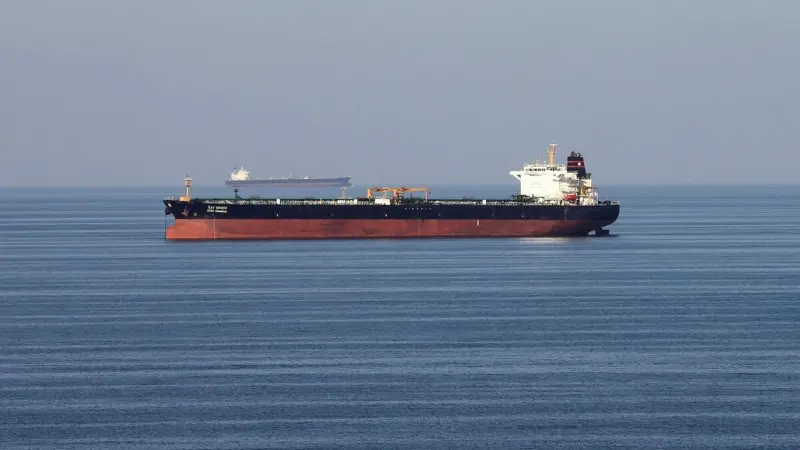
Iran's strategy is gaining traction. Around 100 tankers are reportedly stranded on the approaches to the Strait of Hormuz, creating a 'traffic jam' even as global oil supply is expected to decline by 8 million bpd this month, as per the International Energy Agency. Oil prices have shot up by 50%. The Trump administration officials who spend their Sunday mornings typically hopping from political shows in TV studios are assuring US consumers that the high fuel costs will only be temporary.
The Trump administration is caught off guard, ignoring Iran's warnings that this being an existential war, it would escalate by targeting the Persian Gulf's oil infrastructure, and choking its key waterway. Yet, Trump's distress calls on allies to rally have fallen on deaf ears. For Europeans, it's payback time. Trump read the riot act to NATO and threatened to subject the alliance to neglect but quick came the retort from German Defence Minister Boris Pistorious, "This is not our war; we have not started it."
Germany is historically an ardent supporter of transatlanticism, but this time around, Chancellor Friedrich Merz hit back. "It has been clear at all times that this war is not a matter for NATO. There was never a joint decision on whether to intervene. That is why the question of how Germany might contribute militarily does not arise. We will not do so," he said.
More of this war can only turn it into a war of attrition as geopolitics comes to dominate it. The trends are already there. Three of them can already be identified. First, the closure of the Hormuz has led to heightened awareness that weaponisation of sanctions is a game all can play. Iran went through sanctions for over four decades and will not take it anymore. It has the second-largest gas reserves in the world, but cannot export the commodity. Its puny little neighbours steal its offshore reserves in broad daylight.
The closure of the Hormuz has compelled the US to wink and nod while Iran's oil cargo passes through; Trump is careful not to touch the great oil storage tanks when the Pentagon bombs Kharg Island. What an irony! Isn't it an act of atonement? Doesn't the waiver of sanctions on Russian oil amount to an admission of guilt?
Second, the US is being reminded every single day for the past 20 days that the petrodollar phenomenon is ending. The US' self-proclaimed claim of being the provider of security for the oil-rich states is blown sky-high as it emerges that when the crunch time comes, the US military bases prioritise the security of Israel's interests while the regional states have been left on their own to face the music.
Indeed, the shake-up in the security matrix cannot but impact the thinking of the regional states as well in the direction of greater diversification of their partnerships with an accent on regionalism. Iran will only welcome it and intensify its own regional integration.
Meanwhile, Iran has destroyed much of the ecosystem that the US military bases spawned through decades at the cost of trillions of dollars. Will Trump want to rebuild the bases? No way, when the American people are not even convinced about the raison e'tre of a West Asian war. This must count as the last 'armada' that the US ever assembled in pursuit of imperialist objectives.
Iran has openly admitted to Russia's and China's military support. Arguably, these two superpowers have become stakeholders in Iran's survival. This alone phenomenally changes the geopolitics of the West Asian region. Jaishankar is right in holding breath and treading warily.
Iran's bold posture that it will make an exception for Russia and China in their uninterrupted use of the Strait of Hormuz proclaims a new dawn as consequential in its historicity as the failure of Napoleon's Syrian campaign and the destruction of the French fleet at Aboukir, compelling him to abandon his army in Egypt and secretly sailing for France on August 22, 1799 to seize political power. Leaving command to Jean-Baptiste Kléber, Napoleon abandoned a struggling, diseased ragtag army that eventually surrendered to British-Ottoman forces in 1801.
M K Bhadrakumar is a former diplomat.
(Disclaimer: The views expressed above are the author's own. They do not necessarily reflect the views of DH.)