




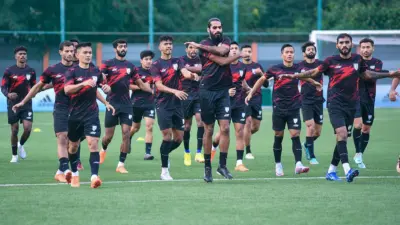

New Delhi: There seems to be no end to the agony if you are an Indian football fan as even the most hopeful among them have begun to lose faith that something good is around the corner.
Not long ago, Indian football was talking itself into believing that a corner had finally been turned with Bengaluru in the backdrop. The national team was winning the SAFF Championship in 2023, beating Arab teams like Kuwait and Lebanon, while the style of football under then-head coach Igor Stimac gave supporters enough reason to believe that India could build on their return to the FIFA top 100.
That momentum is long gone now as India finished 2024 at 126 and slipped to 142 by November 2025, before improving marginally to 138 in June 2026. More than the ranking, though, it is the general direction of Indian football that is worrying.
And a sizeable share of the blame inevitably falls on the All India Football Federation regime led by president Kalyan Chaubey.
As Chaubey and team seek another term, the AIFF is putting considerable emphasis on the biggest headline it can manufacture: Brazil are coming to India. The five-time world champions will play India in Kolkata on October 3, an undeniably glamorous fixture. But there is something almost absurd about polishing the bonnet of a car whose engine has been malfunctioning for years.
'No fan of two-Test affairs, they put undue pressure on team': Gautam GambhirThe timing could hardly have been more striking as the announcement of the Brazil fixture came a day before Jamshedpur FC, backed by one of India's most respected corporate houses, announced their withdrawal from the Indian Super League, leaving the top tier with 13 teams.
The walkout came after Jamshedpur had asked the AIFF for more time to decide on its participation and pay the first Rs 55 lakh instalment under the new club-led model. The AIFF had initially fixed July 20 as the deadline and later extended it to July 31, but Jamshedpur ultimately chose not to continue.
What makes the episode particularly galling is that Jamshedpur had been among the few clubs to maintain a conciliatory position during last season's chaos, when the future of the ISL itself was uncertain. Yet, when the Tata-owned club sought time, the response from the federation was hardly conciliatory. The AIFF's July 22 communication warned of a default charge of Rs 1 lakh for every day of delay.
If the new club-led structure was still being formalised, why was the federation demanding payment with such urgency? And why did a club that had shown such restraint during the previous crisis feel so alienated that its ultimate answer was to walk away?
A senior club official summed up the mood succinctly. "There is now a serious trust deficit between the clubs and the AIFF," said the official. "The clubs had previously dealt with a commercial partner that, whatever its shortcomings, provided a professional structure. With that arrangement gone the system had moved from a professional setup to a 'government-like' way of functioning, where decisions take too long and quick action is rare."
The AIFF, as myopic as ever, spoke about protecting players but far less attention appeared to be paid to the people employed around them while the clubs continued to burn money.
East Bengal, despite being the defending ISL champion, are struggling to find a sponsor after the exit of their previous backer. Mohun Bagan Super Giants remain competitive largely because their owners continue to spend heavily, but winning trophies has not necessarily translated into sustainable business models. The trouble does not stop at the ISL.
I-League clubs are also questioning the economics of the new season as the projected contribution has risen sharply, from around Rs 30 lakh last season to about Rs 1.30 crore. Clubs have written to the federation asking for the figure to be reconsidered but there has been little clarity weeks into the development.
In I-League 2 and I-League 3, the complaints are even more basic; cameras not being properly positioned, last-minute venue changes, logistical problems and the financial burden of complying with decisions taken by an administration that does not have to bear the consequences.
"We as a club may not know what direction will come from up top, and even if we do everything as per their wishes, the consequences will largely fall on our pockets," a lower-league club official said.
India legend Bhaichung Bhutia, who is not intending to contest the AIFF election, has questioned the wisdom of spending heavily on a glamour fixture while the domestic structure is struggling.
"If Brazil were coming free of cost to play a free friendly match, I have no problem with that. But to pay Brazil Rs 50-70 crore to come and play a friendly in India at this moment, the timing is not right," Bhutia told DHoS.
With the October 3 fixture colliding with India's participation in inaugural FIFA ASEAN Cup, a tournament which would provide competitive matches against Southeast Asian nations and prize money, AIFF's preference for Brazil is worrying.
"FIFA ASEAN Cup is the second biggest tournament for any footballer of India after the Asia Cup. We've not qualified for the Asia Cup this time, which means FIFA ASEAN Cup is the biggest tournament any footballer in India can play," said Bhutia.
That is the heart of the matter, Indian football does not need more publicity as much as it needs better structures. The national team has already regressed after Stimac's tenure ended badly as the relationship between the coach and the AIFF leadership deteriorated into an ugly battle of egos.
Since his departure, India have not found a coach of comparable stature or built a convincing long-term technical project. That's down the fact that AIFF has stayed away from splurging cash on finding a coach of that quality. The women's team has fared no better.
After Crispin Chettri helped India qualify for the Asian Cup, the AIFF made a late coaching change, appointing Costa Rican Amelia Valverde on a short-term contract only weeks before the tournament. The preparation programme promised 10-12 international friendlies but India, in reality, had precious little meaningful international exposure against quality opposition.
The results in Australia exposed the gap as Vietnam and Chinese Taipei were not unbeatable opponents, yet India left the tournament without a point and the blame fell on Valverde, whose contract wasn't renewed.
The team's sense of being treated as an afterthought was further magnified by the kit fiasco, another episode that reflected the lack of attention to detail surrounding the campaign. The promise that the women's team is edging closer to World Cup qualification sounds increasingly hollow when measured against the preparation and support they are actually given.
Then there is the trouble with Indian Women's League 2, delayed after the earlier announcement of July 20 as the kick-off date, leaving clubs, players and the entire ecosystem confused over their pre-season preparations.
Such unresolved questions around the leagues - added to refereeing controversies at all levels and uncertainty over club finances - not getting prominence over the AIFF's bizarre decision to spend enormous energy on a proposed name change to 'Bharat Football Federation' has baffle many.
For an administration approaching the end of its first term, the temptation is obvious: talk about Brazil, possible friendlies against other countries, and a future filled with possibility. But a football administration is ultimately judged not by the size of the opponent it can bring to town, but by the strength of the system it leaves behind.
Right now, the system is struggling at almost every level. The biggest question before the AIFF election is not whether Brazil are coming but whether Indian football is actually going anywhere.
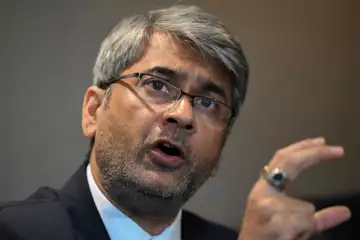 Kalyan Chaubey