




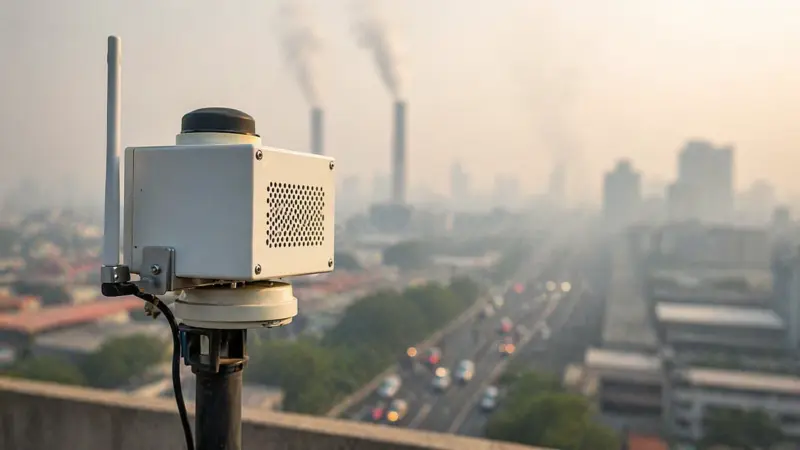

Bengaluru: As low-cost air quality sensors are seen as agents that can bring a paradigm shift in understanding air pollution and take corrective measures, especially in developing countries, a new study shows that much needs to be done before deploying them on the ground due to the problems in getting reliable data.
Bengaluru-based think tank Centre for Study of Science, Technology and Policy (CSTEP) took up an eight-month-long study of 48 sensor devices from six manufacturers who supply the devices in India.
The sensors were co-located alongside a reference-grade air quality monitoring station (AQMS).
"None of the sensor manufacturers met the precision targets for NO2 (Nitrogen dioxide) and O3 (Ozone)," the study said, noting that the manufacturer-reported sensor data can vary substantially between devices and across manufacturers, when compared with the reference data from AQMS.
Specifically, the devices capped NO2 and reported fixed values for O3, which risks underreporting of the pollution levels. NO2 is a precursor gas that eventually leads to the formation of PM 2.5, the harmful fine particulate matter that is associated with lung diseases. The 03 pollution has similar impacts on human health.
Calibration is key
The researchers developed locally tailored correction methods that significantly improved sensor performance. This especially held true for key pollutants, such as NO2 and 03.
The study recommended that low-cost sensors must be calibrated before deployment.
As environmental factors such as weather and pollution patterns differ from place to place, calibration of models should reflect these realities to ensure accurate readings.
"Low-cost sensors have the potential for multiple air-quality-related applications if the data can be made reliable. At Indi-SET, we test the performance of sensors, enabling users to assess the reliability of their devices," Dr Emil Varghese, Senior Associate at CSTEP and one of the authors of the report, said in a statement.
The study called for the establishment of more calibration facilities to facilitate a localised calibration approach in view of India's unique climatic conditions, varied land-use patterns, and differing pollution loads.