




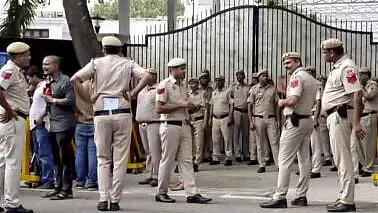

Karnataka Home Minister Priyank Kharge's decision to constitute three committees to recommend police reforms acknowledges the need to improve the force's services, capabilities, and organisational structure.
Retired directors general of police R K Dutta, M N Reddi, and Kamal Pant have been tasked with examining these areas and submitting recommendations within two months. Dutta's committee will review citizen services, including FIR registration and complaint handling, and consider a Citizens' Charter prescribing service standards. Reddi's panel will prepare a modernisation plan covering cybercrime, artificial intelligence, forensic facilities, and emergency response. Pant's committee will examine recruitment, cadre strength, promotions, and career progression. These are necessary interventions, but their success will depend on implementation.
Police reform is hardly a new subject. The National Police Commission (1977-1981), Ribeiro Committee, Padmanabhaiah Committee, and Soli Sorabjee Committee, among others, recommended insulating policing from political interference, establishing independent complaints authorities, ensuring fixed tenures for key officers, and making transfers transparent. The Malimath Committee stressed specialised investigation and better use of forensic evidence. In 2006, the Supreme Court's Prakash Singh judgment directed states to establish safeguards such as State Security Commissions, Police Establishment Boards, and complaints authorities, while protecting tenures and separating investigation from law-and-order functions. Yet implementation remains inadequate, particularly in separating investigation from law-and-order duties. The consequences are visible: routine VIP bandobast and other deployments leave investigators overburdened, delaying charge sheets, and weakening prosecutions. The latest exercise should, therefore, lead to enforceable reforms, including amendments to the Karnataka Police Act, 1963, rather than stop at administrative circulars.
The larger challenge is integrity within the force. The suspension of over 230 personnel in connection with serious offences, including extortion, bribery, robbery, suppression of evidence, and alleged links with criminal networks, points to the need for stronger internal accountability. Such cases demand rigorous investigation and firm action. Even more corrosive is the market for transfers and postings, which is no longer spoken about in hushed tones. Payments for desirable postings incentivise officers to recoup their investments through illegal collections and build funds for future transfers. Persistent complaints also suggest that some officers spend more time brokering real-estate deals than policing. Left unchecked, these practices undermine the purpose of reform. Kharge must address political interference, cash-for-postings, and police misconduct alongside improvements in technology, recruitment, and infrastructure. The real test is whether the committees help make the police answerable to the law and citizens, rather than to political patrons, private interests or criminal networks.