





On the afternoon of December 12, 2024, the Habitat Comedy Club in Mumbai was buzzing. Three panellists with mics sat behind a table on the stage.
To their right stood a giant projector screen. The audience was a group of young men and women, some in early middle age, who had gathered on a weekday afternoon to watch a chess match.
More than 4,000 miles away, in a luxury resort in Singapore, India's Gukesh Dommaraju sat across a chess table from China's Ding Liren - the defending world champion. After four hours of push and pull, a faux pas from Ding gave Gukesh a straight shot at the title.
As Ding's dazed eyes darted around the board, and as Gukesh's zoomed in on the pieces, confirming that he wasn't dreaming, the Habitat crowd let out a thunderous "YESS!". Gukesh was going to be the World Champion. The youngest ever, four years quicker to the summit than Garry Kasparov.
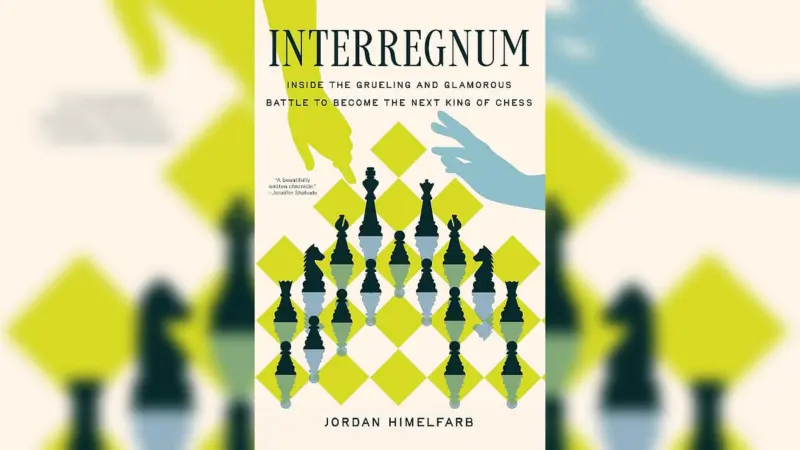
This scene is the final crescendo of Jordan Himelfarb's new book, Interregnum. The truest portrait of a place is found in the lives of the people who live there. Interregnum is their story. Consider how Himelfarb introduces Ding Liren, a new world champion, when the book begins. "Ding is slight and wan. Eye contact is not his forte." We learn that Ding likes to watch the rain, read poetry and philosophy. He detests leather shoes because they remind him of people with power over others. Magnus Carlsen is rendered not as a character one might know but as a force of nature one must endure. He completed fifty-piece jigsaw puzzles at two. By five, he could name the capital and population of every country on earth. Carlsen knows he's the best. During the World Cup in Baku, Carlsen asked his social media manager to draft a tweet to be posted only if he won the tournament. It read: "Chess? Completed." The book's greatest strength is its restrained use of technical jargon. Himelfarb sprinkles detail like a travel writer showing you local parlance - always in context, and just enough to build ambience.
"Chess has long had a communication problem," Himelfarb told me. "It's an abstract, technical game. But it's also a beautiful, dramatic game, full of interesting characters and profound emotions. I wanted to capture all that in a way that resonated for chess fans and newcomers alike."
Chapter five dives into the most jarring loose thread within chess' fabric: the gender disparity. Thirty years after Judit Polgar breached the world top 10, drawing to a close all doubts about the ceiling for women in the sport, there exists an unmistakable institutional apathy.
"It is social residue from a previous century," Himelfarb told me. "The most important barrier to parity is a history of sexism in the sport - from derogatory comments to sexual harassment and abuse. In recent years, the chess world has finally begun to reckon with this, which is crucial. To see women at the very top of the sport requires bringing more girls to the game and encouraging them to stick with it. That begins with showing girls that the chess world is welcoming and safe."
Himelfarb pauses on India, the birthplace of chess as shatranj, the country with more grandmasters than any other, and four of the eight quarter-finalists at the 2023 Candidates tournament. He highlights the parental care with which Viswanathan Anand, an all-time great himself, has nurtured the next generation. It's hard to find a young grandmaster in India who hasn't trained with Anand, either at an academy or at his Chennai home. Take a flight to Chennai today, and as you descend, you'll see a bridge painted in the chess monochrome.
In the last scene of the book, when Gukesh lands in Chennai, soldiers escort him through a crush of cameras and screaming schoolchildren. He is showered with flower petals. A shy, 18-year-old boy from Chennai is, briefly, the centre of India's attention, a position many have only seen cricket heroes take.
We experience sport through stories. Jordan Himelfarb's Interregnum tells the world that chess produces them, too. One just needs to look.