
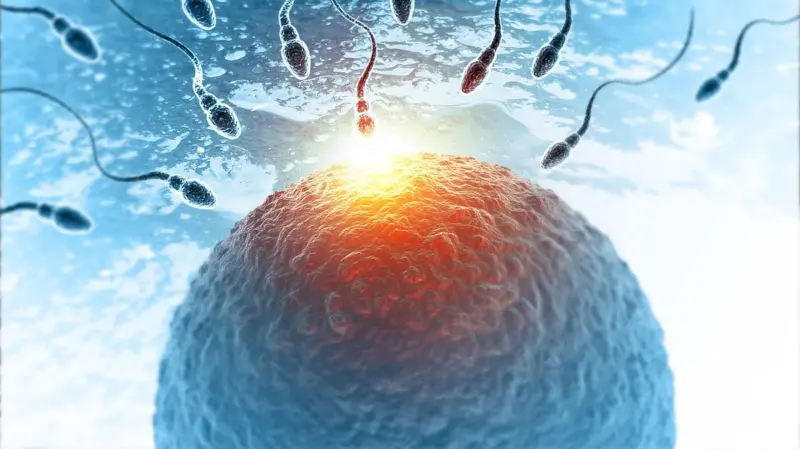

Female fertility is different from a man's because of the limited egg supply which gets emptied gradually.
The term 'biological clock' has been misconstrued to sound more psychological than biological, creating pressure on women to choose fertility over ambition.
However, there is some truth to the limited reproductive function in women, experts have said.
As per fertility experts, the biological clock is not entirely a myth but a clinical phenomenon grounded in evidence-based studies.
Just like many physiological processes, the ovarian function in women is also bound by an internal clock.
World Health Day 2026: Why AI chatbots won't make good doctorsThe ovarian reserve
According to the American College of Obstetricians and Gynecologists, the number of reproductive cells (oocytes or eggs) in the ovaries have a limited reserve.
With about one to two million at birth, the number of oocytes drops to 300,000 to 500,000 at puberty, 25,000 at 37 and 1,000 at 51 years of age.
Not just the number, the quality of these eggs also decrease rapidly, becoming more prone to genetic irregularities and resulting in abortion or an inability to conceive.
Speaking to DH, Dr Hrishikesh Pai, a gynaecologist & IVF Specialist at Lilavati Hospital Mumbai (also Fortis Hospitals, Delhi) said: "By the time of puberty, only a small part of the ovarian reserve is left and with each menstrual cycle, the number further decreases. More significantly, the quality of eggs, especially the chromosomal status, becomes worse as they grow older, which is more likely to cause fertilisation failure, implantation failure, or miscarriage."
The expert further clarified that 'biological clock' exists on a continuum and is not a fixed deadline.
"Biological clock is a term that is considered alarmist by some, but in the field of medicine it is an indicator of a quantifiable and predictable reduction in reproductive potential," said Dr Pai.
Dr. Hrishikesh Pai, a gynaecologist & IVF Specialist at Lilavati Hospital (Mumbai)Biological clock is a term that is considered alarmist by some, but in the field of medicine it is an indicator of a quantifiable and predictable reduction in reproductive potential.Fertility decline after 30s
Fertility decline in women doesn't follow a straight trajectory, it remains gradual up to 30 and then rapidly falls.
Fertility decline is relatively slow but clinically significant after the early 30s, and there is a steeper reduction in fertility after the age of 35 and an even faster reduction after the age of 37, said the fertility expert.
As per research, one out of four women have a compromised reproductive ability between the ages 40 to 44.
According to Dr Pai, decreased ovarian reserve, hormonal imbalances and amplified chromosomal abnormalities are the factors affecting fertility in later reproductive years.
It cannot be paused or reversed
With many women waking up to their limited reproductive bandwidth, more are seeking out assisted reproductive techniques like IVF and egg preservation.
Egg preservation allows women to preserve their eggs at younger ages when both the quality and quantity is optimal.
However, experts say these assisted techniques cannot pause or reverse the declining fertility.
"They are able to maximise opportunities within the current biological constraints but are not able to recover the quality of eggs," said Dr Pai.
Women in later reproductive ages often end up requiring additional IVF cycles, donor eggs and other reproductive choices.
Likewise, egg freezing is also not a guarantee of future pregnancy but a probability-enhancing strategy, informed Dr Pai, saying it largely depends on the age at which the eggs are frozen, the number of eggs preserved and the reproductive health of the woman.
Moreover, poor lifestyle choices and conditions like PCOS, endometriosis and other metabolic disorders can further complicate the picture.
Late marriage and fertility
As per experts, social institutions like marriage have no direct impact on a woman's fertility but the decision to delay conception becomes an indirect cause.
"Sometimes, later marriages can squeeze down the reproductive window. In later conception, couples are likely to have lower monthly pregnancy probabilities," said Dr Pai.
The success rate of an IVF cycle dwindles to almost 10 to 15 percent after 40 years of age, said the expert.
Also, getting pregnant later in life is also associated with a greater risk of gestational diabetes, hypertensive emergencies, premature childbirth and increased chances of a cesarean surgery.