





On September 24, 2014, a group of scientists in Bengaluru erupted in joy. Their spacecraft Mangalyaan, built in just 15 months on a budget smaller than the Hollywood film Gravity, just slipped into orbit around Mars.
India had become the first country to enter Mars' orbit on its first attempt. The Mangalyaan mission cost $74 million. NASA's Mars mission cost $671 million. The gap was not just about money; it was about mindset. Build it yourself. Make it work. Don't wait for someone else to hand it to you. That philosophy is what made ISRO one of the great institutional success stories of the modern era.
Now, a new organisation is betting that this approach can work for artificial intelligence (AI). IAIRO, the Indian AI Research Organisation, launched in January 2026, is India's first government-backed AI research body, built on a public-private partnership model, with a five-year budget of roughly Rs 300 crore. The mandate is clear: build India's own AI capability from the ground up and create the technology itself. IAIRO's own founders make the ISRO comparison. It's a flattering analogy. But how much of it holds up?
Vikram Sarabhai founded ISRO in 1969. He had a simple but radical belief: a poor country can still afford a space programme, but that programme must solve the problems of its poor people. Early satellites, launched via rockets carried to launchpads on bicycles and bullock carts, beamed educational television to rural villages. There were no shortcuts, because there was no money for shortcuts. This is the first lesson of the ISRO story. Frugal engineering is not about being cheap. It's about building for the actual problem when you cannot afford to waste anything.
The second lesson is institutional patience. The first successful launch of an Indian satellite, Rohini, came in 1980, after multiple failed launches and iterations over 11 years. No startup under ordinary circumstances would have survived this long. ISRO needed the backing of a State willing to play the long game, and the government came through.
The third lesson is strategic self-reliance. ISRO chose to build ground up because dependence on another country for critical infrastructure is a risk you never stop paying for. India witnessed this happening with semiconductors and 5G. It is now happening with AI.
Borrowed robots: India's test of trustBut this is where the analogy starts to strain. ISRO could afford patience because space itself moved slowly. Rockets are expensive and take years to design. Launches are expensive, and failures can set you back for years, but being a decade behind the Americans or the Soviets was not fatal. Progress in AI is much faster. It moves in months, sometimes weeks. What is cutting-edge today is a footnote by next quarter. A San Francisco lab can go from idea to global product in under a year. So IAIRO does not have 11 years to find its footing.
The second problem is that of openness. Rocketry thrives on secrecy. A new propulsion system is a national asset and a secret. AI works the opposite way. The biggest AI breakthroughs occurred because researchers shared their data, code, and models freely for the community to build on. An IAIRO that seals itself off from this in the name of sovereignty may end up with irrelevance.
Then there is the talent problem, which is arguably harder to solve. ISRO kept its engineers through an incentive that money cannot easily replicate: the feeling that you are doing something that has never been done before, for a country that is watching. That worked well enough. AI researchers have a different calculus. A sharp AI scientist graduating from IIT or IISc today is choosing between IAIRO and a role at Google or Anthropic, with a salary paid in dollars and stocks that could make them financially independent before they turn forty. Prestige and patriotism alone will not close that gap.
What success would look like
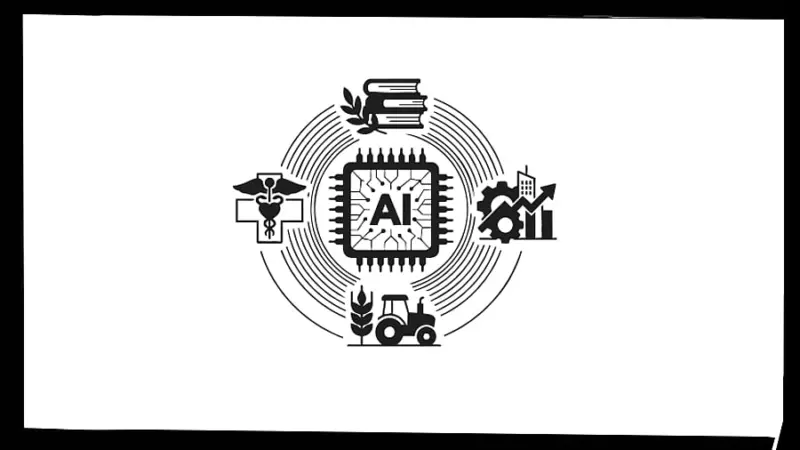
As IAIRO grows, there will be pressure to measure its success the way we measure ISRO's, through landmark moments and breakthroughs. That would be the wrong approach. ISRO's wins are photogenic, like a visible rocket launch or satellite deployment. But AI is critical infrastructure itself. Its benefits surface in applications, like in a doctor's diagnostic screen, in a crop disease alert on a farmer's phone, or in a government form that someone can finally read and fill out in their own language.
In India, hundreds of millions of people live their lives in languages that today's AI systems handle badly, or ignore altogether. A language model that actually works for a farmer in Odisha or a small trader in Tamil Nadu will never trend on social media. It won't look like a moon-landing. But it would reach more people, and matter more to them, than almost anything else IAIRO could build.
AI thrust needs vulnerability auditsThis is the form that institutional patience has to take for AI. Done right, it will be two decades of quiet, unglamorous capability-building that empowers hospitals, agricultural bodies, schools, and state governments in Viksit Bharat 2047. That would include sharing data, training developers, and building tools that quietly serve people who will never think about who built them.
The real question is whether India's institutions have the patience for that. Political pressure is real. Budget cycles are short. There will always be a flashier problem to chase, a bigger announcement to make, and a headline to make that justifies the funding. Holding course through all of that for two decades, without a moon landing to show for it, is a different kind of hard. It may be the hardest thing IAIRO has to do.
That answer, like the organisation itself, is still being written.
(Binod is an IAS officer serving as Additional Chief Secretary [School and Higher Education],Government of West Bengal
Kanadpriya is an AI leader and business faculty at George Mason University, USA, and Subho is an assistant professor of Decision Sciences at IIMB)
Disclaimer: The views expressed above are the author's own. They do not necessarily reflect the views of DH.