
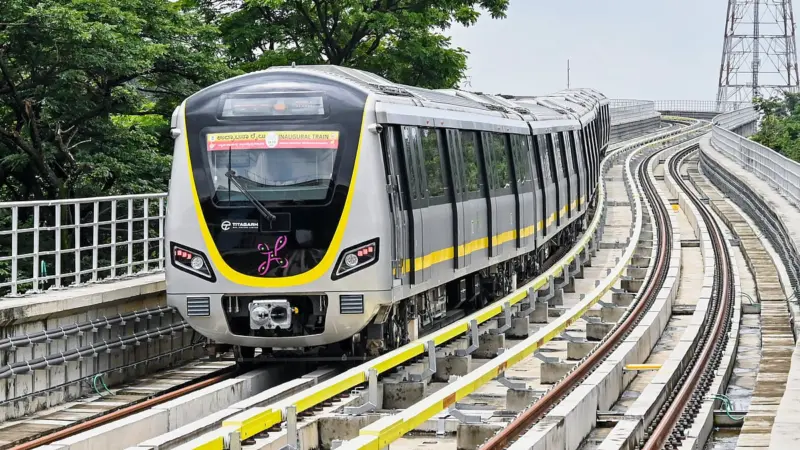

Bengaluru: Namma Metro's Phase 3A, which earlier included only the Sarjapur-Hebbal line, will now add a 6.6-km fully elevated corridor between Kadabagere and Tavarekere along Magadi Road in the city's southwest, official sources said.
The decision, taken recently at the government level, could further delay approval from the Union government for the 36.59-km Sarjapur-Hebbal metro corridor, which will pass through the CBD and connect emerging tech hubs in the southeast.
"The state government has directed us to fast-track the Kadabagere-Tavarekere line, one of the future corridors. We will send the Detailed Project Report (DPR) for both Sarjapur-Hebbal and Kadabagere-Tavarekere lines together in the coming months," a source told DH.
With the DPR for the Tavarekere line expected in the next three months, authorities felt it should be clubbed with Phase 3A so both can be sent to the Centre for approval, the source added.
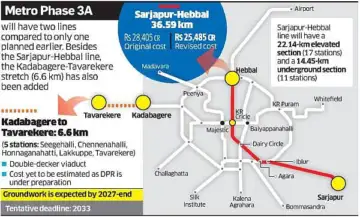
Metro Phase 3A
The Tavarekere line will extend the 12.25-km Hosahalli-Kadabagere corridor (part of Phase 3) and have five elevated stations. It will also feature a double-decker viaduct, with a flyover running below the metro line. Additional details, including alignment, traffic analysis and construction parameters, will be outlined in the DPR. No official colour name has been assigned to this line yet.
However, fast-tracking the Tavarekere line could invite criticism that the metro is expanding outward rather than focusing on core areas.
The state approved the Sarjapur-Hebbal corridor in December 2024, but the Centre flagged its high cost of Rs 776 crore per km.
Following a report from French consultancy Systra, the BMRCL reduced the project cost from Rs 28,405 crore to Rs 25,485 crore. It shortened underground stations from 210 metres to 170 metres and cut tunnelling costs from Rs 300 crore per km to Rs 210 crore, DH reported last October.
The Centre also raised concerns over plans for double-decker viaducts in the overground sections - Sarjapur to Iblur (14 km) and Agara to Koramangala 3rd Block (2.45 km). It argued that flyovers under metro lines could impact ridership.