



Bengaluru: Karnataka's kharif foodgrain production is projected to be 68.87 lakh tonnes in 2026-27, according to advance estimates by the Directorate of Economics and Statistics, indicating a 40% decline from the 2024-25 final estimates and 45% fall from the 2025-26 target.
The state's foodgrain output for this kharif season is projected to be 68.87 lakh tonnes from 41.03 lakh hectares, against 125.99 lakh tonnes from 51.35 lakh hectares in 2025-26. In 2024-25, the foodgrain production was 114.85 lakh tonnes from 60.78 lakh hectares.
Heavy rain lashes central & interior Karnataka; provides lifeline for distressed Kharif cropsThe final production and acreage figures are available only up to 2024-25 as the statistics department is yet to release the final figures for 2025-26.
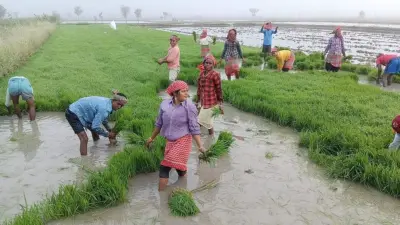
Staple crop rice is the worst-affected. Its area is estimated at 5.58 lakh hectares, compared with 10.63 lakh hectares in 2025-26 and 11.81 lakh hectares in 2024-25. While rice production is projected at 17.84 lakh tonnes, the corresponding figures were 46.37 lakh tonnes in 2025-26 and 39.49 lakh tonnes in 2024-25.
"Food production has been severely affected, with an estimated 82% loss, raising concerns over the availability of food grains," Deputy Chief Minister and Revenue Minister G Parameshwara said.
A senior agriculture department official told DH that sowing coverage stood at 84.10 lakh hectares, 32% short of the target.
"The impact is major, particularly in the Tungabhadra belt, where there is no crop for the second season," the official said.
He attributed the shortfall to incomplete sowing, severe moisture stress and pest and disease outbreaks, which had caused stunted growth and heavy crop loss in the state.
"As a result of these production declines, local prices of essential commodities, including pulses, cereals and oilseeds, may rise. However, the Union government will intervene to stabilise the situation and manage supply," the official said.
Meanwhile, Parameshwara said poor rainfall had also created shortages of fodder and drinking water. "Drinking water is already being supplied in several places through tankers and hired private borewells. However, if water sources themselves dry up, even supplying water through tankers will become difficult. That's the situation we're approaching," he said.
Pulses most vulnerable
Pulses production is expected to be 9.52 lakh tonnes in 2026-27, from 15.27 lakh tonnes in 2025-26 and 14.34 lakh tonnes.
Agricultural economist T N Prakash Kammaradi said pulse production would bear the brunt of the shortfall.
"Karnataka is a major pulse-growing state particularly for red gram, Bengal gram and urad dal. Because climate impacts are uneven and our agricultural markets are nationally integrated, shortages in key regions ripple across the entire country," he said.
He called for a long-term pulses policy addressing demand-supply mismatches, logistics and climate variability, rather than "short-term, impulsive, ad-hoc measures" such as anti-hoarding drives.
To mitigate food inflation and buffer against climate variability, both the central government must implement a long-term pulse framework and Karnataka must establish a unified pulse federation.
Karnataka eyes higher pulses output with boost in tur, urad, moong dal productionFarmers flag debt trap
T Yashavantha, general secretary, Karnataka Prantha Raitha Sangha, said drought has pushed farmers towards debts. "Previously, every crop yield helped renew those debts. But now, without debt renewal, farmers across all crops face the threat of falling into a vicious debt trap," he said.
He alleged that essential commodity prices have surged by 25% to 75% compared with last year, with rice that earlier cost Rs 40 is now selling at Rs 65 and even touching Rs 100. He demanded stronger Public Distribution System supplies, action against hoarding and meaningful drought relief.
Another farmer Bharath, from South Bengaluru district, said: "Large-scale protests by sugarcane farmers demanding a fair FRP based on actual production costs reflect this deep anxiety and crisis. Even crops grown using groundwater are now difficult to harvest. Farmers are continually being displaced from agriculture. Hardly any family in Karnataka can survive solely on agricultural income today. This is the direct result of 30 years of globalisation, privatisation and liberalisation policies."