





New Delhi: The Modi Government on Tuesday set up the High-Level Committee on Demographic Changes (HLCDC) headed by Justice (retired) Prakash Prabhakar Naolekar to undertake a "scientific study" of such changes that arise out of illegal immigration, irregular population mobility and administrative laxity and recommend appropriate measures to tackle it.
The panel, as per an eight-point Terms of Reference, is tasked to undertake an "extensive consideration of the challenges arising from demographic changes, including due to illegal immigration", and analyse the "structural population changes at the level of religious or social communities, especially those diverging from uniform trends" among other things.
The five-member committee has been given a deadline of one year to submit the report. The other members are retired IAS officer Durga Shankar Mishra, former IPS officer Balaji Srivastava, economist Shamika Ravi, the Census Commissioner and Joint Secretary (Foreigners-I) in the Ministry of Home Affairs, who will serve as Member Secretary.
A workpaper by a team led by Ravi, a member of the Economic Advisory Council to the Prime Minister (EAC-PM), had triggered controversy during 2024 Lok Sabha election on decreasing share of Hindu population and rising Muslim share had triggered a controversy.
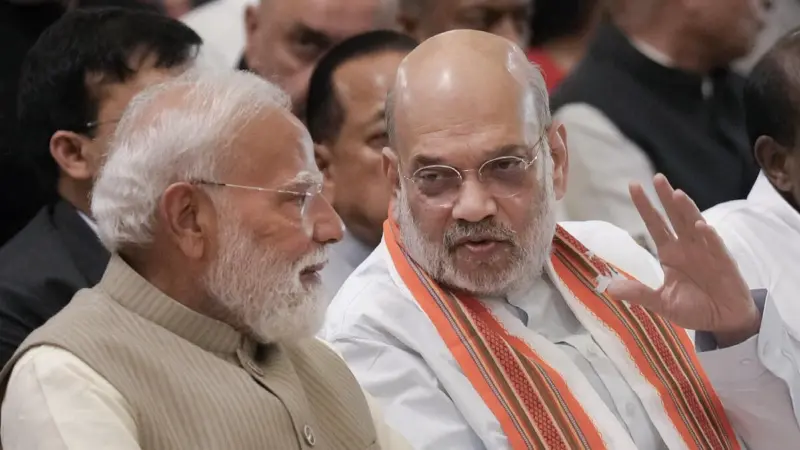
Announcing the setting up of the committee, Home Minister Amit Shah said demographic change is a "serious issue connected not only with our sovereignty, but also with national security, law and order, major changes in the social structure, and the protection of tribal society". Modi in his Independence Day speech on 15 August, 2025 had announced the plans to set up the committee.
Shah said the committee would conduct a comprehensive assessment of demographic changes occurring across India due to "illegal immigration" and "other unnatural causes", analyse patterns of "abnormal population shifts at the levels of religious and social communities" and present a planned and time-bound solution.
A gazette notification said demographic changes have been observed in certain regions of the country which are "not attributable to normal fertility or mortality trends" but are instead emerging due to "external abnormal factors such as illegal immigration, irregular population mobility, and administrative laxity", leading to "extensive challenges".
Although these changes are "most visibly concentrated in the border districts", it said their impact has "extended beyond those areas, now affecting urban centres, industrial corridors, tribal regions, and other socially and economically sensitive areas", impacting public service delivery, local governance, resource distribution, and social cohesion.
Explaining the need for a scientific study of the nature, causes and consequences of such demographic changes occurring across the country and to recommend appropriate policy, administrative and legal measures, it said the existing institutional framework has not been adequately equipped to undertake coordinated, evidence-based, and time-bound evaluation and response to such demographic shifts.
The Terms of Reference also tasks the panel to study the possible causes of such demographic changes, such as variations in fertility, cross-border movement, economic opportunities, and other socio-environmental factors.
The high-level panel will also recommend a "well-organised and permanent operational system" for the legal, fair and time bound identification, detention, and deportation of illegal immigrants already residing in the country.
The committee will identify the underlying factors behind these changes, including illegal immigration, abnormal settlement patterns, and planned migration as well as analyse structural population changes at the level of religious or social communities, especially those diverging from uniform trends.
It will recommend an appropriate institutional mechanism to strengthen border management, population stabilisation and identification systems for sustained monitoring of such trends as also propose a comprehensive policy framework to enhance coordination between Central and State Governments in matters related to illegal immigration and resultant demographic imbalance.