




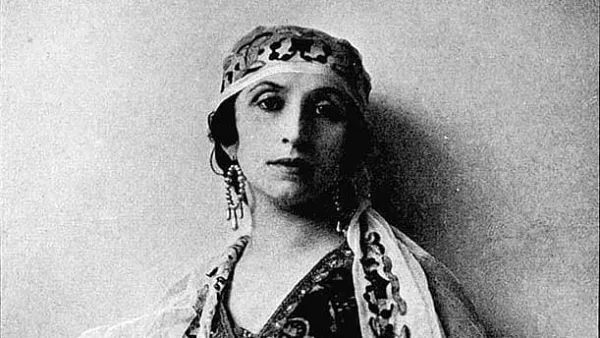

Did you know that a renowned cosmetic company derives its name from the 1883 French opera Lakmé? The title is a French iteration of Lakshmi, the name of the Hindu goddess of wealth, beauty and prosperity.
When the parent group that owns the company set out to establish a makeup line in the 1960s, their French collaborators proposed the same name as an homage to the opera. Tracing the historicity of this name reveals a fascinating story shaped by orientalist aesthetics and fashion.
Lakmé was an opera written by Léo Delibes, a French Romantic composer, set to a libretto by Edmond Gondinet and Philippe Gille, first performed in 1883 at the Opéra-Comique in Paris. It tells the story of Lakmé, daughter of a Brahmin priest, and Gérald, a British army officer, falling in love in 19th-century British India. For Lakmé, this love figuratively saves her from her cruel father; for Gérald, it is portrayed as a seduction away from his duty.
The plot is inspired by Pierre Loti's autobiographical novel, Le Marriage de Loti (1880), which narrates his romance with a Tahitian girl, Rarahu, during his adventures of "going native" in Tahiti. Victorians often used oriental dress and posture to display their exotic travel and cultural immersion. One example is the 1854 photograph of Prince Arthur and Prince Alfred, sons of Queen Victoria, in Indian royal clothes, enacting an oriental scene. According to scholar Julie Codell, "going native" became a popular term in the 18th and 19th centuries as a denigrating reference to Europeans who go beyond temporary immersion, exhibiting "a loss of civilising behaviour and a willing entry into a dangerous, atavistic, natural state through immersion in a 'barbaric' culture" as Loti did.
Interestingly, Loti's Rarahu wasn't a real woman, but a conglomerate of many local Tahitian women he had affairs with. Just as the reductionist orientalism of the original novel was characteristic of the 19th-century genre of "romantic exoticism", Lakmé stages many of the orientalist themes popular in the 1880s: an exotic location, mysterious religious rituals and fanatical priests, beautiful flora and fauna of the Orient, the white saviour contrasted with the "savage" father-figure, and the novelty of a Western colonial living in a foreign land. Its posters foreground the assumed wilderness of the Orient, with a particular focus on banana and plantain leaves. Actors playing Lakmé through the ages embodied oriental archetypes: ornamental headdresses, postures conveying sensuality, excess jewellery, and objects such as the cylindrical pots reminiscent of Arabic cultures, thereby conflating multiple oriental images into one. The opera exemplifies colonial anxiety and fascination with the Orient. Gérald is entranced by Lakmé, the oriental beauty, and is on the verge of confirming marital vows when fellow officers remind him of his duty. Choosing his country over oriental allure, he leaves Lakmé, who kills herself fearing dishonour. In 2012, Opera Australia staged Lakmé with an English actor playing the character, continuing the play and the period's colonial legacy and orientalist aesthetics.
Discover Indian Art is a monthly column curated by the editors of Impart, an online platform encouraging greater engagement with South Asia's art and cultural histories.