




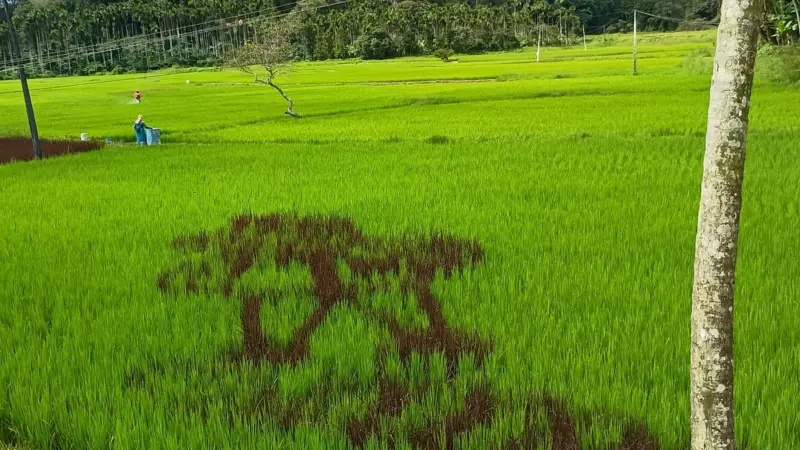

Kodagu today is synonymous with its lush, aromatic coffee plantations. But long before coffee arrived with the British, the region's identity was rooted in paddy cultivation.
Kodagu transitioned from paddy to coffee only in the late 20th century, as coffee plantations turned to be more profitable and less labour-intensive. In recent years, real estate development has resulted in the conversion of paddy fields into non-agricultural land.
Yet, rice continues to be the staple diet in Kodagu and remains an important crop, cultivated in around 14,000 hectares in the district. Consequently, the cultural life of the region is intertwined with the various phases of paddy cultivation.
A tranquil ashrama in Halasuru turns 125The Kodava New Year, Edmyar Ondh, celebrated in Mid-April, marks the beginning of the paddy cycle. The year is ushered in with ploughing of the paddy fields. During Kodava Kakkada, the peak monsoon month from mid-July to mid-August, paddy saplings are transplanted. On the 18th day of Kakkada, known as Kakkada Padhinett, maddh payasa, a special dessert is prepared from a plant locally called maddh thoppu (medicinal plant). This plant (Justicia wynaadensis) is known to have several medicinal properties which helps boost immunity.
The Kailpodh festival, celebrated on September 3 every year, marks the completion of transplantation and offers a period to relax after the hard labour.
Puthari, celebrated in the Birchiyar month between November and December, marks the harvest of paddy.
"Since Kodagu is blessed with abundant rainfall, paddy cultivation is entirely rainfed and cultivated as a single-season Kharif crop in the lowlands," says Dr Prashantha C, Assistant Professor of Entomology and Head of the Agricultural and Horticultural Research Station, Ponnampet.
"From December to March, the focus shifts to coffee harvesting and processing," he adds.
Local paddy varieties, known for their flavour and aroma, are largely grown for self-consumption. "High-yielding varieties meant for commercial use are declining due to reduced returns," adds Dr Prashantha.
Labour shortages and increasing human-animal conflict have also discouraged farmers from continuing paddy cultivation.
However, Kodagu is still home to several varieties of paddy. Among the indigenous varieties are Jeerige Sanna, BKB - developed by agriculturist Baduvanda K Belliappa, Biliya, Rajamudi, Doddi and Boliya, while popular high-yielding varieties include Tunga, KPR-1, Athira, BR-2655, MTU 1001 and IR 64.
"Indigenous varieties such as BKB and Doddi grow up to 3.5 feet in height and are a good source of fodder for the cattle. However, they are low-yielding and require 150 days to mature. High-yielding hybrid varieties such as Athira grow 2 to 2.5 ft and have less straw. These varieties mature at 120 days and usually require mechanical harvesters," says Koniyanda Sanju Somaiah, an agriculturist.
Varietal conservation
According to seed conservationist Ravi Shankar B P, paddy varieties from any part of the country can be grown in Kodagu. Only the yield may vary. He has conserved over 100 varieties of paddy from across the world including the Kala Namak (Buddha rice) from Uttar Pradesh and Magic rice (Komal Saul) from Assam, and wishes to preserve several other unique rice varieties.
"With proper techniques, yields of paddy can be increased fivefold. This involves proper water management and in-situ green manuring. Under this method of manuring, short duration leguminous crops such as cowpea are grown in the field and are incorporated into the soil after sufficient growth, before the paddy saplings are transplanted. This improves soil fertility and its physical, chemical and biological properties, while reducing the need for external manure," says Ravi Shankar.
Local varieties yield around 10-15 quintals per acre, while high-yielding varieties can produce 25-33 quintals per acre.
Paddy cultivation plays a vital ecological role as well. Waterlogged fields can help recharge groundwater, depending on soil and local conditions.
"The rise in the water table ensures that lakes, ponds and streams do not go dry even during summer" says Dr Veerendra K V, Scientist (Plant Protection) at Krishi Vigyan Kendra, Gonikoppal.
"Government schemes currently support farmers through subsidies on machinery, paddy seeds, pesticides, bio-fertilisers and green manuring crop seeds. However, increasing the minimum support price and offering other monetary benefits for cultivators will ensure increased paddy cultivation in the region," he adds.
At present, procurement delays and storage challenges continue to deter farmers. While harvesting takes place in November-December, procurement happens only in February-March.
On the table
According to chef Naren Thimmaiah, Kodavas traditionally consumed pukkalakki (boiled rice) as their staple. Jeerige Sanna was used to prepare pulav and ghee rice on special occasions. However, since the mid-20th century, the white BKB variety has been widely adopted in the region. BKB and Jeerige Sanna varieties are also used to prepare otti, noolputt, kadambutt, paputt and thaliyaputt and payasa.
"In Kodava cuisine, pairing the right curry with the main rice-based dish is essential," adds Naren.
'Naada mann, naada kool' (my soil, my rice) is a popular saying in Kodagu, reflecting the belief that instead of abandoning rice cultivation, each family should maintain at least a small patch. "For this, government support is crucial," notes Ravi Shankar.
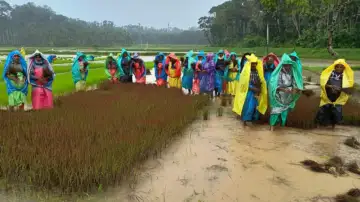 Women workers bundle paddy seedlings for transplantation in a field near Ponnampet in Kodagu. Photos by Ravi Shankar
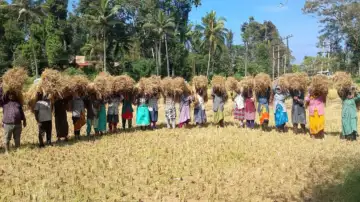 Workers with harvested paddy. Photo by Ravi Shankar
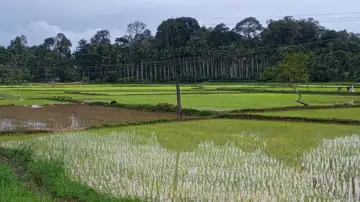 A paddy field near Ponnampet. Photo by Ravi Shankar
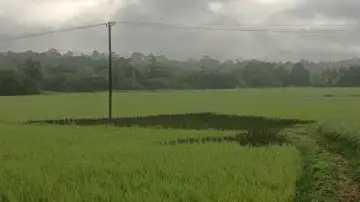 A paddy field near Ponnampet. Photo by Ravi Shankar