
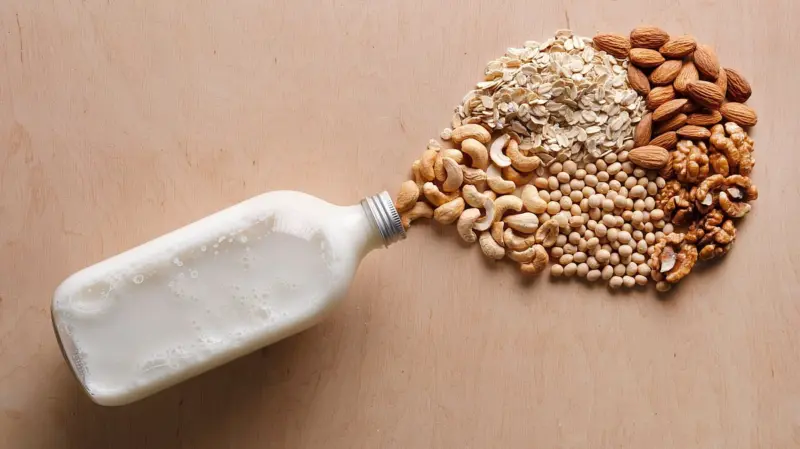

Ever felt bloated or uneasy after your daily cup of coffee or that late-night glass of milk? Often, the culprit is not the caffeine or the timing, but the lactose present in dairy.
This has meant that many people go vegan and opt for plant forward substitutes starting with milk.
Take this media professional who goes by her initials, NP, for instance. She switched to plant milk for her teas and coffees when she realised that her body wasn't able to digest animal milk. "Even a Vietnamese iced coffee with condensed milk was having adverse reactions on my health," she adds. She now uses almond milk in everything, from her morning protein shake to ginger tea.
She isn't alone. With reports stating that a large number of Indians are lactose-intolerant and awareness around the subject growing, there is an influx of plant-based milks in the market. Gentler, lighter and lower in calories, they are finding favour with a new wave of health-conscious consumers. Gauravi Vinay, a clinical nutritionist, observes, "More and more people are now aware and acknowledging the fact that they are lactose intolerant. With social media promoting lactose-free and plant-based milks, people are finally ready to talk about it."
Coffee you just cannot resist!Beyond a substitute
Dairy has long been a kitchen staple in India, whether in morning chai or afternoon curd rice. Yet with conversations around lactose intolerance, wellness, and sustainability growing across parties and dinner tables, plant-based milks are occupying a space of their own - not just as substitutes but as credible choices in their own right.
While for some, the shift is about digestion; for others, it's about climate consciousness. Of course, the calories in plant milk play a crucial role too. "Cow's milk typically has 100-150 calories per 100 ml, while plant-based versions average closer to 25 calories depending on consistency," informs Gauravi.
Lactose intolerance, she stresses, is a blanket term - subjective and different for each individual. "While some may be able to eat a few dairy products without any issues, some may not be able to take any dairy at all," adds Gauravi.
That said, she cautions that mindful choices matter. "Portion control is crucial when it comes to anything, including plant milk. While it may not affect some people, for others, having multiple cups of coffee or cereal loaded with plant milk may not be ideal."
Also, while plant milk may be a good mimic of cow's milk taste-wise, it isn't equivalent in nutrition. "Cow's milk naturally comes with a fair share of protein, calcium and minerals and is an important food group. Removing the entire food group from your diet without proper replacements can create deficiencies," she points out. "Unlike cow's milk, which naturally has fat for creaminess, plant-based milks rely on added stabilisers, emulsifiers, or vegetable oils for texture, and are often fortified with vitamins and minerals to make up for nutrients they lack naturally."
Plant milk on café menus
Walk into any café today, and chances are that you may be asked: "regular, almond, soy, or oat?" quite a lot.
Ashish D'abreo, Q grader, coffee roaster and Co-founder of Maverick & Farmer Coffee and Partner at Good Farmer Foods explains, "For many of our guests, plant-based options are less about following a trend and more about finding what feels best for them, whether it's managing lactose intolerance, lighter choices, or plain curiosity."
At Flax Café too, plant-based dairy is no longer an occasional request. Gurmeet Singh Arora, CEO and Founder, says, "We've seen plant-based milks move from being a niche request to a regular part of customer choices. While veganism contributes to this shift, a significant number of our guests choose plant-based alternatives for wellness reasons such as lactose intolerance, easier digestion, or managing cholesterol."
"We believe plant-based milks will continue to gain mainstream acceptance, with more innovation around blends, fortified versions, and premium offerings," concludes Gurmeet.