

Ashok Kharat-"Captain Kharat", godman, seer, and, according to a complaint lodged with the Nashik police, a serial rapist-was arrested recently.
Investigators reportedly found 58 videos featuring women on a pen drive in his possession. He is currently in police custody.
The complaint, filed by a 35-year-old woman at Sarkarwada Police Station in Nashik, alleges that Kharat gained her trust by claiming divine
powers. Now the eternal question that arises is, why do people repeatedly fall into the trap of godmen, babas and astrologers?
The perceived spiritual halo surrounding such figures often shields them from scrutiny. They enjoy a degree of immunity from censure, aided by religio-scriptural sanction that confers upon them an aura of 'divinity'. People's collective lack of scientific temper and irrational faith in superstitions-astrology, black magic, and clairvoyance-make many vulnerable to unscientific thinking and unfounded beliefs.
Many godmen, self-styled high priests and occult practitioners are dubious characters, but their followers, too, play a role. By creating an image of inviolability around these figures, devotees often psychologically exonerate them, even when faced with allegations of wrongdoing, including sexual misconduct.
Despite widespread scepticism about gurudom, priesthood and astrology, people continue to fall prey to such figures. Psychologists note that when followers invest complete faith in an individual, even anomalous behaviour tends to be overlooked. This constant overlooking emboldens the godmen, priests and cult leaders. Scandals involving clergy across religions-including well-documented cases within sections of the Catholic Church-show how institutional sanctity can be misused. Yet, many believers and followers continue to defend these 'holy' people. Samuel Taylor Coleridge's idea of the "willing suspension of disbelief" seems apt here.
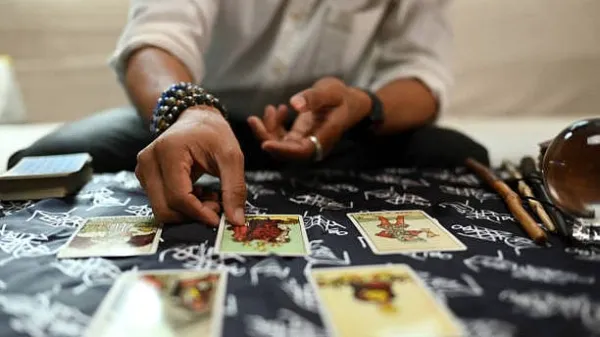
Blind faith sustains the influence of godmen, priests and astrologers. Astrology, in particular, continues to command wide acceptance in India, cutting across levels of education. Astrologers, tarot card readers, numerologists and soothsayers are frequently featured in mainstream media, and their opinions are sought on matters of consequence. This is shocking and alarming. This attention, and subsequent normalisation, lends legitimacy to questionable people and practices.
Individuals like Ashok Kharat thrive in such an environment, gaining wealth, access and influence. They often attract followers who are emotionally and socially vulnerable. What is evident is that such figures are adept at exploiting trust.
While it would be inaccurate to suggest that all religious figures are predatory, there is enough evidence across contexts and religions to show that positions of unquestioned authority can be abused, particularly where accountability is non-existent or weak.
A related issue is the myth of enforced celibacy as a marker of spiritual purity. The expectation that 'holy' individuals are devoid of physical desire creates a false moral pedestal. Public condemnation of sexuality often coexists with private transgressions-a contradiction that has surfaced repeatedly in scandals across faiths.
Our religio-psychological dependency and unflinching faith make organised spirituality very productive. At the same time, the proximity of babas, gurus, priests and pujaris to politicians makes the matters worse. So, such patronage enables dubious gurus and 'numerologists' to thrive with a comforting sense of unmitigated freedom and protection. Ashok Kharat, too, reportedly built and strengthened access to Maharashtra's political elite before his arrest.
As long as fear of religion and god, and unquestioning belief persists, such figures will continue to emerge and flourish. Like water hyacinths, they may be removed periodically, but they return--exploiting timid followers and feeding off vulnerability and blind faith.
(The author is a Pune-based independent writer and columnist)
Disclaimer: The views expressed above are the author's own. They do not necessarily reflect the views of DH.