




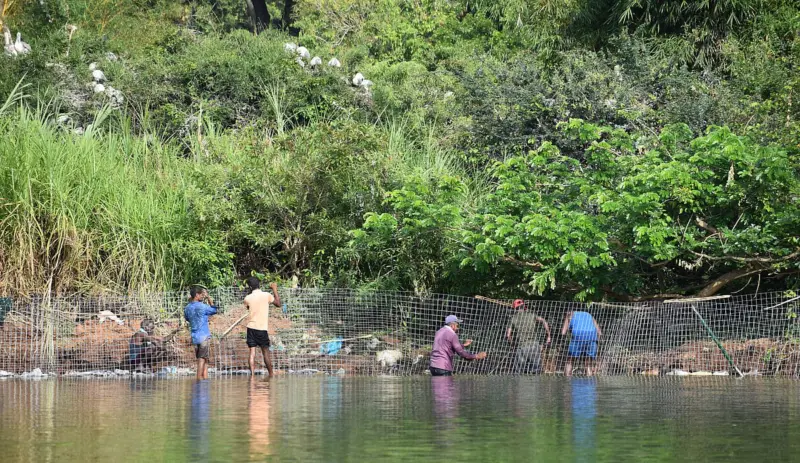

At Ranganathittu Bird Sanctuary, the Cauvery river flows into a network of small islands and islets that sustains one of Karnataka's most important bird habitats.
Spread across 67.49 hectares near Srirangapatna in Mandya district, the sanctuary supports over 220 bird species and functions as a nesting and breeding ground for both resident and migratory birds.
The sanctuary's ecology rests on six river islands and several islets that offer birds safe nesting spaces, cut off from land predators such as foxes and cats. Between November and December, migratory birds arrive here in large numbers, build nests, lay eggs and raise their young before leaving by June.
But this fragile system is repeatedly tested. Seasonal flooding in the Cauvery basin, heavy rainfall in the catchment and water releases from a dam often submerge the islands. This erodes the soil, reshapes the edges and weakens the nesting grounds.
In an effort to find a sustainable solution, the Mysuru Wildlife Division of the Forest Department has shifted focus from temporary fixes to structural protection, as earlier measures such as sandbag bunds and vegetation planting offered only short-term relief to the islands.
Deputy Conservator of Forests I B Prabhugouda said that the department is now testing a more durable approach. On three islands, gabion structures that are wire mesh cages filled with stones and soil are being constructed along the edges. The idea is to stabilise the banks and reduce erosion, effectively wrapping the islands in a protective frame that can withstand strong water flow.
If successful, the model will be extended across all islands in the sanctuary, Prabhugouda added.
"They are also economical, require little to no maintenance and have a longer lifespan," he added.
According to K Manu, a wildlife enthusiast, gabion structures are eco-friendly and can last for a long time when filled with stone jalli. The sand-filled bags tend to deteriorate within a few years, causing the sand to sink, while permanent concrete structures are not suitable for islands. In this context, gabion structures emerge as the most practical solution.
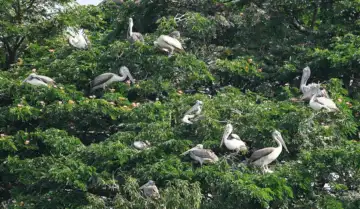 Pelicans at the at the Ranganathittu Bird Sanctuary. DH Photo/ Anup Ragh T
Field learning
Alongside this ecological intervention runs another effort focused on people. The Forest Department has introduced a programme called Pakshi Mitra at Ranganathittu, aimed at school students from Mysuru and Mandya districts.
The initiative seeks to connect classroom learning with field experience in bird ecology and conservation.
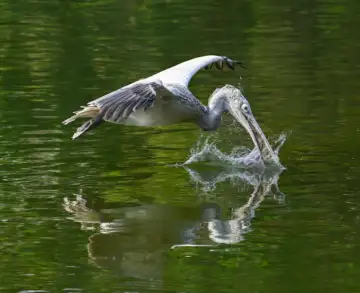 A pelican at the Ranganathittu Bird Sanctuary. DH Photo/ Anup Ragh T
Students from Classes 8 to 10 are brought in groups to the sanctuary. Their visit follows a structured format: arrival by 8 am in Forest Department vehicles, a short written assessment on environment and birdlife, followed by a presentation by the forest personnel introducing the sanctuary.
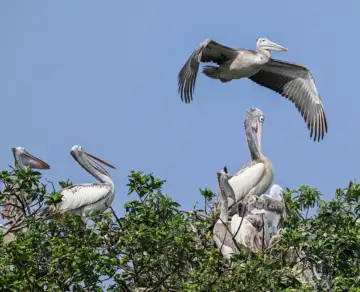 Pelicans at the Ranganathittu Bird Sanctuary. DH Photo/ Anup Ragh T
Students then experience a boat ride along the Cauvery and take part in guided birdwatching sessions before being assessed again in the evening to evaluate what they have learnt during the day.
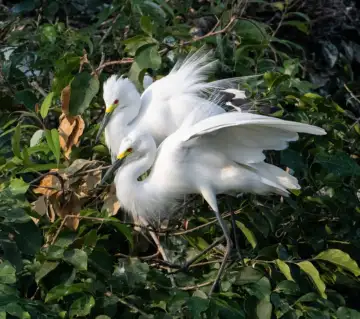 Large egrets at the Ranganathittu Bird Sanctuary. DH Photo/ Anup Ragh T
So far, around 1,200 students have visited the sanctuary and have become 'Pakshi Mitras'.
Ranganathittu Environmental Education Officer S Gagana says the programme is offered free of cost.
The focus, she notes, is not only exposure but also measurable learning outcomes - linking awareness with experience in a landscape where both ecology and conservation are constantly shaped by water, islands and human intervention.
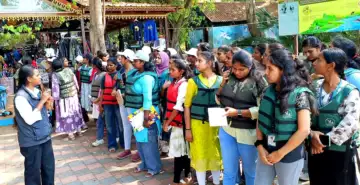 Students visit the Ranganathittu Bird Sanctuary as part of Pakshi Mitra initiative. DH Photo
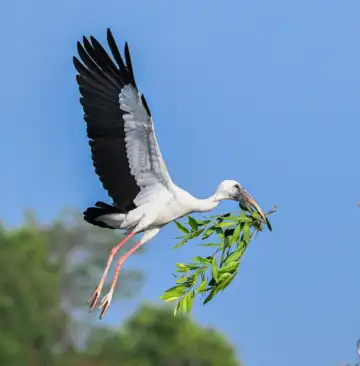 An Asian openbill stork at the Ranganathittu Bird Sanctuary. DH Photo/ Anup Ragh T