
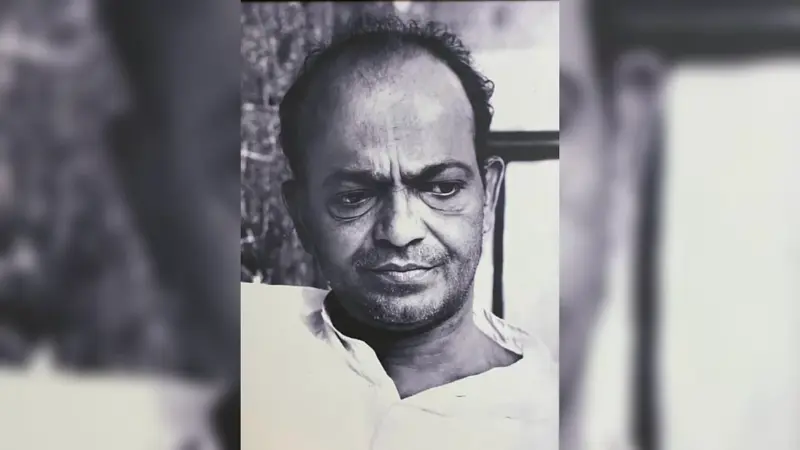

The Karnataka government's recent decision to rename Bengaluru's Victoria Hospital after socialist leader Shantaveri Gopala Gowda has reignited debate over the growing trend of renaming public institutions in India.
Reports indicate that the proposal took doctors and patients by surprise, as the 125-year-old hospital remains one of the state's most prominent public healthcare institutions.
Established on December 8, 1900, during the tenure of George Curzon and supported by Maharani Kempananjammani, the hospital was built to mark Queen Victoria's Diamond Jubilee and strengthen public health after severe plague outbreaks. Over time, it has become synonymous with accessible healthcare, serving as a major tertiary referral centre for patients across rural and urban areas. The surprise over the proposal reflects a broader concern about limited public consultation in decisions affecting long-standing institutions. Many note that, irrespective of official changes, the hospital will likely continue to be known by its original name-highlighting how public memory often outlasts administrative decisions.
The proposal also comes amid other naming debates in Karnataka. The state earlier approved renaming Ramanagara district as Bengaluru South, while discussions continue on referring to Tumakuru as Bengaluru North. Critics argue such changes may gradually dilute distinct regional identities by subsuming them under Bengaluru's expanding metropolitan identity, driven more by administrative convenience or political messaging than public demand.
This trend extends beyond Karnataka. The Union Cabinet's approval to rename Kerala as Keralam, following Odisha's shift from "Orissa", reflects attempts to align names with linguistic identity - though such decisions often intersect with political considerations, including upcoming elections. Meanwhile, the proposal to rename West Bengal as "Bangla", repeatedly raised by Chief Minister Mamata Banerjee, remains pending. These examples show how language, identity and politics often converge in naming decisions.
India is no stranger to renaming. Several cities have adopted names reflecting local linguistic and cultural identities. Cities such as Mumbai, Kolkata, Chennai and Bengaluru replaced their colonial-era names. Similar examples include Gurugram and Prayagraj. In many cases, the objective was to restore indigenous identity or correct colonial spellings.
Even within Karnataka, some changes arose from linguistic or social considerations. Madhugiri, known for its massive monolithic hill and fort, was earlier recorded as Maddagiri in colonial documents. As "Madda" has an awkward vulgar connotation in Telugu slang, the name was later refined. Historical accounts suggest that when the noted Kannada writer and civil servant Masti Venkatesha Iyengar served as assistant commissioner in the region in 1927, he standardised the name as Madhugiri, lending it a more dignified form. Such examples show that renaming decisions can stem from social sensitivity rather than political symbolism.
Over time, however, the practice has expanded. Roads, institutions, districts and universities are increasingly renamed to honour political leaders or reshape historical narratives. In the national capital, for instance, Race Course Road became Lok Kalyan Marg, and Aurangzeb Road was renamed Dr APJ Abdul Kalam Road. Although these changes generated debate, many residents still use earlier names out of habit.
Similar debates have surfaced elsewhere. In Goa, for instance, there have been demands to rename Vasco da Gama as Mormugao, arguing that the Portuguese-era name does not reflect local identity or the legacy of Goa's freedom movement. These debates show how place names are often intertwined with history, identity, and political memory.
Yet a key question persists: does changing a name alter outcomes? Experience suggests it rarely does. Institutions typically continue to function much as before, regardless of their labels. For example, the State Bank of India renamed its training centres-from Staff Training Centre to State Bank Learning Centre and later to State Bank Institute of Learning and Development-while their core functions and systems remained largely unchanged.
This gap between symbolism and substance is captured in wry administrative humour: potholes may be called "speed regulators", delays "work in progress", deficits "negative surplus", and corruption "facilitation fees". The point is simple: names may shape perception but rarely change reality without real reforms in policy, execution, and accountability.
(The writer is a retired deputy director of boilers)
Disclaimer: The views expressed above are the author's own. They do not necessarily reflect the views of DH.