
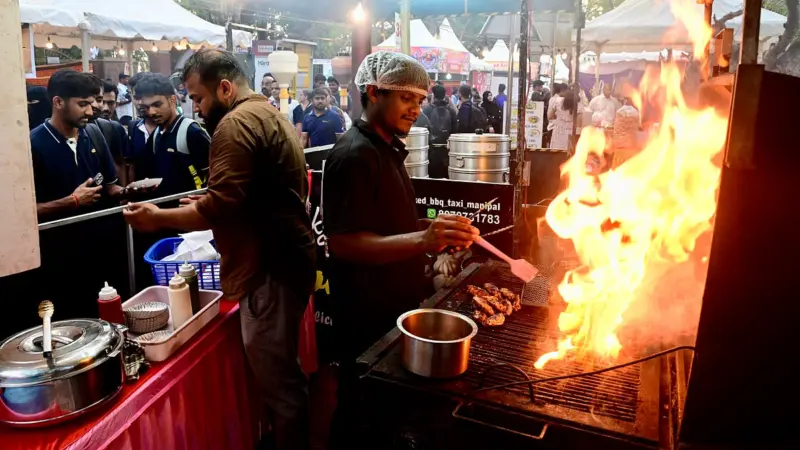

The Union Health Ministry's recent decision to significantly reduce the compliance burden on street food vendors and allow them to focus on their livelihoods is welcome.
By removing redundant bureaucratic hurdles, official policy is moving towards a system that respects the entrepreneurial spirit of millions while maintaining a firm grip on safety. Street food remains the heartbeat of urban India, offering culinary experiences that stretch from the temple towns of the south to the high-rise corridors of the north.
For decades, however, these micro-entrepreneurs have operated in a stifling regulatory environment, forced to navigate a complex web of certifications while living in constant fear of arbitrary renewal drives.
Govt greenlights food regulatory reforms, street vendors to be 'deemed registered' under FSSAIThe most transformative element of this policy shift is the introduction of "deemed registration" for the informal sector. By allowing a municipal or town vending committee (TVC) certificate to double as registration under the Food Safety and Standards Authority of India (FSSAI), the State has effectively acknowledged the absurdity of dual compliance.
This move does more than save time; it validates the vendor's legal right to operate in the eyes of multiple departments simultaneously. By streamlining this process, we are finally moving away from a culture of policing and toward one where street vendors are recognised as legitimate partners in the national economy.
To further support this shift, the government has overhauled the financial thresholds that define a "small" business. Increasing the registration limit to Rs 1.5 crore is a pragmatic admission that many family-run stalls and food trucks handle significant volumes without having the administrative capacity of a corporate restaurant.
Furthermore, by making these FSSAI licences valid for life, the state has removed a major source of corruption and anxiety. Vendors are no longer tethered to a cycle of renewals that often required "facilitation fees" or resulted in unnecessary service interruptions. Instead, they can focus on their craft, freed from the logistical burden of tracking expiry dates and repeated interactions with licensing authorities.
Bring street vendors under food safety rules, says Karnataka HCThe removal of traditional gatekeeping shifts the burden of proof to "post-market surveillance" through a technology-enabled, risk-based inspection system. Rather than checking every stall randomly, authorities will now use data to target high-risk commodities like meat and dairy, while rewarding compliant businesses with fewer interruptions.
This shift treats regulation as a surgical tool rather than a blunt instrument, ensuring that safety resources are deployed where the actual risk to the consumer is highest. It represents a move away from the "guilty until proven innocent" approach that has traditionally characterised small-business inspections.
In this decentralised landscape, TVCs have evolved into crucial frontline mentors. Since they include representatives from the vendor community, the system fosters a sense of peer-to-peer accountability that top-down inspections never could.
This local empowerment is a double-edged sword: it offers vendors a voice, but it also means that the failure of a few can tarnish the reputation of many. A vendor who ignores basic hygiene now risks losing their municipal certificate, which carries the immediate consequence of revoking their deemed food safety status. It is a system that replaces the fear of the inspector with a tangible responsibility to the community.
The true driver of this cultural change is the Food Safety Training and Certification (FoSTaC) initiative. Education is being prioritised over punishment through large-scale training sessions that teach the essential "Five Keys to Safer Food".
By focusing on potable water, waste management, and temperature control, the state is addressing the root causes of foodborne illness rather than just penalising the symptoms. A trained and informed vendor is fundamentally more reliable than one motivated solely by the fear of fines, creating a more resilient public health system in the long run.
In many developed nations, street food is strictly regulated through a system of risk-based permits and public transparency. In cities like New York and London, vendors are often required to prepare high-risk ingredients in off-site commercial kitchens before final assembly at the stall.
Furthermore, mandatory "letter grading" systems are displayed prominently, allowing the market to reward hygiene. This infrastructure-heavy approach ensures that quality is supported by access to municipal water hooks and professional-grade refrigeration. Singapore offers a different gold standard by transitioning from scattered stalls into permanent, utility-integrated hawker centres.
Quality is assured through continuous monitoring where a vendor's long-term safety record determines their grade. By providing clean water, electricity, and waste disposal at the site, the state eliminates the most common sources of contamination. This model suggests that while "smart oversight" is essential, providing basic infrastructure is the most effective way to guarantee public health without stifling the entrepreneurial spirit of the vendor.
Why are Bengaluru street vendors welcoming the Union govt's FSSAI reform, yet remain worried?Ultimately, these reforms represent a profound renewal of the social contract between the state, the vendor, and the urban consumer. By simplifying the path to FSSAI compliance, official policy encourages thousands of vendors to join the formal sector, making them eligible for financial support like PM SVANidhi loans. This visibility also empowers the consumer, who can now rely on digital feedback loops and QR-code transparency to make informed choices.
Hopefully, replacing endless forms with smart oversight can pave the way for a system that benefits both the vendors and the consumers alike.
The author is an independent writer.
(Disclaimer: The views expressed above are the author's own. They do not necessarily reflect the views of DH.)