
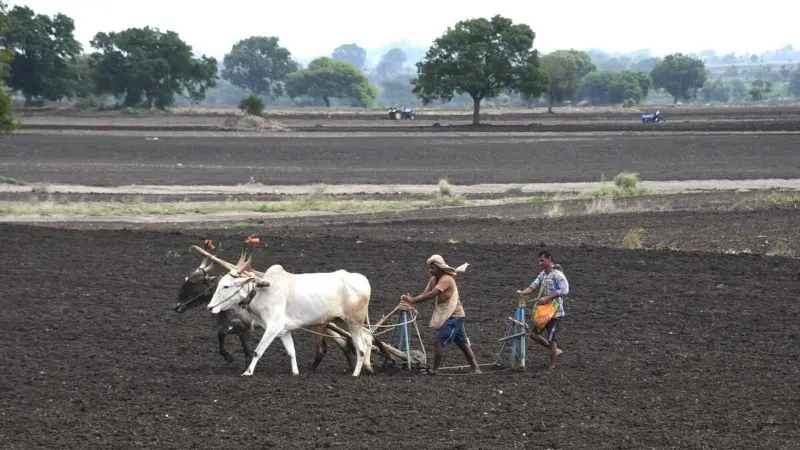

Farmers in Karnataka adopting sustainable agricultural practices could be rewarded through carbon credits, a government-backed study has said, but a top minister has flagged hurdles in turning the idea into reality.
The study, in which the Institute for Social & Economic Change (ISEC) evaluated the National Food Security Mission (NFSM) in Karnataka, covered 5,476 farming households in 10 districts and seven years of secondary data.
Karnataka LPG crisis: Auto drivers head to hometowns temporarilyAccording to the study, which covered the 2014-2020 period, farmers reported a reduction in fertiliser usage, savings on pesticide costs, efficient water use and an increase in yield due to sustainable practices.
The study has asked the government to introduce a policy framework to incentivise farmers, especially those growing green and black grams, with carbon credits.
"This innovative approach recognises and rewards farmers for their contribution to carbon sequestration and greenhouse gas emission reduction through practices aligned with environmental conservation," the study said.
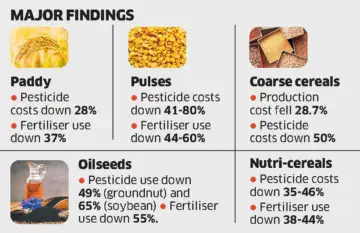
After NFSM, the amount of fertiliser used per acre for paddy cultivation reduced from 100 kg to 63 kg. Similarly, the cost of pesticides went down from Rs 1,807 to Rs 1,297. Similar results were found for pulses and nutri-cereals (millet).
India is yet to develop a full-fledged carbon credits market. The Punjab government is piloting a carbon credits programme in five districts. In Uttar Pradesh, the government there and IIT Roorkee have announced a carbon credits scheme that may give farmers an additional income of Rs 5,000-8,000 per hectare.
Private companies like Grow Indigo, Auri Grow India and Varaha are already working on carbon credits.
In Karnataka, the National Bank for Agriculture and Rural Development (NABARD) launched a pilot carbon credits programme for mango farmers in Koppal last year.
"We understand the concept, but operationalising it may be a challenge. This requires more discussion," Revenue Minister Krishna Byre Gowda told DH. "We can have a pilot programme. But to have scalability and traceability, how do you quantify an individual farmer's contribution? How does one determine what's the value to be derived? And, how do you get someone to buy these credits?" Gowda, a former agriculture minister, said.
What are carbon credits?
Carbon credits are financial rewards for reducing or removing carbon dioxide from the atmosphere. One credit equals one tonne of carbon saved or absorbed. Farmers can earn these credits by adopting sustainable agricultural practices. These credits can be monetised by selling them to industries looking to offset their pollution.