




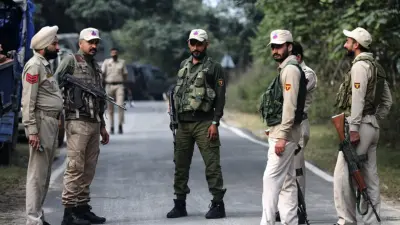

Having spent over three decades in uniform - first as a young officer learning the ropes of border policing in the unforgiving heights of the Indo-Tibetan frontier with the ITBP, and later steering the Odisha Police as its DGP during some of the most challenging years of Left Wing Extremism - I have seen the CAPFs from both sides of the fence.
I have commanded men in snow-bound outposts, co-ordinated joint operations with CRPF and BSF in Maoist-affected districts, and felt the pulse of jawans who risk their lives daily so that the rest of India can sleep peacefully.
That is why, when the Union Cabinet cleared the Central Armed Police Forces (General Administration) Bill 2026 earlier this month, I viewed it not as a political move, but as a statesmanlike decision rooted in ground realities. This Bill is not about "dominance" of one service over another. It is about institutionalising what has worked brilliantly for India's internal security for six decades - a healthy blend of tactical valour of the CAPF cadre with the strategic, citizen-centric leadership that the Indian Police Service brings to the table.
1. Statutory Backbone for a Force of Over 10 Lakh Men and Women
For years, the five major CAPFs (CRPF, BSF, CISF, ITBP and SSB) operated on executive orders for senior-level deputation. The 2026 Bill replaces uncertainty with permanence. It codifies recruitment rules, service conditions, disciplinary mechanisms and operational protocols in one comprehensive legislation. As someone who has seen ad-hoc postings create administrative friction, I can say this is a game-changer. Clear rules mean better planning, higher morale and seamless functioning - exactly what a modern paramilitary needs in an era of hybrid threats.
2. Proven Leadership Model Retained at the Apex
The Bill formally reserves 50% of Inspector General posts and 20% of Deputy Inspector General posts for IPS officers on deputation. Critics have called this a setback for cadre officers. As a former IG in ITBP and DGP of a LWE-affected state, I respectfully disagree. The numbers speak louder than any rhetoric:• Left Wing
Extremism incidents fell from 1,936 in 2010 to just 222 in 2025 - an 89% drop.• Civilian and security force deaths plunged from 1,005 to 95 - a 91% reduction.• "Most-affected" Naxal districts came down from 36 in 2014 to only 3 in 2025.In Odisha, during my tenure as DGP, we turned the tide in southern districts through seamless co-ordination between state police and CRPF battalions. That synergy was possible only because senior leadership understood both district-level policing and large-scale counter-insurgency doctrine - a perspective IPS officers bring naturally from their All-India exposure and rigorous training. Pure tactical commanders excel in the field; strategic commanders are needed at the helm to align operations
with national policy, intelligence fusion, development schemes and legal accountability. The Bill ensures that balance without shutting the door on cadre officers.
3. Fair Deal for the Brave CAPF Cadre
Far from being anti-cadre, the Bill is actually pro-reform. It creates additional senior posts through restructuring, accelerates promotion avenues for the approximately 13,000 Group-A cadre officers who have waited decades for recognition, and introduces modern cadre review mechanisms. The Modi Government has simultaneously pushed welfare measures - timely pension processing, modern equipment under the Rs 1,523-crore Modernisation Plan, and expanded housing schemes. Having seen jawans in remote ITBP posts and Odisha jungles, I know that motivated, well-led forces win wars. This Bill delivers both.
4. Citizen-Centric Policing in Uniform
In 2020 co-authored piece in The Print (Abhinav Kumar with Sudhanshu Sarangi), Authors had argued that if CAPF officers aspire to civil servant status, they must internalise citizen-centric values. The Bill does exactly that by retaining IPS leadership at senior levels - officers who are trained to balance security with human rights, co-ordinate with elected governments, and uphold the rule of law. In today's India - facing cross-border terrorism, urban radicalisation and border standoffs - we cannot afford insular command structures. The Bill prevents militarisation while preserving the paramilitary character. A National Asset, Not a Cadre Dispute As a retired IPS officer who has worn both the khaki of state police and the olive green of CAPF, I salute the courage of every CAPF jawan. Their sacrifices in Naxal belts, along the LoC, LAC and in election duties are unmatched. But national security cannot be an experiment. The 2026 Bill, crafted under the decisive leadership of Prime Minister Narendra Modi and Union Home Minister Amit Shah, protects the winning formula that has brought India to the threshold of a Maoist-free nation by March 2026.This is not about one service versus another. This is about India First. The Bill is a mature, forward-looking legislation that strengthens the world's largest paramilitary architecture while giving its brave sons and daughters the leadership, resources and respect they deserve. In my long years of service, I have rarely seen a policy that so perfectly balances operational
effectiveness with institutional equity .I strongly support the bill.
The author, K B Singh, IPS (Retd) was a Former Inspector General, Indo-Tibetan Border Police and ex Director General of Police, Odisha.
(Disclaimer: The views expressed above are the author's own. They do not necessarily reflect the views of DH)