
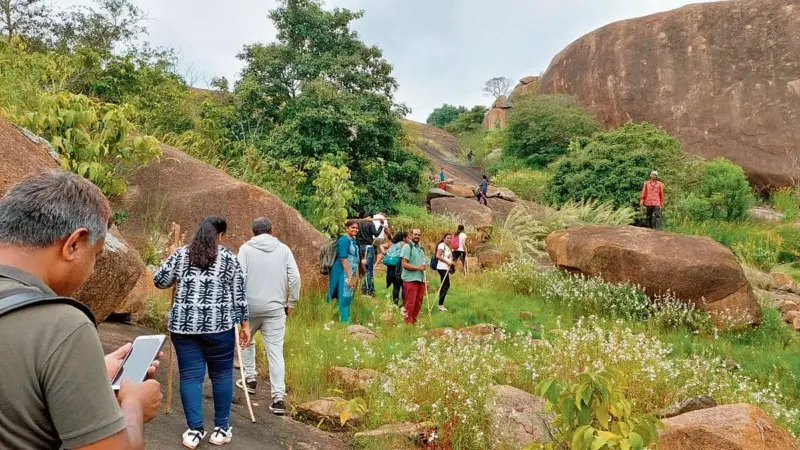

The Karnataka government's decision to introduce a comprehensive set of Standard Operating Procedures (SOPs) for trekking marks an important course correction.
In a state where adventure tourism has grown faster than regulation, the new framework marks a decisive shift from a culture of casual exploration to one of structured, accountable access. The push for reform follows disturbing recent incidents.
The death of a 14-year-old tourist in Chikkamagaluru and the separate case of a woman who went missing on Tadiandamol before being rescued exposed serious gaps in safety protocols and coordination. These were symptoms of a system struggling to cope with an explosion in footfall. The SOPs are anchored in a simple rule: "No guide, no trek." Every group must now be accompanied by a certified nature guide, with a ratio of one guide for every ten trekkers.
A daily ceiling of 150 trekkers per trail, mandatory online booking through the Aranya Vihaara portal, GPS-based tracking, and regular communication between guides and base camps collectively aim to professionalise trekking. The rules also enforce environmental discipline through a strict "leave no trace" policy, banning plastics, campfires, and unsanctioned overnight stays.
Such measures have become unavoidable as Karnataka consolidates its position as a leading trekking destination. Trails across the Western Ghats - including Kudremukh, Kumara Parvatha, and Mullayanagiri - now attract heavy weekend traffic. Routes that were once relatively undisturbed have turned into crowded corridors. The pressure is evident.
At Kumara Parvatha, visitor numbers have at times run into the thousands, far exceeding ecological limits. The government's decision to impose caps and restrict certain stretches may have disappointed some enthusiasts, but it reflects a necessary alignment with environmental realities. There is, however, a debate over whether opening new trekking routes could ease the pressure on existing hotspots.
Proponents argue that expanding access would distribute footfall more evenly and stimulate local economies in less-visited regions. Conservationists caution that this could extend ecological stress into previously undisturbed areas while complicating enforcement.
A balanced approach is therefore essential. Instead of indiscriminately adding trails, the state can formalise and regulate existing unofficial routes, introduce seasonal access based on ecological sensitivity, and classify trails by difficulty and risk. Such an approach can widen access without diluting safeguards. The SOPs represent a necessary recalibration.
Trekking will always involve risk, but the absence of basic safeguards is indefensible. The new guidelines acknowledge that responsible tourism depends not just on access, but on discipline, preparedness, and respect for fragile landscapes.