
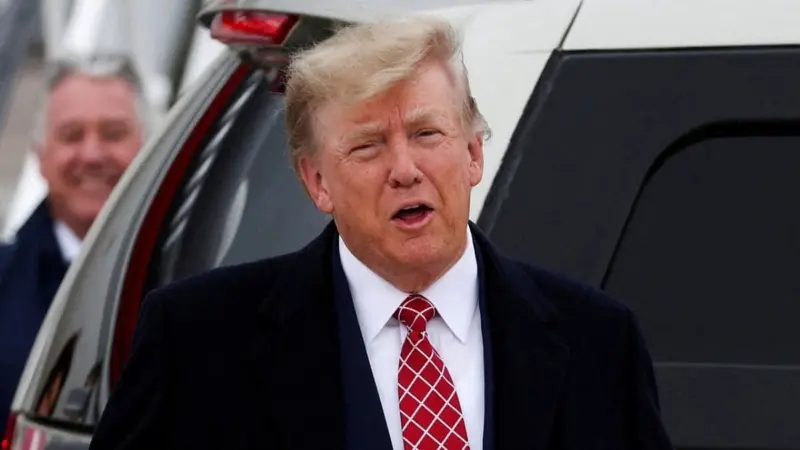

President Donald Trump said Sunday that U.S. officials will travel to Pakistan for further negotiations on ending the war with Iran, as a two-week ceasefire was set to elapse this week without an agreement in sight.
Vice President JD Vance will again lead the U.S. delegation, accompanied by top Trump aides Steve Witkoff and Jared Kushner, according to a White House official. There was no immediate comment from Iranian officials.
At the same time, Iran said it had effectively closed the Strait of Hormuz, defying one of Trump's conditions for the temporary truce between the United States, Israel and Iran. The Persian Gulf waterway, critical for global energy supplies, appeared largely shut Sunday. Trump also said Iran had fired on passing ships in a "total violation of our ceasefire."
Trump said on social media that the U.S. delegation would arrive Monday evening in Pakistan, which has been mediating between the two countries.
Pope Leo downplays feud with Trump, says 'not in my interest' to debate himLast weekend, Vance led a similar round of negotiations in Islamabad, the Pakistani capital, which ended without a breakthrough. The meeting had been the highest-level encounter between Iranian and U.S. leaders in decades.
In recent days, Trump had repeatedly said Iran had assented to nearly all of his demands on the country's nuclear program. But Iranian leaders vehemently denied that, dampening hopes for an immediate agreement.
Mohammad Bagher Ghalibaf, the chief Iranian negotiator, said in a televised address late Saturday that the United States had failed to pressure Iran through ultimatums or secure international backing for the war, which began with a U.S.-Israeli air assault in late February.
Now, Iran hopes to consolidate what Iranian leaders view as their military achievements with diplomacy, said Ghalibaf, who is also the speaker of Iran's parliament. Nonetheless, he added, its army was ready to restart fighting at any moment.
A trigger for renewed conflict -- should negotiations collapse -- could be the deadlock in the Strait of Hormuz. Iranian forces are still choking global energy markets through their blockade of the Persian Gulf waterway, a conduit for a significant share of the world's energy.
The U.S. Navy, as well, is continuing to blockade Iranian ports in an effort to pressure Iran's leadership to accept U.S. conditions for a durable peace.
Iran's foreign minister had declared the strait open Friday to commercial ships, as long as they followed an Iranian-designated route. The announcement came in response to the start of a ceasefire in Lebanon between Israel and Hezbollah, the Iran-backed militia.
But less than a day later, Iran's military again tightened its grip on the strait, which it said would stay closed in retaliation for Trump's decision to impose a U.S. blockade on ships from Iranian ports.