





In The Bones of Grace, the third part of Tahmima Anam's Bengal trilogy, a character ruminates on Bangladesh. There's "political infighting, radicals on the loose, child marriage, and climate disaster around the corner.
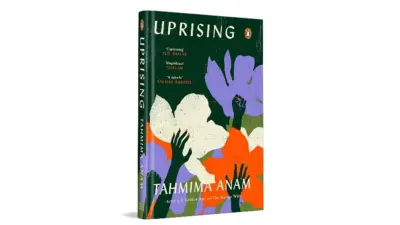
No one should want to go anywhere near it." Anam, Dhaka-born and now resident of London, thankfully doesn't heed this advice and sets her new novel on a sinking island of Bangladesh, with women, who dominate the cast of characters, at the forefront of a movement for change and justice. Uprising is inspired by the real-life floating, state-licensed brothel of Banishanta off the south-western coast that Anam heard of years ago. The women live a perilous existence, badgered by men, the madam of the brothel, and a marauding sea.
In fiction, however, and in Anam's hands, there's rebellion, and hope floats. The story is narrated by a chorus of unforgettable children, aged three to eight, who are determined that one day "love will appear" and carry them far away from the island, being eaten by the river and sea, never to return. Whenever such thoughts are aired, the mothers, however, accompanied by that theatrical Bangla incantation invoking the mother, and sometimes the child, - 'O Ma go' - would tell the children of the island not to believe in such foolish dreams.
There's a reason for the mothers to be so pessimistic, as nothing has worked out right for them from childhood. It was a cousin, a brother or an uncle who lured them from home with the promise of a job. They left their villages "with smiles, hoping for a life of rice and shoes." But they were soon blindfolded, drugged and dragged, and brought to the island from where there was no escape.
Some of them gave birth to children who "did not go to school" because they were schooled in the vagaries of a harsh life, like their mothers, who "had always been poor, always one of many children, always the girl no one wanted," always on the margins, mostly invisible.
Arrival of Kusum, the protector
The 'madam' who runs the brothel is called 'Amma', who owns everything on the island including "the flesh on our bones." But life on the wretched island where everything is broken, "with the people inside the huts the most broken of all," is upended with the arrival of Kusum. Hailed as the "flower of Mongla", she learns, albeit the hard way, the first lesson of the island: that no one was coming for her. Kusum, who had "a voice touched by god and a stomach of steel," plans an escape route for all the women and makes the ultimate sacrifice for them.
Who is Kusum, really, the children wonder. She does not seem entirely human to them. Anam cleverly weaves in the legend of Bon Bibi, forest goddess and protector of the Sundarban, into the story, as she does the student protests in Bangladesh that swept in a new regime two years ago.
Kusum does many things alien to the children. She teaches them the letters of the alphabet, shows the mothers a new way to survive, and plots the ouster of the brothel's Amma, a task seemingly impossible, so entrenched is her hold on the island and its powerless denizens. First, she has to break the atmosphere of fear the women live in. The children explained: "…Amma was just the start of their fear. They feared the rain that brought a high tide; they feared the talk back in their villages, the whispers about them, people spreading stories and shunning their parents, the thundering sound of their fathers' shame. They feared dengue and AIDS and cholera; they feared God and demons and djinns; they feared being poorer than they already were; they feared being older than they already were; and most of all, they feared the island, that the island would sink into the water forever, because even though they were desperate to leave it, it was still the only home they knew. They survived by becoming as small as possible, and that included their hopes."
But Kusum would not give up, and when one of the girls piped up that they wouldn't need a man to rescue them, she felt that her lessons were finally working.
Uprising is a powerful story, marred by small blemishes, surprisingly in the translation of Bangla words. No, aata is not tamarind but custard apple; and aashar is not springtime but the monsoon season.
The final radical protest, with the women deciding to get "dirty" to keep the men off, may remind readers of Mahasweta Devi's story, Draupadi, and the protagonist's last act of resistance. It's surprising Uprising missed the Booker Prize 2026 longlist, but it was a finalist for this year's Orwell Fiction Prize, which went to Ben Lerner's Transcription.