
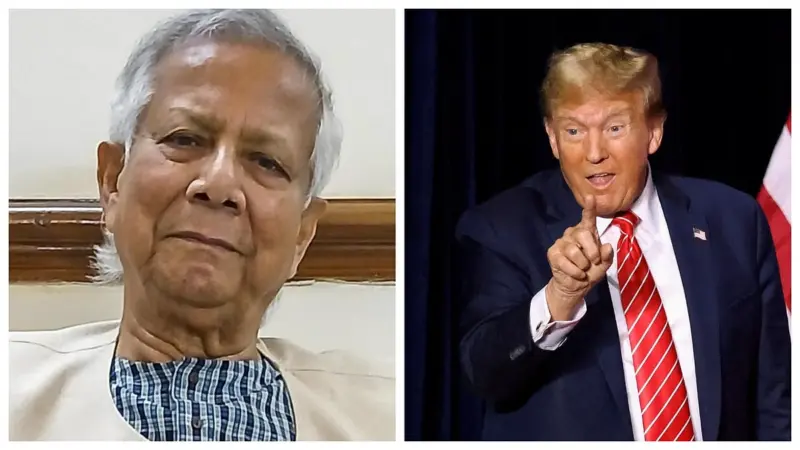

The Donald Trump administration on Monday cut tariffs on Bangladeshi products imported into the US to 19 per cent, while exempting duty on some textiles and garment manufactured with US material.
Chief of interim government Muhammad Yunus on Monday said the US had "committed to establishing a mechanism for certain textile and apparel goods from Bangladesh using US-produced cotton and man-made fibre to receive zero reciprocal tariff in (the) US market".
The deal has been reached after nine months of negotiations since April last year. Earlier, Bangladesh was slapped with 37 per cent tariff, which was reduced to 20 per cent in August 2025.
Yunus makes clarion call for 'Yes' vote for Bangladesh referendumAccording to Commerce Secretary Mahbubur Rahman, Bangladesh's key export-earning ready-made garments (RMG) made from cotton and synthetic fibres imported from the US would enjoy zero reciprocal duty under the deal.
The agreement was signed in Washington by by Commerce Adviser Sheikh Bashir Uddin and US Trade Representative (USTR) Jamieson Greer.
Meanwhile, Bangladesh will import US wheat, soybean and LNG at zero tariff.
Bangladesh recently agreed to purchase 25 aircraft from US aerospace giant Boeing, with an estimated cost of Tk 30,000-35,000 crore as part of broader efforts to ease the US tariffs.
Indo-US trade pact: Industry awaits clarity on soybean oil, animal feed tariff cutsUS is Bangladesh's largest export market, according to the country's Export Promotion Bureau (EPB).
Bangladesh's closest competitor, Vietnam, is subject to 20 per cent reciprocal tariff, while Pakistan, Cambodia and Indonesia have also been imposed a 19 per cent tariff.
The reduction comes only days before Bangladesh heads for nation-wide elections on February 12 general election to choose new leadership. The Yunus-led interim regime had taken charge following the fall of Sheikh Hasina's Awami League government after a violent protests in July 2024.
Last week, the US had announced to reduce tariffs to 18 per cent from 50 per cent for India, seeking New Delhi to halt Russian oil purchases and lower trade barriers.