




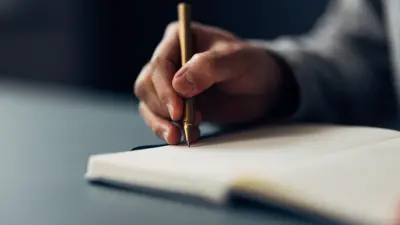

I have always written. Perhaps it is in the genes. Perhaps it came from teachers. Perhaps I discovered early that a thought looks different once it arrives on paper.
Whatever the reason, I write. And I think everyone should. Write to remember. Write to understand. Write so another mind may find yours.
For an engineer, the case is easy. Writing records a thought before it evaporates. It forces an idea to survive the discipline of a sentence. An equation may describe a relationship perfectly, and a drawing may capture the design, but you still need to explain why it matters, how it works, what assumptions were made, and what should happen next. Writing lets you collaborate with yourself across time.
A note made today may answer a question three years from now. A design explanation may guide someone you would never meet. A technical paper may outlive the laboratory in which it was written. That is how knowledge accumulates. That is how technologies outlive their inventors. That is how technological nations are built.
AI writes perfect sentences, but can it tell a human story?But writing belongs to no profession. Diplomats write. Bureaucrats write. Politicians write. They write to explain, persuade, negotiate, and shape public imagination. Gandhi published relentlessly. Martin Luther King Jr. wrote and spoke. Marx wrote. Hitler wrote, too.
Writing is a tool. Its power lies also in what it can change. Doctors write. Economists write. Historians write so that memory does not depend entirely on the victor. Scientists write because an experiment that cannot be communicated is barely part of science. Accountants, lawyers, teachers, and entrepreneurs write because expertise gains value when it can travel. And most good writers, I suspect, are also serious readers.
Begin simply. Take a notebook to a meeting. Make notes. Keep a page for every customer. Record what was promised and what was left unsaid. Write on your phone while waiting at an airport. I am writing this on a flight. Keep paper beside your bed for the thought that arrives at two in the morning. Write in the boardroom. Write in the bathroom if that is where the idea chooses to visit.
If you are young, write to learn. If you are old, write to teach. Then reverse the proposition. The young have things to teach. The old still have much to learn. Writing is also a conversation with truth. Not necessarily the truth. Your truth. Putting an experience into words forces you to look at it again. Sometimes you discover that anger was really hurt. That certainty contained doubt. That the person you blamed had another story.
Write your narrative. Leave space in the margin for someone else's. Write to find your voice. Write when your soul wants to sing. Write before your tears dry into silence. Write about tribal rights. Write about the traffic jams outside your community. Write about a city losing its trees, a village finding water, a train journey that changed nothing except you.
The ordinary deserves a record too. Write about Maxwell and Einstein if you understand them. Write about the Vedas if they speak to you. Write about the art of war, or better still, the craft of letting go. Write for today's newspaper or for a time capsule meant to be opened a hundred years hence.
Write when you lose someone. Grief sometimes needs grammar before it can become bearable. Write about the life you have lived and the lives you encounter. Observe the flower-seller at the traffic light, the child staring out of a bus window, and the housekeeping worker.
Write to grow in your career. Write to understand your neighbour. Write out frustration before you shout it. Write down happiness before familiarity makes you forget how extraordinary it once felt. Write because you know. Write because you doubt. Write because you are still becoming. Most of us are.
Ashurbanipal collected clay tablets into one of the ancient world's great libraries because even the kings understood that memory needs a home. Writing gives memory one. Eventually, conversations fade. Presentations disappear into forgotten folders. Even memory becomes unreliable. But a few words may remain. A letter. A notebook. A technical paper. A poem. A column.
Someone, somewhere, sometime, may read them. Write so that something of you remains. Write so that something of another may enter you. Write because words can cross distances that people cannot. For a moment, two minds separated by distance, culture, or centuries will meet. That is the quiet magic of writing. And perhaps that is why everyone should write.
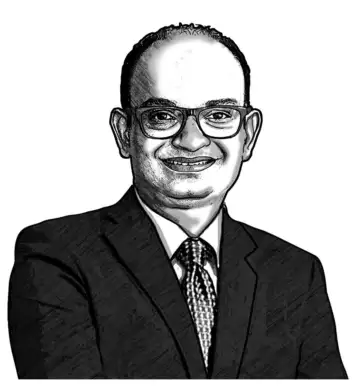
Gopichand Katragadda, The former CTO of Tata Group and founder of AI company Myelin Foundry, is driven to peel off known facts to discover unknown layers@Gkatragadda
The writer is the former CTO of Tata Group and founder of AI company Myelin Foundry is driven to peel off known facts to discover unknown layers.
(Disclaimer: The views expressed above are the author's own. They do not necessarily reflect the views of DH.)
Write to us at: theprism@deccanherald.co.in